Monday, January 31, 2011

Breaker Morant: The Empire's Stroked Back

During the Boer War three Australian officers are put on trial for murder. They are members of a counter terror unit formed against the new commando tactics the Boers are using.  So, when they summarily execute a number of enemy combatants in the field they do so knowing that nothing would come of it. When they are implicated in the killing of a local pastor it's murder and now so are the other cases.


So this can be proved or not according to evidence, yes? Well, yes and no. Witnesses can clear up events but the issue of whether the actions of Morant and crew can be justified is more difficult.Wartime communications had become quite breezy by the early 20th century and the delivery of accurate orders was a given. Morant's unit, however, was formed for Edwardian black ops and their orders were carefully left unrecorded.

And there's something else. This would be a minor trial if it weren't for the moves toward peace talks and the need for Britain to whiff rosily at them.Australia, just out of home and federated, is quietly crossing its fingers for a conviction, as you never know when you'll need mum do do your laundry. The accusations of ethical violation are being made at a time when Lord Kitchener in the top job has directly ordered Boer women and children bound to the engines of freight trains to prevent them being blown up by the commandos. Two of the three defendants have done what all alphas do well:make enemies.

The film delivers all of the above without ever feeling tiresome. Courtroom dramas allow for this kind of exposition with ease but the emotive power of the writing and performances ensure that these facts only add to the mounting stress of the situation. There is a palpable nervous energy in the courtroom that makes the recalled action, however violent, seem free and natural. Everyone in the room apart from the prosecutor whose unfazeable crystal-eyed aristocracy seems both proper and psychopathic (excellent field officer material, in fact). As for the rest, everybody seems to understand that they have either done wrong or will be required to. The light in the room is adequate for proceedings but the blaze through the windows is white, like liberty or death or anything that isn't this scene of corruption and stress. It presses in through the glass.

The sound in the courtroom is plagued by a big dull reverberation that can obscure lines. This feels intentional. It means that any point has to be made with clipped hard emphasis and anything ambiguous can be uttered and remain obscure. This also serves as a kind of cultural class divide as the colonials with their nasal accents need to speak with extra care if they want to be listened to as well as merely heard.


Jack Thompson was at the time the closest thing we had to a movie star. He was both the image of the golden-topped bronzed Aussie but also carried enough clear intelligence in his playing to offer an open of the door for the cliche. In Sunday Too Far Away he played an alpha dog ageing beyond his power. It remains a complex and centred perfomance. His bush lawyer in Breaker Morant builds on this figure (minus the sexuality of the earlier part). His earnestness shines here.

Edward Woodward emotes through his Roman bust handsomeness with an expert spareness. He is playing a character whose stoicism can break with force. There is a creepy vanity to his self control which expresses itself in a quiet contempt of any who do not share his experience. Woodward played a Le Carre like anti-hero spy in the 70s tv series Callan with a similar icy complexity and barely controlled sadness.

But if Morant is played as a kind of fossiled flaw in amber, Peter Handcock is an explosively violent reproduction engine, only effective as a soldier if kept in tight check. Bryan Brown's 80s yobbo persona has crawled into this role and it fits him like an undersized condom. His outbursts of anger or joy are unselfconscious and unstoppable. People who are aware of the person Brown presented at this time (in interviews etc) might complain that he's not doing that much acting but they would be underestimating an accomplished performance: a wild colonial boy in khaki.

And then there is Lewis Fitzgerald as Witton, the least culpable of the trio. His role serves thanklessly to add breathing space between the two more forceful men and the universe. Appropriately, the performance is muted, a young man who never considered himself capable of the brutality of his charge, whose ideals of family, country, commonwealth are articles of faith. Morant and Handcock both have the rogue male about them, taming their obstacles pragmatically, devil may care. Witton is more like the audience contemporary to the film's release, assured of the honest goodness of his life and puzzled to tears and anger at finding the opposite.

So far I think I've described a compelling drama well met with the big screen. But there is a major problem with this film. It stems from a single scene which would dismantle all the sturdy craft of the rest if that weren't so firm.

The British fort of its setting is attacked during the trial. The defendants are temporarily released and armed to help repel the invaders. They do so. Now, the film needs this action sequence. We need to witness these men act selflessly and we need to see them as regular soldiers. It allows their tragedy to resurface without plea.

It doesn't happen that way in the film, though. The soldier who frees them appears like a delivery boy, unlocking the cell doors and handing each prisoner a weapon. The trio then fall into action like wind-up toys and hit everything they aim at. They are a trio, aloof from the main soldiery who are falling about them in splayed agony, voicing variations on the Willhelm scream. Unironically, I’ve seen more affecting and profound depictions of heroism in war comics. 

The film is almost destroyed by this naiveté. A few shots of the characters simply fulfilling their training and instincts would have served the film better for in every war film the question of how much is the person and how much the uniform is ever present and correct. We need to see that these men who have already been shown performing brutal acts can also perform selfless ones. But the tone pursued is that of heroism and it almost reads as self centred pride as the accused stoop to help these tootsy Britishers (they do seem to be the only ones who can shoot straight and never seem to be in any danger). Later, when a plea to the redeeming power of this action is made it is rejected by the judges as mere duty. I'm meant to find this response angering but I just can't help agreeing with it.

Why couldn't this one sequence have been sobered up before it had to go on? It's the kind of thing a military prisoner might fantasise.If the film weren't playing so straight (and effectively so) I'd expect a scene reversing this and showing something more harrowing or mundane, something far removed from the boyish idealism of the original.

The film survives this and progresses toward a decorous if grim finale and leaves a heavy veil on the viewer. And this is what court martial drama should do. War itself is on trial in these stories; the uniform-deep ethics of humanity, their breaches and the correction of them, are under examination. Be the stages of these dramas ever so small and makeshift, they are the stages of giants and Breaker Morant features an interesting cast of them and they come from this country's history of parent figures.

Bruce Beresford  had spent the 70s making films that contributed to the notion of Australian identity, particularly the male. From Barry Mackenzie to Don's Party, he showed a readiness to plunge into depictions that left a lot of questions at the feet of the bronzed Aussie. While it might have been acceptable to ridicule the stodgey bloke in a middle class urban cage the idea of targeting the Australian soldier even before he had the chance to be an ANZAC was still too touchy a place. Calling an old forebear to account for brutal hypocrisy was safer but this time it served as a thin veil for the more recent adoptive parent that had helped keep us from invasion but drew us into a war as dodgy and unpopular as the one in on the veldt: Vietnam. The My Lai massacre was still present in public memory when this film was new. The losers in Breaker Morant were those who followed orders too well. They who lie down with empires.....


SHADOWS resumes screening in March (see program here)

Review: Animal Kingdom

17 year old Josh is sitting by his sleeping mother watching a game show. A moment later a pair of paramedics arrive and treat mum for a heroin overdose.Cut to Josh on the phone to his nana who will come to pick him up and place him in the family nest. Then we get an opening credit sequence which is a series of stills of armed robberies taken by security cameras and has a very odd family album quality to it.

If you haven't guessed by these few screen minutes that you are in for a dive into the underworld, Australian style then it's back to rom coms with you. I was enticed by the opening and its immediate strengthening in the scenes of the first act. The writing and playing and masterful use of the wider, scope image completely absorbed me. But then things started to feel wrong.

The portrayal of family life works because it is afforded its own nature by the film and allowed some give. There is no apparent contradiction in the dangerously psycho Uncle Pope lifting Josh's girlfriend from an awkward slumber on a couch to Josh's bed. It's caring and parental. As is a later sequence when he dispatches a character with the same gentleness. Otherwise he is manipulative and dead eyed, a criminal from birth. Ben Mendelsohn is powerfully eerie in this role and it's almost shocking to behold him so. That goes for Jackie Weaver as Smurf, the mother. Her gentle joy at being so essential and close to her sons' power is expressed the same way as if they were all careerist architects, bankers or doctors. Her cheer seems pleasingly surreal in this milieu until the moment see fixes the detective on the family's tail in her gaze. Her voice is sweet but if you went to the shark tank at the aquarium and it caught your eye from its gelid blue realm you would see the same look that Weaver gives Guy Pearce. This is a family of violent self preservation and predation but it is a family. The final moment of the film is a chilling affirmation of that.

So, why, if these elements are so good and freshly delivered, did this film disappoint me? Two reasons. First and worst is the saggy middle act. There is a lot of procedure, criminal and police and then legal which I didn't need to see to know about. The feel is that each scene seemed cut to length and the result was too even, too samey. When critical points appeared like the treacherous demise of one of the brothers it seemed to flare up from nowhere despite the film's hard work setting up the fateful nature of the story. The pity is that the scene itself is so strongly performed that I almost feel guilty saying it but I wanted it to be over in the period made standard by the other scenes. What should have seemed both inevitable and powerful felt tacked on.

The second reason has to do with the choice of Josh as the story's focal point. We hear his narration from the get go and the tale increasingly points to him for its central referencing. That saggy middle with all its procedural completism loses touch with him as police and crims go about their tough guy work. If the latter were told with less of the grim verite that the family scenes are impressively given the story, quite literally, would be different. This is all threaded back for the final act which plays out with an intimidating power but by then the feeling is one of having lived through a long rather than powerful film.

Also, there is a problem with the casting. I know Josh is 17 from the beginning. James Frecheville plays him with an utterly appropriate monosyllabic grunt and deferential downward look. He acts like a teenager constrained but ready to explode into his violent birthright. He just doesn't look like one. He looks like a 25 year old who has spent the last five years living in a gym. I know teens come in all sizes and remember the outsized specimens from my school years. It's plausible in the real world that Josh could be that size and for all I know Frecheville was the same age to the hour as his character. But this is not a documentary or even a documentary drama (the film's central criminal action is drawn from rather than replays the Walsh St shootings of the 1980s), if anything it's more like a classical tragedy. About halfway through I started wishing Josh was frail and gawky and awkward right up to the apotheosis in the finale. That would have hurt a lot more and made this film unforgettable rather than patchily impressive.

It pains me to say this about this film as its strengths are pure and cinematic in a way that films from this country generally aren't. I get the strong feeling that a lot of the expository material was included because it was left unquestioned. Guy Pearce, whose underplaying here is to his credit, as a detective delivers the speech to Joshua the gives the film its title. It's a laboured analogy and could have been conveyed more sparely and bluntly to the same effect. But someone had written it (perhaps had begun the entire project with it) and it was in for life. See also the brief attempt at the intimidation of Josh by the younger detective in the motel room. Nicely written and played but its bulk, for all its brevity, just weighs the film down further. Everything that shifts focus from the second act on does this.

This is why when we see the female barrister toward the end we brighten up and pay attention. Her character appears exactly when it should and is played with a sharpness and wit that is both believable and relieving. Honourable mention here must also be given to the subplot of Josh's girlfriend. It's trim, realistic and high tragic all at once. It's also central to Josh's story (as is the barrister). Everything else at this point dilutes what ought to be concentrate.

So what is this? Have the big US cable shows with their trust in the depth of still waters begun to influence the cinema that had generated their own look and feel? Maybe but the fact is that The Sopranos has weeks of screen time per season to plumb the details of characters and life decisions as well as the extended "family". Animal Kingdom has two and a half hours tops (it's less than two) to do this and can't. There simply isn't the time. Every attempt at what I'll call extraneous depth slows this film down as effectively as the deleted scenes reinserted into The Exorcist after decades of devout service to cinema. Maybe a future director's cut could be shorter. Worked for Picnic at Hanging Rock.....

SHADOWS resumes screenings in March (program here)

Wednesday, January 26, 2011

Rock on film Part 11: Chapter 27

I finally got around to seeing this after putting it off. First, I put it off because I read a few bad reviews and wanted to clear their memory. Second, I wanted to avoid seeing it on the twentieth anniversary of John Lennon's murder. Couple of reasons for that last one. While I am a big Beatles fan I was a lukewarm fan of their solo work and thought the Double Fantasy album was an unsurprising mediocrity when it was released (I felt embarrassed by the single Starting Over). While I was aggrieved by Lennon's murder I didn't feel as personally crushed as those of the original generation of Beatles devotees. I was more outraged to learn that his murder had been at the hands of a born-again religious psycho. It seemed a disgustingly American way to be killed.

The Americans have done a bang up job of taking personal responsibility for the murder happening on their watch, as it were, and feel the guilt of it for the rest of the world. This is why a film about the murderer's last days before the act is inevitably as obsessive and psychologically claustrophobic as Chapter 27. It's why it has to be so quintessentially American. And it is ... but in a good way.

First good thing: the characterisation of Lennon is slight and blurred. He's not really a player in this, oddly enough, he's just a target. Second good thing: Chapman's mental state is the chief character, centre stage; the husk it inhabits, flabby and malleable, is a vehicle. Third good thing: Chapman's diconnection from the world he inhabits is depicted as being complete and irreparable: he is a perfect devotee.

These things are good in this account because they serve as antidotes to any sentimentality resident in any viewer who might be tempted to wrest the emotional centre of this account away from Chapman and drape it around Lennon's ghost. Chapman is alone in his universe and whether this is by his conscious agency or through psychological forces he is aware of the insurmountable difficulty he faces whenever he is called on to connect with anyone earthly (he considers Lennon to be something other). It's time to talk casting.

Jared Leto, normally so slim that he fronts an emo band outside of his acting gigs, has monstered up to resemble Chapman in a shocking transformation (he also looks a little like a young Stephen King). He speaks and thinks in a paper thin Georgian accent, a kind of straight Truman Capote. He makes brief definite statements that he offers like Christian leaflets. It's a pity Leto was winced at where Charlize Theron was celebrated for this kind of metamorphosis. It's possible he will never do anything as hazardous as this again which is a pity because he is good.

The other significant player in this film is someone who has similarly suffered the wrong kind of public attention; Lindsay Lohan. She's a fellow fan, loitering outside Lennon's palatial apartment building with a friend who doesn't quite share her obsession. Her name's Jude (yes, Chapman gets the line "Hey, Jude" but that's after she has said,"Hey, Mark, don't make it bad.") She's slight and geeky and takes to Chapman's intensity. There's a moment later where, though she is already understanding the danger of his condition she responds to his flattering encouragement as any teenager would. For a second on her face it's as though she has found her strength and purpose AND a soul mate. Then she remembers the words were spoken by someone she is starting to fear and her guard is immediately repaired. It's good stuff.

The reason this review is in the Rock on Film series of this blog and not by itself is that, despite nary a bar of rock music being played in it digetically or not, is that it's real theme, the big hard ice lake it's built on, is fandom. Chapter 27 is not interested in humanising Mark David Chapman (who'd listen?) or eulogising John Lennon (who hasn't?) it's interest is in illuminating the scary human capacity to replace the self with an assumed and unattainably distant identity. Chapman's obsession swings between the Bible and Catcher in the Rye and every time it swings past he gets a glimpse of Lennon: Lennon God, Lennon Sellout, Lennon Genius, Lennon Traitor.

The problem here is not that he scooped his being to make way for the star's like some terrifying Elvis impersonator, it's that he wanted to stay there, nestling beside the famous parasite, warm and feeding as long as they both should live. Obsession is derived from the Latin word for beseiged which is handy to know and remember whenever fandom manifests. The scary thing about Chapman, especially for Americans is that he is the distillate of that subservience, essential and execrable.

The film itself plays like an anaesthetised memory but is highly accessible for all that. The difficulty you might have in sitting through it will not be due to any nostalgic leanings toward John Lennon or any anger at Chapman, though. You might be reminded, however, that the grace of a few moments reason has saved you from the many seductive means of self annihilation offered every day. Be afraid of yourself. Be very afraid of yourself. Then you'll be dandy, I reggon.

Available locally. Watch it with A Hard Day's Night. No joke.

SHADOWS resumes screenings in March

Tuesday, January 25, 2011

Review: Black Swan

Nina, the pretty ballerina, thinks her big chance has come. Reigning primadonna, Beth, is growing old and going nuts. The other girls in the company gossip in the dressing/bitch-session room about it, each of them believing she deserves the crown. The decision rests with brilliante Fronsh artistic director Thomas. Whom shall he choose for his revolutionary version of Swan Lake? Who shall be she?

Ok, it’s Nina. Not a spoiler as it happens so early on and is in the trailer anyway. Nina is good, if a little formal and stiff. Her chief rival, Lilly is freer in style but lacks discipline. In other words Nina=White Swan and Lilly=Black Swan. The big problem for evil wizard Thomas is that he can’t have both in one role. So he goes with discipline (Nina) which he hopes he can break into and find the wild erotic darkness of the black swan. Ok, good.

Well, maybe not. Nina vows to overcome her stiffness and find the fire but she’s not helped by an evil stage mother whose congratulation is laced with emotional strychnine (Barbara Hershey, all faded beauty and alkaline). Nor is the potentially sabotaging force of Lilly, rejected the wizard but who might be redeemed if she can topple Nina physically, sexually, emotionally or psychologically. Lilly does have a lot of those cards in her deck and is pretty deft with them. Oh, and the former prima (Winona Ryder growing pretty strongly into her second stage as an actor) has been hit by a car, alive but stitched back together and seething in a hospital bed. Oh, Oh, Nina keeps seeing her doppelganger, passing her in the street and then increasingly in the faces of others, in shadows, and in mirrors. Could be better, this prima ballerina lark.

Darren Aronofsky (whose name sounds like a jazz band playing a punchline) is a little like a 60s rock star. Pi was a kind of first good album with two sides of strong, hummable toetappers. Requiem for a Dream played out with more confidence and daring, a kind of Revolver. The Fountain was all psychedelia. The Wrestler was back to White Album basics but with all learned lessons on board. Black Swan is kind of early 70s prog. Really, simple themes elaborated and plumbed to subterranean depths in an immediately appealing package. The only thing you don’t get is the self-indulgence. Absent are the noodling solos that go for a whole afternoon, absent, too, the pretentious overstatement of importance. Black Swan might qualify as indy but it plays like mainstream. Actually, better than that, it plays the way mainstream should, solid, constant, and as trim as a dancer.

Black Swan also does something interesting with its subject matter. Ballet as an art form fails to move me. I just don't get it. I admit that's a failing (what, after all is there to get when movement is such a fundamental tool of communication?) but there it is. It's like movies about sport. I don't dislike sport it just doesn't compel me. None of it. So if I watch something like Any Given Sunday I can get into the dialogue and politics but have to buzz out into nowhere world while the interminable football scenes are on. The Wrestler, however, made that activity worryingly dangerous for all its campy showbiz. The scenes in the ring could be harrowing.


So Black Swan first makes ballet look hard. The perfect bodies performing their stretches and contortions are depicted without fetish, these girls in their legwarmers and tracky dacks are at work. If there's skill here it's hard won. If there's art it's all the more special. This removes the sleight of hand a lot of movies about art or performance must do to divert the audience away from the lack of proof for the praise a character might receive. How would I know if one dancer was better than another? Oh right, that one works harder. The other thing Aronofsky sees to is a solid maintenance of intensity. This film is constantly on the move. Pitstopping only to get fuelled by emotional energy, plot points and the occasional second or two of light relief, the film careens to the big one at the end, the stage performance of the ballet. We still don't know if Nina can carry this off. By this time the notion that she has still to release the black swan within has taken centre stage in the drama and might be hurtling towards violence. Nina by this point is struggling to trust her eyes and sanity that all the self-discovery, self-reflection, self-eroticism, self-torture. And Aronofsky has has put so much effort into dosing his audience with just the right increments of unreality from the word go that at the climactic moment, anyone in the audience who scoffs at the sight of the transformation can only be a flat-earth cretin and shouldn't be anywhere a cinema playing this movie.

So, an almost unrelenting intensity building to a real tension by use of sinuous conception and muscular forward movement to a grand finale that bursts beyond normal reality. What does that remind you of? .... Anyone? .... Anyone! It reminds you of BALLET, doesn't it. Well it should. It reminded me of ballet and I know less about ballet than I know about cartography. That, all up, is why Black Swan is a good film. From that point you can start talking about how Natalie Portman will deserve any Oscar nomination thrown her, or that Mila Kunis, baby faced yet highly charged plays Lilly to arouse and terrify. 

And personally, I don't care if this movie is indebted to The Red Shoes, The Fly or Dario Argento. The ingredients are easily discernible but the chef has enough style to make them seem fresh to the palate. Most homage-laden films are stapled together pastiche (almost all post Romero zombie films, for eg.) and it's worth remembering that the mighty Argento used Hitchcockian suspense and cruel humour for his own purposes and created something new. That's what Aronofsky has done here. In an odd way it's kind of unassuming: he has set up his premise with the plainest concepts and simply kept the momentum healthy to provide a strong entertaining thriller that bears thought after the credits roll. Nothing revolutionary in that, it's just good.


See!

Monday, January 17, 2011

Rock on Film Part 10: Gimme Shelter

The Maysles brothers, having witnessed the Beatles’ moment of global breakthrough in their documentary The Beatles First US Visit, found themselves ending the love decade with a record of corporatised rock, long bad trips and fatal violence. Gimme Shelter is only partially about the Rolling Stones. Mostly, it’s about America looking wearily at the 60s gone and through stunned vision at the 70s to come. It’s not the 60s of Sargeant Pepper, it’s Charles Mansons’ 60s, Vietnam’s 60s, Martin Luther King and Bobby Kennedy’s 60s. This ain’t Woodstock, it’s Altamont and if you were told not to touch the brown acid it was in a memory that you weren’t sure wasn’t just a dream, it was, apart from anything else, too late. All of America was on the brown acid when this film was made.

It’s also the time in which the Rolling Stones emerged from their own odd experiments with acid to find their path to the top of the mountain free of its obstacle in chief. The Beatles had raged, fought and then mumbled themselves to death as a unit and the Stones found themselves alone at the peak. So they did what any British rock band at the top of its form would do at the time and went on an excessively proportioned tour of America.  Only, this time their bright young manager wasn’t there to catch them and, cornered at a press conference about following the trend for massive free concerts, they said, “yeah, why not?”

Well, why not? All those tripped out spacerockers in Frisco went to the park and jammed for weeks on end with nothing but three chords and blissed-out thousand metre stares. And then there was Woodstock. If the Stones could top that one they’d have to go off-world for a bigger gig. But it wasn’t Woodstock, it was Alatmont, it was rough and down and somebody was killed there.

This film took a little longer than normal to surface after the events it depicts as some of it was called to appear as evidence in the case of the murder of  Meredith Hunter. The film begins not with a triumphant Jagger and co leading the crowd in a massed chorus of Brown Sugar but the band as citizens of their realm viewing themselves on a Steenbeck editing desk with the filmmakers taking them through the footage. In happier circumstances this might be a pleasant view to the narcissism essential to the rock star experience but here there is a weariness in the room and a sense of dread which will reach its peak within the next 90 minutes. A talkback radio show about the event plays too loud to ignore. The leader of the California chapter of the Hell’s Angels gets on the line (Jagger flashes wide eyed shock at hearing himself called an clown) and Charlie Watts, the least opinion dividing member of the band comments without irony or sarcasm, “I remember him. Nice bloke. Oh dear, what a shame.”

Then we’re plunged into the joyous part of the film. The stadium gigs. The lights and massive jet engine roaring adoration and evidence of why the Stones were contemporaneously dubbed the greatest rock and roll band in the world.  We see them off duty doing publicity shoots, partying in their hotels and listening to what seem like interminable repeats of mixes of the next album (Sticky Fingers). And then everyone gets on a helicopter which rises into the starless night sky and the fun is over.

 Altamont ground zero is teeming with hippies. Not the nice east coast hippies but the burnt out hulks that Steppenwolf said had “tombstones in their eyes”. Actually, to begin with this could be any outdoor festival from the past forty years. Folks milling, getting mildly stoned, dogs on rope leads. But it doesn’t last.

The hot day goes on, bands take the stage but most of them are in the background as the Maysles again find something more intriguing to point at. There’s a feeling moving through the crowd and it has nothing to do with peace and love. A heavy set woman, incrementally naked, wanders the swell of bodies in an acid haze. You don’t know what she’s been through so far but the place she’s headed will probably be worse. The dog from before roams, rope still around his neck. People are warned off climbing the flimsy but dangerous scaffolding. Already, doctors are requested from the stage. And more and more, each shot catches a glimpse of the leather, flab and grimaces of a Hell’s Angel.

Up on stage Jefferson Airplane, pioneers of the San Francisco groove of acid rock and anti-war protesting protest against the bikers beating someone in the audience. For his compassion, the lead singer, Marty Balin, is dragged from the stage and whacked unconscious. This is not immediately apparent to everyone in the band and they continue the song but it turns ragged and breathless and dies. The Grateful Dead arrive by chopper but leave after they are told about Marty Balin and the other beatings.

The Stones appear, excavate their way through the crowd to their caravans. Jagger wears a worried expression. The fans are teeming and fawning but it feels exhausted and drunken rather than vibrant and idolatrous.  They stay in the vans until they have to go on.

Cut to their arrival at the stage under the protective cavalcade of the Hell’s Angels, huge loud bikes driven by huge grunting men, hard eyes concealed by shades. They drive a channel through the crowd with what should have been a triumphal progress with the new Caesars of  rock and roll in the position of honour. It’s more like tanks through the streets of Saigon, though. How many butterflies broken on those wheels?

Suddenly it’s night time and the Stones are rocking the stage. Well they would but things keep happening. The crowd has swollen to a life threatening crush. People are fighting. The Angels are on the stage. One of them, beaming in from a lysergic constellation light years away, stands as a huge ursine worry near Jagger at the mic. He slowly caresses himself with eyes closed as though being massaged by the rarest and most exquisitely beautiful of the Venusian Vestals. He will have her this night if his come down doesn’t get him first. Jagger tells the crowd that something happens every time they do Sympathy for the Devil. The song breaks down twice and is abandoned. To their credit, the Stones do try and assuage the turbulence in front of them, sincerely, with more than a hint of unbelieving panic in their voices. Jagger in his harlequin outfit, seen from behind and in middle length shot, looks like a boy at a pageant taking the stage before a crowd of medieval tartars.

The band start up an oldie, Under My Thumb. The self pleasing bear beside Jagger has been replaced by the meticulously neat Sonny Barger, head of the Californian Angels. He fixes on Jagger, calculating him, comprehending his mystique with the eyes of Mr Freeze. To Jagger’s credit, he continues as though he’s alone on stage. I bet it wasn’t what he was feeling, though.

Things finally break down irrevocably and the Stones flee the scene in a chopper. Back in the editing room where we began, the band are shown a black man in a green suit get a knife in the back from an Angel. Run, freeze, wind back, repeat. The victim is revealed to have a hand gun. No one is innocent.

The band are shocked but no one grandstands. The mood is tired and cold. The editing session is over for them and they take their leave. Freeze frame on Jagger looking straight into the camera. Posterise. Big finish.

The dvd version no longer stops there. More poignantly, it returns to Altamont, an hour or so after the bands have gone. The crowds disperse or shiver around makeshift fires but all of them wander into the darkness as a live version of Gimme Shelter blasts out, ragged and barely controlled. Those who fought at Altamont will be different from those who danced at Woodstock. As with the clichéd difference between U.S. war veterans, the D-Day men exult while the ones from Tet or Khe San huddle into themselves and move on.

For one, I’m glad: not that someone died or a crowd of people had a bad time but that the peace and love 60s of Woodstock finds a balance in this record of a generation exhausted and abandoned. Those who survived the early 70s of that crowd would have taken an easy place beside their middle class west coast neighbours. Some might even recall the 60s with wistful pleasure. This film remembers differently.

Friday, January 7, 2011

Rock on Film Part 9: Telstar

This one almost didn't make this category. Here as I listen to a bootleg of the Beatles rooftop concert I'm thinking that this story is better served by its biographical nature than its cousinship to rock music history but the more I recall the film the more I think it deserves its place here in the pantheon o' roll.

Why the dithering? Because this is not an attempt at telling the story of a rock star, real or not, but a record producer. Not just any record producer, either, but a pioneer whose inventions and techniques aren't just legendary they are in current use.

Joe Meek contributed advances in microphone techniques, the technology of compression, re-editing takes and so much else to what we hear on the radio now and take for granted. Like the phab Brian Eno who came after him he considered the recording studio to be an instrument in itself. Possibly no one in his time added more to the palette of pop than Joe Meek. Who knows his name? Well, I bet you know the song that after all of the above sticks to him like one hit to a wonder: Telstar.

This film commits that very sin that would constitute a perfectly formed no-no in conversation with Meek if Meek, in fact, were still alive. Sin or not, the choice of the unrepresentative claim to fame in the title serves the patient viewer who will understand its irony as the end credits roll.

So how do you make a film about a bloke in a suit behind a console rather than the music and makers of his hits who acted like so many Jacks the lad? You do both. Antics for the needy of rock 'n' roll japery and a comedy of chaos when the camera turns its restless eye to Meek himself. And then there is the inevitable convergence. There's a slight problem here, for me.

In Tom DiCillo's very funny film Living in Oblivion (utterly recommended, btw) there's a moment which I have to forgive rather than run with. The film is a sustained dig at the processes of making an independent film. The cameraman is shooting a scene but getting distracted by another character. So much so that during a home made tracking shot he suddenly swings the camera so it hits the forehead of the nuisance ... and goes on shooting the scene. Sorry, can't do it. It'd be "CUT!" and start again on a film set that couldn't afford to be so cavalier about multiple takes. I'm perfectly well aware it's a joke and in the context of the scene it works, it's well timed and executed. It also completely undercuts the entire premise of the film. We know the director should know better. We know he's gone for the laugh.

Telstar is brimming with such moments but they bother me a lot less. There is a separation of gloomy British realism and the kind of glitzy showbiz of the stars who sparkled like rhinestones under the stage lights but had to knuckle down in the studio. The film has the glitter of the stage invade the studio. Let's note something important here: Joe Meek's studio isn't Abbey Road. It's the top two floors of a squeaking floored flat above a handbag shop in an unfashionable part of London.

The faith-creating results come from a guarded Babel of wires and cramped mouldy rooms. The lame suits in this environment as well as the sudden cavernous reverb on one guest singer's vocal while standing among the band, are meant to be the collision of image and reality. That comes out of there? You bet it does. We're just going to save a little screen time by shoving the two together. What do you get? Well, both at once. It's wrong but it knows it and knows you don't care that much.

Haven't said a word about Joe yet. He was a restless inventor, innovator and practitioner of the new which you get from the disastrously failed boyhood experiment the film opens with. Joe is a hands on guy, taking on management of his acts as well as nurturing their sound (a campy silent film version of an exploratory early tv music video packs these into one moment and it's not as bad as it might have been). Hands on? really Mrs, Slocombe. Ok, now we're there. Joe was gay. In the parlance of the time he was a screaming queen. Scenes that depict this are the same kind of fantasy within grim reality that we've already had in the recording sessions. So far so good.

The central performance by Con O'Neill is streamed from his successful and feted stage performance and, while the film keeps the wolf of theatricality far hence there is a near constant sense that he is caught in a canvas that is getting busier with every stroke. Is he a genius aesthetic engineer, a tormented homosexual in hostile territory, a besieged artist whose every idea is stalked by a pack of mediocrities, a nurturing stage uncle taking his awkward young charges from one clunking overreach to the next, did he dance with the Devil, were those seances and pentagrams for real? All and more, according to this account. The problem is that successive scenes play like chaotic tableaux vivant with a lot of laff moments and rough British dryness (there's a lot of the "not bloody likely" in these) which are meant to highlight the difficulty of Meek's character and predicament in his professional context but really only serve to pass the time until the next calmer revealing scene turns up. It's as though the film is trying too hard to tell us it's not a play anymore but a real film: "can't do THIS onstage, matey".

But Telstar does work in those quieter moments. The framing scenes of Meek in a room illuminated only by the streetlight steadily burning the evidence of his life and career act as a kind of touchstone to what the original concept might have been in the idea of bringing his story to the screen. It looks unintentional, but the contrast between these moments and others of more sensitive nature and the big goopy, larky ones ("oh, we were such loons back then") creates a weird kind of dignity which, after all the silliness, after Kevin Spacey's 'orrible attempt at British uppercrust, after the eye rolling references to big history writ small ... and all, a weird kind of dignity which yet prevails.

I was waiting to see The Boat That Rocked so I could contrast it with this film but I still can't bring myself to watch it. I will say that, as much as I admire Oliver Stone's more serious work which often involves the fictionalisation of history and/or biography, he hasn't quite close to the order out of chaos that this film achieves. The achievement is a near miss but it is an achievement. Who's to say that's wrong? Not Joe Meek.

Oh, this is one case of a film set in the 60s which is allowed to sound like 90s minutes of Gold FM. And it's good, that there music. Check it.

Tuesday, January 4, 2011

Blind Spots 3: Davids

The two Davids, Cronenberg and Lynch, are always at or near the top of my cinematic affections but both can do wrong. Existenz was like a self parody and Wild at Heart is fun piffle. Dune is almost too obvious a goof in Lynch's career but it's there all the same and Eastern Promises might well have been made by any middling Hollywood talent. These are the lesser efforts of the two and while they mope around my favourites they still have individual merit and will confidently enter any conversation about the work of either. But each of these directors has a blind spot for me, a film I can never remember unless someone else brings it up.

THE DEAD ZONE
On his way to The Fly, David Cronenberg adapted this Stephen King novel of a man who emerges from a coma with a curse. He can see the future of anyone he touches. When he does he pays a little more of his life for the power. So if he can accurately know the future can he also change it?

What's wrong with this film? A still young Christopher Walken is perfect as the bland Johnny Smith whose extraordinary gift renders him into one of the most interesting characters to walk the Earth. The narrative is stripped to bare essentials yet moves at judicious pace, allowing no sleight of hand in the concepts. This is aided by the role of the heavyweight Herbert Lom who explains and thinks through Smith's predicament and dilemma with him.

There is no shortage of Cronenbergian flare: one sequence depicting a suicide is brief, merely suggestive and ickily disturbing for its few minutes of screen time. This is the least histrionic, leanest that a King novel has been on screen since the Shining and the two keep close company among their bloated kin. So what's the problem?


THE STRAIGHT STORY
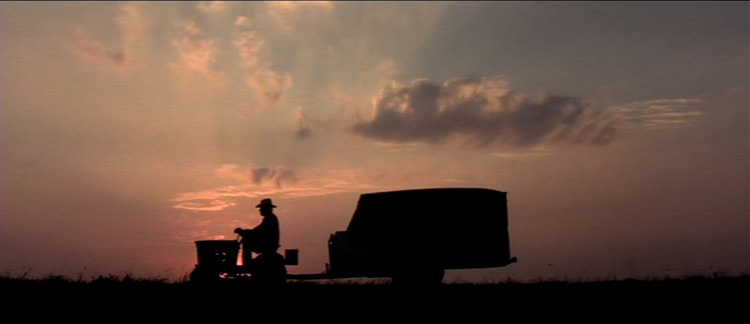
This deceptively plain tale of an old man going to extraordinary lengths to reconcile with his estranged brother is a David Lynch film so accessible it was distributed by Disney. Richard Farnsworth plays the biblically aged Alvin Straight who, incapacitated into medical house arrest contrives to drive through a loophole in the law and travel two states by a ride on lawnmower. He meets many people on his way through some pleasingly lovely autumnal landscape as he heads as well as he can to the end of his mission. None of this is so warm as to cloy nor is it all plain sailing. It's deceptively simple because Alvin's sin necessitating his reconciliation is never stated; the implication must be derived from clues throughout (one hint: it's not his war story).

There are some unmistakable Lynchian touches here. The film has a factual basis and I don't know whether Straight's daughter was the way she appears on screen but Sissy Spacek plays her like she's been beaten around the temples with oranges before each scene. The deer woman scene could only have come from a Lynch movie as a woman hits a deer, gets out of her car and rants to Straight how she keeps killing deer which seem to materialise from nowhere. It's a kind of G-rated Mr Eddy road-manners rant from Lost Highway but carries an eeriness along with its absurdist humour. This is all Lynchy goodness.

So what's the problem? Well, it's not them, it's me. Primarily, I get disappointed when artists with singular vision play the game and join the ranks. The best always find a way of maintaining their signature through this stylistic dilution but it's still annoying when we could have had another Videodrome or Eraserhead. Naive? Yeah, but I'd still plead it as there are so many capable hacks pressing themselves breathless at the door to the industry all of whom could have made these films as well, just minus the few auteurist appendices that they could survive without.

Money? If individualists need to make a living through hack work why don't they do it more? Cronenberg has largely gone mainstream since Naked Lunch but still comes out with Crash and Spider when he needs to. Lynch's intention didn't seem to be filthy lucre harvesting in the Straight Story; it had a tiny release unsupported in cinemas by the mighty Disney corporation. Filmed from his wife's screenplay, it seems to have been a labour of love in more than one sense. And anyway his last film came out of his own pocket and ranks among his strongest work.

Neither David has taken the King's shilling like Martin Scorsese did when he turned his back on anything but increasingly massively alright works like The Aviator. Neither have they made conscious efforts like Peter Weir to remove the hand of the author from the screen. Both have always shown themselves rather helplessly through all attempted mainstream sheens.

Neither of these is bad. On the contrary. I just wish it didn't feel like they were trying to prove how acceptable they could be to the general admission. Then again, Terry Gilliam struggles to make the films he wants while Guillermo Del Toro does hack work in English and keeps his sublime work (and it is sublime) in his native Spanish. (I've only just realised, reading this back that Guilllermo Del Toro's name is like Terry Gilliam's in joke Spanish.)

I think I'm also annoyed that these handshakes had to feel so compromised. I look at the feature length reel of outtakes from Wild at Heart (available only on the Lime Green box set) and marvel at how straight up they are and smile at how they all hit the floor for the release cut. Wild at Heart is not my favourite Lynch flick by a long shot, it's not even among my favourites, but it is damnably its father's child. Then again, I'm not the one paying the support and alimony.

Ah well...