Monday, September 9, 2013

Top Ten Politicals

Now we as a nation have set back reform for another three years at least here are a few fine pieces to help us maintain our rage.

The Parallax View
IMHO the sharpest response to the killing of the 60s by political assassins. Warren Beatty's career-best as an investigative journalist who ventures well beyond the protection of his paper into the dark of facelessly organised control. The bleakness is pure 70s and I defy any first time viewer to remain dispassionate during the Parallax Corp psyche test slide show. Add a music score that expresses tingling paranoia through a warm patriotic facade.


October
My favourite Eisenstein film for its energy and sheer thrills. Prefer it to Potemkin any day. 1+1=3 montage editing, constant kinesis and compelling silent performances in abdundance. As they said in the revolution itself: the gang's all here!


2 or 3 Things I Know About Her

Insidious consumerism vs inflexible income turns lower middle class women into prostitutes in this on the transformation of people from citizens to customers. Neither narrative feature nor documentary, this essay on contemporary life retains its vitality all the way from the mid 60s and its blend of philosophy, Marxism and genuinely funny absurdism keep it fresh.


Triumph of the Will
Often forgotten that this is essentially an admin meeting turned epic but you won't need subtitles if you don't have them. Watch a people become a work of architecture with all the compassion that implies. Never again.


The Great Dictator
If Triumph of the Will can't entice you all the way through try Charlie Chaplin's take. Any worthiness aside this endures because it is still bloody funny. There's a story that Hitler not only saw this film but laughed helplessly at the scene where Napoloni and Hynkel try to out elevate each other on the hydraulic chairs. I can't think of a weirder endorsement of this film, if true, but there it is. I'm not a great fan of Chaplin's work overall but the addition of dialogue along with even bolder production values make this a venerable ancestor to the likes of Life of Brian.


Red Monarch
Little known made for UK tv piece on Stalin from thaw-era Soviet satire hits a few boggy points but overall plays the tension between the gravity of the Terror and the Alice-like weirdness of the inner circle. The meeting with Mao is clearly influenced by The Great Dictator but still very funny (marred only by the now archaic casting decision to make up a Euro to look Chinese for the translator, not as unsettling as Mickey Rooney playing Japanese in Tiffany's but still...) Use of Anglo-Irish accents to reflect similar USSR ones was a great decision.


La Chinoise
Young middle class students run a Maoist boot camp in a Paris apartment. When Veronique's fervour is gently deflated during an encounter on a train we feel it terribly as the train speeds down for the next station. Godard is quite harsh on his characters here but less than a year later he joined them at the barricades.


Bob Roberts
Great, if less than always disciplined, satire helmed by star Tom Robbins. Rich conservative independent mounts a campaign for the white house. Because that would never happen would it?


The Dismissal
Tv mini series rather than standalone film but needed Australian content and have fond memories of this dramatisation of the axing of the Whitlam government made in time for the start of the Hawke years and to remind us here of how good and how bad things can get. John Stanton as Fraser was a standout.

Oh, and "never again!"


 Burn the Butterflies
Standalone ABC tv movie with Ray Barrett as a Whitlam-like PM beseiged by crisis. As tough as we could make them here for the small screen once upon a time. Final shot used unfocussed background action with shocking brilliance.


The still is not from the movie but Ray is the one on the left.


It Happened Here
A sobering what-if story of Britain under Nazi control. It distrubed its initial audiences as, while it showed an active resistance, it suggested that the Britons of the Blitz might have knuckled under like everyone else the Nazis got to. A discussion between blackshirted thugs is improvised by the participants from their own experience (they were National Front members). Brilliant device of using a nurse who can move through different social strata with relative ease allows some strong examination of the scenario's possibilities. Looks like a mix of stock footage but every frame was freshly shot. Conceived and executed over years by two guys who were still in their teens when they started it.

Wonder if we could do the same here with the Brisbane Line. Probably not.

Friday, August 30, 2013

Review: DOWNLOADED: Paradigms Lost

A common misaprehension of Napster at the time was that it was a big store of free music. The fact that it was actually a facillitator of access was less sexy as a public demon and the record industry's response pushed the misconstrusion because it was easier to do. The protest from the hapless giantsupermegacorps dug in through the courts with the outrage that the artists themselves were being robbed blind. Only in comedy was it touted that the companies were getting shafted at their own game of artist exploitation.

I remember the brief flash that was Napster. At first, it really did look too good to be true; people sharing their music collections. Anything new you'd heard about to old chestnut albums you'd never got around to or just wanted again. Dowload times could be slow. Boomers with public profiles joked crankily about it being like getting it in real time or longer so it was worse than cassettes in the old days. Well, cassettes was what it was like and not just because of the load time or reduced audio quality. It was like cassettes because that's the way albums got around at school. Someone would get the big buzzy LP and you'd give them a tape. If you dug it enough you'd shell out for the record because that was the real thing. If you drove a car you'd have tapes of everything anyway and when those mangled up you'd just make more (assuming you hadn't got sick of them in which case you wouldn't bother).

That's how I and a lot of others saw Napster. The only reason I hung on to some mp3-ed albums or burnt them onto cds was because of zero local availability. The industry didn't see it that way. When it heard about Napster it tried to shut it down. Eventually, the corps had the rug pulled out from under them anyway when things like itunes, that got the point of Napster, changed the game forever. This documentary is about that as much as the vision and ingenuity of the creators of Napster as a program and concept. The companies were shown the future and they dug their heels in. It took the bits and bytes team to use it properly.

We all have some version of this story as we were present during the time when the music industry went from empire to a post colonial shell and the real money went back into live performance. Radiohead gave their new album away online and kept filling stadiums. DIY retail sites gave anyone the equivalent of a record deal (without the promo machine but the times had allowed for that in a way they never had for the indies of the 70s and 80s).

So, while we have an idea of what happened we don't know much about the people who brought it to us. This film addresses that and the almost unsettling self-effacedness of the principal players is one of the reasons why I began with all of that rather than anything about the movie. Shawn Fanning and Shaun Parker along with a crew of hoody wizards revolutionised music culture from a larder sized office because they knew it would work the way it did. Even though they operated in the grey they also knew it was only time between the revolution and its suppression.

There is a real poignancy in the straightness of this documentary. A series of talking heads tells the tale between blocks and bites of news footage. No attempt is made to cute up the concepts with animation or amp the ironies through editing. Its plainness serves some of the trickier concepts involved that reveal the mistakes the suits made when they found out. They all talk about the scale of the copying and how it outstripped anything passed on by direct means to that date. They all, wittingly or not, admit to failing to see the massive shift in the paradigms of marketing and distribution. The only way they could think of to monetise it was direct pay to play rather than using the light speed peer spread that was already happening. The passages about iTunes etc have a quietly triumphant feel to them because of this and the absorption of Fanning and Napster into the machine a moment of sadness but only in passing.

See? Again, I'm talking much more about the issues than the movie .... maybe it's just a good documentary.


Thursday, August 29, 2013

Review: BEHIND THE CANDLEABRA: Career Camouflage

Scott, golden and alluring, hangs out in a gay pickup joint. His 70s-moustachioed beau takes him to Vegas for the weekend and there he is awed by the specactle and skill of a Liberace show. Gets better. Backstage is the man himself whose glittering gaze is fixed upon him, charming everyone in the incandescent glare of the dressing room with wit and champagne. To one side, tucking into a steak and a grumble in his eye, Liberace's protege quietly seethes, tired of this blinding bubble and not long for its protection.

Scott moves in with the big L, who insists on being addressed as Lee, and sinks into its jacuzzi-warm glow with an opioid smile. When bitchface houseboy gives him the word about favouritism he mentions it to Lee who buys the boy off. Scott has been spied as a gem in the slime of the land and retrieved from it by this latter day Byzantine eminence. The taste is not just good it's addictive. We know without effort that Scott himself will be wearing the same frown as the protege before the third act opens.


That's basically it for plot but it carries much about fame, love, luxury, the duplicity of public life just as effortlessly. Performances don't come much better than these from a director who showed from his debut how careful he is with actors. Matt Damon builds from naive to explosive, by turns empathetically true and wildly unhinged. Rob Lowe seems to have been squeezed from outtakes of Wild at Heart, nearly Dadaist in his self-administered grotesquery. But it is Michael Douglas in a career best turn as Liberace, a kind of crumbling pastry in a toupe, who shows, beneath the Arabian Nights glitz, the vulnerability of his subject but also how convincing his charm must have been.

This is a Stephen Soderberg film, the first of his post-cinema efforts (though it's currently in cinema release outside the HBO diaspora (ie the USA). Having sworn off the big screen and pledged allegiance to the slightly smaller ones in the loungerooms of his new jurisdiction, he has come forth with this most cinematic of pieces. Well, why not? If we echo the sentiments of critics worlwide about US cable television being more gravely cinematic than the ever lighter fare at the multiplex then he has chosen depth over surface.

Maybe it's more guaranteed distribution (through legit channels and torrents) for the less mainstream fare he has been getting better at since Sex, Lies and Videotape way back in the 80s. Soderberg has always been interesting to me for the ease with which he leaps from an Oceans blockbuster to the Che films without breaking his stride and lensing the lot himself. If an auteur he's one less by style than pluck. And now he moves into cable tv where he might, having influenced some of its triumphs (think of Hung or Weeds or really quite a lot of Breaking Bad and Mad Men), go productive but unnoticed.

Perhaps his choice of subject makes it more of a matter of hiding in plain sight, the real movie director among the cable barkers. Well, Scorsese helmed the Boardwalk pilot. Peter Medak of the great Changeling and Ruling  Class has been tv-ing for decades now in Homicide, The Wire, Carnivale, Breaking Bad and Hannibal. They are not alone but he almost is in that he has publicly stated the permanence of his crossover.

What I know is that unlike a lot of what I have seen and celebrated in everything from The Sopranos to Breaking Bad Soderberg here is showing a lot of restraint. If I say the gayness of this story is light I don't mean it's trivialised but that it is rendered natural, the relationship between Scott and his lover/benefactor is more important than its sexuality. This might be considered standard fare for cable tv but the care in it is rendered without show. Where many of these setpieces and fraught emotive scenes might be given a harder or over-protesting cinematic muscle, Soderberg chooses what would work as well on the big screen. Scott's drugged up paranoia scene with its handheld wayward focus making us feel the same as him is an example. On The Sopranos that scene would have ended in violence. Here it's an intensifier for the arc. He's less interested in impressing than say an Oliver Stone might be if he made the same career choice.

It's been a long time since Laura Palmer's fingernail was wincingly penetrated by tweezers in Twin Peaks (on that read this, it's good). That and the other Lynchian moments lifted the tv of its time into home cinema that drove quite directly to the great cable-led recovery of now. It was ostentatious and daring. Now that everything is it might well be time for something more artisan-like and less brash to get to us in our loungerooms. This would be a good start.

Sunday, August 11, 2013

MY MIFF 2013


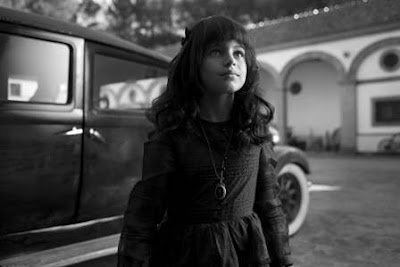
Blancanieves
Foremost, due to the way the festival was erased for me last year it was my great and conscious pleasure to
walk to every screening (and back from most of them). Managing the stairs and seats of the venues I knew I was right not to even attempt it with the cast on my leg last year. I shuddered at the memory of it a few times while nearly tumbling down the stairs of the Forum exit.

The festival club was again a hit with its odd blend of classical splendour and Dr Seuss. I love its cathedral quiet and cloistered protection from the second remarkably frigid winter in a row. A dark and cinematic setting for some searching and bickering o'er a coffee or cider about what we'd just seen.

THE GOOD

Films
Catching up on almost all of last year's choices showed how good I'm getting at picking for my own peculiar pleasures. This year was pretty much the same. I missed one through illness but made it to everything else including the sessions I added to the minipass thirteen.

Best of the fest has to be Blancanieves for outright enjoyability. It didn't so much outdo The Artist as a contemporary silent film as it progressed from it. By dispensing with the gimmick of the silent form itself it blasted its way through the light and galloped to its shivery poignant ending with the joy of its own existence. I would've shown it at Shadows. One thing it did so that I didn't expect was to make surprising use of the 4X3 near square we all dismiss as limiting. The aerial shots of Seville's bull ring were breathtaking, filling the narrow frame the way they physically couldn't in scope. But the next big silent film needs to move beyond the period settings and embrace the changes while still using the limitation. That would be a new branch of cinema and I would be in the queue for it.

Others in the toppermost are: Upstream Color for its stubborn strong-arm pioneering beyond the bounds of the sci-fi genre; A Hijacking for its toughness and insistence on the value of committed performance; The Sunnyboy for bringing a lost boy back to us; Act of Killing for making its bizarre premise work and taking us into filthy corners we need to see and doing that through the momentum of the perpetrator's testimony and imagination; and Jin for the courage of its convictions and the boldness of its final tableau.

Of a lesser wow but with their own real power were: Blackbird for its restrained topicality and strong central performances; The East which I've put here for being noticeably lighter than the two previous Marling outings (I miss their audacity and sombreness, here it's mostly the latter) but would like to see the team's continued infiltration into the mainstream; Manuscripts Don't Burn for the fact of its existence against genuine prohibition and still managing to be good cinema; The Daughter for its toughness and ease with allegory; A Touch of Sin for the same reasons as the previous and for its gratuitous beauty (yup, I just typed that); and Good Vibrations for reminding me how much fun my own experience of punk was.

But Gebo and the Shadow, while appreciable as an exercise in adapting from the stage, was not for me. Aim High in Creation subverted itself by trying too much and producing too little, obscuring its own intentions: I wanted that one to blow me away. Expectations too high? Probably.

Outside of these as it was a revival screening I'm going to hold A Quiet Place in the Country aloft for its brashness, anger and the seriousness of its purpose. This is how feature films could be both cultural commentary and decent genre films.

I used to think myself successful at MIFF if I got four great ones out of the thirteen. I tend to choose by personnel and scenario once I've satisfied my requirement of a few screenings at my beloved Forum. The rest I'll let a few keywords guide me or perhaps a region from which I've seen too little. With that kind of decision making I'm easy on the judgement if I draw more than half poor to middling. The last few, though, have shown me choosing better. This is partly due to the vitality that the Michelle Carey led efforts of the last three years have resulted in a spicier banquet table but also partly due to my being able to spot things I like and others I might be challenged by. So, in two ways it's getting better.

If I lament the lack of anticipated movies in the line up I think it says more about what's out there than the organisers' choices.

App
My first experience of the Android app was mighty. Great instant info on session availability The two festivals I'd gone to previously were in the transition between the plastic card system and the apps so they were all about printing out paper tickets which annoyed me. The best way to do that was to print out as may sessions on as few sheets of paper as possible and keep them nice until they were scanned. It was horrible.

The cards were faultless but the last two festivals that used them didn't get them to their owners in good stress-relieving time and there were vaguely identified administrative problems that caused not only this but some misaddressing. I had to go and queue for my replacement for my last one, the very thing they were intended to eradicate. But the app puts the delivery into the hands of the punter and it's available on the day the program is released. A few tech hiccups I can deal with happily. A few app updates and everything worked perfectly well before the festival kicked off.

Turning up with my phone, as I would anyway, with all my tickets and session info and any last minute texting for organisation etc could not be easier. It even looked good and was a breeze to navigate and vote with.

One thing that annoyed me about it, now I think of it was the weird thing that happened every time I tried to rate a movie. It told me I had to log in for that when in every single case I was logged in already. It took logging out and then back in to work. A small gripe but a real one.


THE BAD

Queueing
Ever since I found at the end of an interminable wait in the freezing rain on Russell St that I would have got my favourite seat if I'd just sat in the warm foyer in filed in after everyone else, I've stopped queueing. This has led to a much easier mooded festival. As I said elsewhere, it also drove the last nail in the coffin for the appeal of festival membership for me. I only had to queue once as the person I was seeing the film with had a problem sitting too close. I was happy to oblige, especially as I didn't quite see how close I was to the head of the queue (and then watched in quietly seething vindication as the front three rows filled last).

Tagline
"Only the best films make the cut"? Has it been used for three years now? It hangs off the artwork like a sheep's dag and makes me wonder what a giant plaster figure of a scarfed and beret-ed winterbod would look like in Fed Square just outside of ACMI: the Big Cinephile welcomes you to all the magic of the movies at MIFF 13!

When I played my band's album to my Dad decades ago he approved and said it sounded very professional. I winced because it was the kind of thing you'd say about a covers band. We were meant to be original and fresh. Dad was only trying to be nice and, being of soundly technical mind, chose an industrial reference for his compliment. If anyone my age and of my poste punque stylings (however desperate) had said that to me they might as well have called it mainstream. That's what this tagline reminds me of. You may as well call it a festival of world-class films

Illness
I spent the first week under the cloud of the last wave of this year's epic cold. The fever and fatigue got so powerful that it obliterated the day I would have enjoyed watching Rhino Season. I might have been able to swap the session for the following Sunday but I kept thinking I might feel better as the start time approached. Not so. Also I was visited by something I've been plagued by since childhood, ear ache and ear blockage the latter of which defeated the nurse's best assaults upon it with a warm water syringe. A week of regular attacks on it with a kind of earwax napalm and her second attempt broke through and my personal stereo got its left speaker back. And my balance, that came back too.


THE UGLY

Trailer
I can't remember which year it was but there was once a MIFF trailer that worked as both a joke and celebration. Two people seen through a shop window get hot 'n' heavy on the shop counter. The guy tries to close the metal security screens but can only get them so far and we end up with what looks like a scope ratio image of a love scene. Funny, but when the joke wore out it was still sharp and clever, inviting, enticing.

Subsequent trailers have mostly been embarrassing jokes with what a brother of mine used to award a high ph level (ph=pensioner humour), glimpses of high naughtiness that would have proudly made it into sketch shows of those tired comedians from the 70s like Dick Emery and Benny Hill.

When I first saw this year's I thought, wow, they've done it. A clip from a Chinese movie. A woman stabs a man and the motion slows to a crawl as we see him reel back and eventually collapse. How beautiful an image, its campiness saving its violence from confrontation, the fluidity of the motion mesmerising. And then the bogan voice comes in with the cringingly try hard yobbo-party-Monty-Python crap about it being unrealistic. It's down there with the "oh-really" lameness of the Elegant Gentleman's Guide to Knife Fighting. There's an old tv commercial whose punchline is how a lovely photo of a pair of old dears at the beach is annihilated by the sudden appearance of a fat guy in a g-string going past. This trailer reminds me of that (and I don't mean its punchline).

A joke trailer might be good for about three viewings if it's a good joke. If it's a painfully bad one like this it doesn't even get through the first viewing and if you have to see it at every screening you have to find ways of zoning out. It only goes for about two minutes but, Christ, they're long ones. Everyone I spoke to about it was puzzled by the direction of its marketing. Is the boganism of it dissing MIFF audiences who supposedly would have only a welcoming response to the scene's traditions and its own humour and- That's the other thing! It's like: when someone jokes and a resentful other wants to top it despite a sudden lack of material the resenter will mock the joker, hoping that everyone else will go with the negativity. The ploy works only if the riposte has enough contempt in it to engender timidity or the one doing it stands higher in the pecking order. But when some shithead thinks he's being witty by diverting from the value of this clip he's invoking all the smudgy philistinism of anyone who would ridicule this kind of festival it's too much. Even a stranger who sat next to me at one movie expressed her distaste for it and composed an impromptu hymn of hatred while it was on before the lights lowered and we could once again forget it ... until next time.

Oh, so it's a self-reflexive joke. No, it bloody isn't. Not once did even a third of the audience greet this crap with laughter. At every session the only laughter I heard that could conceivably have been in response to this embarrassment was a few lonely titters falling dead from somewhere in the back seats where sit the blind and the timid of heart.

Oh, come on, it's just a joke, isn't it? If it's a joke why isn't it funny? Why do I only know it's meant to be funny?

How about in the future we just celebrate what the festival is about. If the Carey Administration can do such a good job at freshening what was becoming a welcome but weary event, can't they ditch the jokes of a bad date and seduce us a little with style and charm?

Audiences
Why is it that cretins think they are the smartest people in the room? The Melbourne Horror Society reported on Facebook that there had been a lot of laughter at the screening of Deep Red, the Dario Argento classic thriller. I wasn't there for that but I'm glad I wasn't. I've been at those occasions before where sections of the audience want to show how far above the movie they are. It happened to a small degree at the screening of A Quiet Place in the Country. And then there's that over-protested incredulity, the laugh that sounds like "or whore whore whore whore whore!" and seems to contain everything but actual mirth. Hey, none of the acting on screen that you are trying to ridicule is as wooden as yours! Folks, relax and engage, just relax and engage. There will be laughs along the way both intentional and unintentional but these things you're guffawing at are NEVER that funny. EVER!

Other than that the audiences at my screenings were by and large there for the movie. They got into what they saw. Pleasantly, there feels like a lowering of tolerance of loungeroomism (talking, phoning, tweeting etc). One strong sharp voice at Upstream Color stopped some git from phoning and at the same screening a woman made her way from the back to the front to demand that some goof there shut his screen off. As for commentators who think their clunkingly obvious observations on what is going on onscreen: where the fuck do you think you are? SHUT UP! People have paid for the film's soundmix, not your smugness.

To the bizarre people who place their coccyxes on the very edge of their seats so that their legs jam against the seats in front of them are headed for well-deserved back pain. They will, if goofy-minded enough, elect chiropractic over physiotherapy which means that instead of a month of treatment it will be years of near-effective improvements during which time they will be so heavily indoctrinated with anti-vaxxer and anti-flouride bullshit that they will emerge toothless vectors of whooping cough and measles. Or ... they could try lodging their buttocks in the corner created by the seat cushion and the back (or sitting up straight which is how the seats are designed). It's more comfortable. You can sit more calmly for longer without fidgeting.


EPILOGUE

This is the crowning event of my favourite season in this city. I love the contrast of darkened cinema and bright cold sunshine outside on a morning session or the great steely grey of a big Melbourne rain greeting my rugged up self after a movie with a tropical setting. Chowing down to chips and beer for a mid afternoon postmortem in the big dark cave of the lower floor of the Forum. I love strolling along Flinders St still in the haze of the film I've been living in for the past ninety minutes, picking something that goes well with coffee from a shop and walking, yes, brilliant one foot in front of the other motion that failed me last year. This is a holiday to other corners of the cosmos of imagination, their colours and conceits, all packaged in the constantly relieving chill of winter. My summers are languid and more social. I take longer off for them. But this capsule of transcendence is the one I think of with a thrill.

Upstream Color

Saturday, August 10, 2013

MIFF Session 16: GOOD VIBRATIONS: Place of Pride

When music guru John Peel does the unprecedented and plays The Undertones' Teenage Kicks twice in a row on his canonical radio show the protagonist of this film, Terri Hooley dances ecstatically in his dowdy Belfast home with his wife. A banging at the front door reveals the band and a small crowd of people associated with his record shop. He runs out into the street as they dance to the song and in a blinding spotlight raises his arms in imitation of Christ, giving himself up to bliss. But the light is that of a British Army chopper observing the revelry in case it's more sectarian violence.

This tale of a punk scene's birth and nurture along with the starry eyed and accidental promoter Terri is a thoroughly enjoyable ride through disappointment and triumph. In this case there is a pleasingly Irish oh-so-what to a lot of it which sets it apart from a great many other fictionalised music histories.

This genre suffers from a common malady in the dramatisation of key moments or achievements by the heroes of its tales. When John Lennon says "I'm talking about a hard day's night" in a Hamburg bar years before he should it's one of the few cringes that mar the otherwise wonderful Backbeat. The scene of Ray Manzarek coming up with the hooky intro to Light My Fire in The Doors is the same kind of thing. One of the worst is from a tv movie about he Beach Boys. They're taking a break from recording and ogle as a babe in a Thunderbird drives by. "She's having fun," says one. "Yeah," says another, "until her daddy takes her t-bird away." Someone else snaps his fingers. Ladies and gentlemen we have a classic!

This doesn't really happen in Good Vibrations but the moment Terri hears the freshly recorded Teenage Kicks in the studio cans and approaches the control room glass with a beatific stare it is at least funny but it does dilute the kingmaker John Peel's famous later response for the sake of a cinematic moment. When Fergal Sharkey names himself in full it feels like it's for our benefit rather than Terri's. Surely he would have just used his first name at that point.

But these are quibbles. What I really like about this film apart from his sheer amiability is its sense of place. There are reminders of the war zone nature of Northern Island during the troubles so frequent (most of them footage from the time, often jarringly on blown-up analogue video) that they acquire a kind of rhythm. It's no spoiler to repeat Hooley's own words about punk in Belfast: "New York had the haircuts. London had the treasures. We had the reason."

That strikes home for me. When the Saints' video was partially shown on Countdown in 1976 I was caught by it. When the full clip was played on Flashez I wanted it to go on for hours and, for a few minutes, time really did seem to stop. There was no comparing it with anything I knew. No one was calling it punk. I forced it up against the Rolling Stones of Get Off Of My Cloud or Have You Seen You Mother Baby (rather than Brown Sugar). And they were from Brisbane, not the more sophisticated centres of Sydney or Melbourne but dowdy old Brisbane. When the term punk rose in the parlance and I heard The Damned, The Ramones and, most cataclysmically, The Sex Pistols towards the end of that year the game had changed and I had chosen my team. Increasingly, the sense that Brisbane's punk scene arose from a need in opposition to the repressive Bjelke Petersen regime. They had the reason there, too (of course, less dramatically, but still, that was the feeling).

If there comes a time to tell the tale of the Brisbane scene the way London's was abstractly attempted in Jubilee, Melbourne's in Dogs in Space or Belfast's in this I know it won't avoid the pitfalls of the subgenre of music related films but if it smoothed them out as effectively and enjoyably as Good Vibrations does we'll be in fine hands.

MIFF Session 15: THE SUNNYBOY: Concentration

Early in first year Uni 4ZZZ plastered the Sunnyboys' EP so much that it didn't just create fans but emptied the few local shops that carried it of the record. When they came to play the refectory it was the first of many gigs I saw them play in Brisbane. They had a small musical vocabulary at first but presented it so solidly and tightly that they were irresistible. With the kind of poste punque reverie I was in I shouldn't really have liked them and their revivalist guitar band style and 60s look (not that far away from the band I formed myself, I should point out here) but they were so infectious and there was an intriguing unease in what I caught of their lyrics that belied the bright beaty rock of the delivery. This carried through to the first album. Something was going on there that gave us more than catchy pop.

After Uni my gig going career trailed off. As a creaky twenty-one year old I pretty much stopped going to gigs and put my head down to write the great unfinishable Australian novel. I no longer had a working band. Going to other people's gigs felt like a self-punishment (yep, that's the humbling modesty of youth). So I lost touch with Sunnyboys apart from being hooked by their video for Love in a Box, a terrific plaintive song with a beautiful chiming Stratocaster riff, none of the old limited musical vocabulary, and sombre floating vocals. An interview with the band I came across in RAM revealed it was about dependence on various things like drugs or anything that could be packaged as a cure all. Noting this lovely bit of work I set them down again and moved to Melbourne. Many years later a girlfriend put a compilation album of theirs on and I heard Love in a Box again but much bigger and fuller through a decent system. It padded my hangover life codeine and I wondered what had become of them.

Well, here it is. Jeremy Oxley, songwriter, lead guitarist and instantly recognisable vocalist had ridden the fame wave in the early '80s until the business with its solid claws found his secret weakness and throttled it until he collapsed in a heap of schizophrenia, became erratic, imploded as a working musician and descended into a fog of uncontrol. Well, that's the story I heard.

It's pretty much the one that happened as well but there's a lot more to tell. In the Q&A after the screening, director Kaye Harrison revealed that her first point of entry into the project was the issue of mental illness, finding her human subject later. What we see in the film, to use the language of the Occupy movements, is a one-percenter schizophrenic. I don't mean he's rich but that, after his travails, he is cared for by family and in a relationship that while it can be visibly tested seems stable and healthy. He is not among the great grey statistics of socially paralysed shut-ins, tram stop ranters or heavily medicated still-lifes of the stereotype.

Nevertheless,  frequently bizarre, diabetically obese, he is immersed in his condition and needs the care he receives. What's left is the rest, the lost years and changing relations with family and others, particularly his brother Peter Oxley who in the family history traditionally followed his younger brother's example from boyhood onwards. Their history is an uneasy one a kind symbiosis of competition and support interrupted frequently by abandonment. A truly cinematic moment occurs when Peter, angered by getting a journalist out to speak to a resistant Jeremy kicks a deflated soccer ball around the backyard and curses himself for his lack of foresight, only his foot and the ball are in shot.

After a spry but solid introduction detailing the brothers' upbringing on the northern NSW coast and formation of the bands that would lead to Sunnyboys we land on the problem of Jeremy's schizophrenia, the thing that won't go away. Perhaps it's because he got there from fame, and I was already interested in his story that I didn't feel the screentime dragging. The repetitive exchanges between Jeremy and his wife to be almost always end in stalemate or exasperation. He plays to the camera with a glint in his eye. Yes, he's crazy as a loon but there is yet enough of what he always was to shine through and keep us hoping for deliverance, the way we might well have hoped for Syd Barrett or Rocky Erikson. When he sings his old songs it's in the voice of someone uncomfortable with the memory of them, mocking them on a kind of first strike principle.

When, after a lot of time and trouble he joins his old band on stage for a test gig under a false name the introduction to Happy Man stutters to life and the big D minor chord sounds to herald the first line, he delivers it perfectly, concentrated, meaning every syllable. He loosens up visibly and the song roars on. I welled up.

The journey here might seem a little gentle but as it progresses there is an inescapable sense that some agonising care has been taken over years to make it look that way. If this is counterproductive to offering a holistic portrayal of Oxley's condition it might also serve to calm fears of the nature of the disorder (that it is not always unmanagable) and to assuage the vats of scuttlebutt which had him tearing up the rubber room. He's doing ok.

But one moment haunts me still. He is speaking about a phase of his condition which left him confused and angry and he describes it with a phrase which was the title of another band's album and line of one of its songs, a band rising at the same time as Sunnyboys to a more sustained success: "it felt," he says, staring off," like a blurred ... crusade. It was a blurred crusade."

Friday, August 9, 2013

MIFF Session 14: A HIJACKING: Transparency

Art Spieglman's drawing is astounding in its detail and expression, managing to be highly emotional and realistic even when it's of something fanciful. When he came to tell the story of his recent ancestry's suffering during the Holocaust he pared his style back to bare essentials as though he inked it with a blunt stick. He was already using allegory casting the Jewish characters as mice, the Poles as pigs and the Germans as cats. He knew that any further visible artistry would only cloud what was a story best served by putting as little as possible between the reader and the page.

Along those lines Tobias Lindholm keeps the two settings of his story of contemporary piracy strictly verite. The cast is sizeable but placed perspectively around one hostage, the pirates' representative and the CEO of the shipping company on the other end of the phone in Denmark. It's shot on digital and never feels less than documentary real.

The Rozen, a ship bound for Mumbai, is hijacked in the Indian Ocean by African pirates. They demand fifteen million dollars in ransom from the parent company in Copenhagen. The latter bring in a British advisor to oversee negotiations. He recommends they outsource a negotiator but the CEO whom we've already seen is a steely-eyed winner of deals insists on doing this himself. Back on the Rozen the cook provides the voice of the crew (the captain is ill) and the plainly dressed Omar goes between the pirates and the company. Everyone is set in for what might be months of negotiation.

Dig? This is not a Hollywood SWAT team actioner but a slow burning one hour forty five of tension. It is not about the crime but the negotiation. What will fly what won't? What will they do and what won't they? Time, as the advisor chillingly opines, is a Western thing; all the pirates know is that it is valued by their targets. The rest is the great sweating hell of unknowing.

So, it's barebones and uncluttered, haven't we seen it before? I don't know if we have done half as well as this, without pyrotechnics or loud action sequences, left almost entirely to the power of language and risk through information gaps. At one point when Peter the CEO has possibly forced a disastrous event we stay with him as he stares into something that no longer looks like the office to him but some fiery punitive hell. We do this because everything that a higher calorie film would put there like a bursting orchestral score and quick snip monatge are dispensed with. There's nothing between us and Peter. We project a great deal on to him because we must. The camera will not look away and we have to do something ourselves. Even if this approach to drama is not new here it is devastatingly effective. This might have just been some very fine tv but it is nothing less than cinema.

The final moments are quiet but weigh us down like anchors. I have seldom known such a voiceless crowd as the one I was in as we filed out of the screening, down the Forum stairs and out to the frozen wet grey of the evening, still waiting for the credits to roll.