Sunday, August 27, 2023

THE LAST DETAIL @ 50


Road movies are about self-discovery. The dialogue is doing the driving and it goes from personal shards to conciliation and order. So, if you want to do one that doesn't just play the formula you need an angle. In 1973, the USA was exhausted by the war in Vietnam. Sending the military on the road for the inevitable conflict and resolution would have felt like facing it. Buddusky (Badass) and Mulhall (Mule) are two navy time servers, dozing at the barracks, waiting for orders. They are picked to escort a seaman to a military prison for an offence that comes across as adolescent impulse but gets an eight year sentence. Well, it's a ride and it gets them out of stasis. The boy, Meadows, is an unpredictable mess, attempting unconsidered escape now or curling back into his shell then. Said it was gonna be a ride.

As the trio set off they are couched in the music of order, Sousa marches and massed drums, sometimes loud enough to swamp the dialogue. As Meadows' chaos agent activates all that loosens up and, while the older men give advice and organise some rites of passage for the boy and he, in turn, inspires them with the anarchy of his youth. The big bad world looms up to meet them in the final act but everyone meets it with a little extra sass.

Hal Ashby is one of those directors with a good sized rap sheet of influential classics but very little to point to by way of trademarks. Like John Huston or Stephen Soderberg, it's only clear that a movie was directed by him after you've seen it. There is so very little of the great whimsy of Harold and Maude here. The shooting style is verite and grainy and might remind you of Bob Rafelson. Daylight looks natural but low light settings like the hotel room look as dingy as they would if you were in them. This is a world where the impulses are pushed back by the physical and cultural winter of a nation in paralysis. When Meadows conveys his crucial message using the semaphore he barely knew before it is against the stark white background of a snowed under park and even the low cloud cover seems to resist this moment of defiance and liberty. Oh really, was that a Hal Ashby movie? Makes sense.

Jack Nicholson was already cast as Badass (it was he who sent the screenplay to Ashby). He had already emerged with his career persona flying in Rafelson's Five Easy Pieces. Ashby exercises less constraint on Nicholson, allowing him more flashpoints and, while not as unfettered as Foreman had him in Cuckoo's Nest, he comes across as more volatile than his tired character probably would. But, hey, it's Jack, still young and pushing buttons which is why we still pay to see him.

Less obvious casting is the young Randy Quaid as Meadows. His gangling two metre masculinity might seem the opposite of what's needed (Bud Cort tried for the role) but he wears it as though he's ashamed of it, unaware of the power it gives him. Similarly, Otis Young as Mule betrays his buff appearance by showing the strain of a life at the arm's length of racism. His character plays confidence rather than expresses it, and he is all too aware of the hostility that surrounds him in spite of the uniform. At least in the navy he has to follow the orders.

Ashby avoids the cuteness that at times threatens to lead other outings like Harold and Maude and Being There close to collapse. Instead, the absurdity of the situation, a human getting his youth ripped out by the root for what might have served as an educating moment in his life. That he might be headed to brutalisation before he has had opportunity at life is a thought constantly mounting throughout and the conclusion refuses to alleviate it. And that's the big bad world of verite and military life, offered to an audience sick of seeing it on tv at dinner time. Yes, they're in the navy where they have to salute the most incompetent officers but they've just had a refresher course in the field of how to keep in touch with everything they've retained that is still themselves. And that's a Hal Asbhy movie.

Monday, August 21, 2023

MIFF 2023 ROUNDUP


Physical Condition

Not a good start.

I have developed arthritis in my right knee and have a meniscal tear in the same place. This will be getting surgery soon. In the meantime I had to judge whether to walk into town (from close by) or take a tram which changed my leaving time. None of the venues takes long when I'm walking freely but with a cane and the variation in pain levels I had to do some quick rethinking for most sessions. Also, while I happily exchanged standby sessions for ones with fewer folk, I couldn't face adding sessions outside of MIFF Play. I also avoided multiple screenings on single days. Getting to a single one was already turning into planning. Going to a second in the same day was out of the question.

This aside, I was determined to enjoy everything I could about MIFF which is also my midyear holiday. Enjoy it, I did with some brilliant cinema experiences, good movies in lovely venues. A few things that have changed in the past few years annoy me. Even if they are the result of unavoidable cutbacks or contracts etc. they annoy me. I'll get to all of them below. Otherwise, one of the most fun fests for awhile. 

The Program

One of the first things I noticed was how slim the horror section, Night Shift, has become. On the other hand the selection seemed a lot less shoehorned into the genre. Titles like Tiger Stripes and Suspiria didn't get into it, along with other adjacent films. Sorcery might easily have been classified as horror in an earlier festival. Eight titles. That's less than half of the average Night Shift of previous years.

This is the first section I look in as it's my kid of genre. So, looking beyond the sparser numbers to the quality, it pleased me well enough.

Aside from this, there was a good range of Australian features I actually wanted to see, some that looked enticingly beyond classification, and a number of film makers who I'll always try out. I didn't get to everything but the ones I did made for a solid experience.

Passes

For almost two decades, I would buy a mini-pass. This got me a plain ten sessions any time I wanted outside of the opening and closing. If I could find three more on weekdays before 6 p.m. I could add those. This changed my behaviour from any year previous. I would take at least one week off work and pepper it with daytime sessions and leave the evening only ones for the second week. This got me discovering the joys of morning sessions. They were never sold out and happened in venues I loved like The Forum or The Regent. When my leave for this extended first to a full fortnight and then a week after to decompress the MIFF holiday became better than any travel jaunt I'd been on.

From last year this changed to the share-pass which was pretty good. You could add other people to the same session, let them go by themselves and you got twelve sessions right off the bat without the time of day and day of week limitations of the mini-pass. So, I lose one but gain more freedom to chose. Also, as I could choose from most of the fare on any day, I managed to avoid the logistical awkwardness of multiple screenings on the same day. A positive upgrade.

MIFF Play

I like how this has carried over from 2020 but wish it could be run concurrently with the cinema program from the start. Also, the selection from the main program on Play this year is significantly smaller than on the previous three years. Nevertheless, that is how I was able to see the impressive Stone Turtle.

One gripe. Play needs either a computer to watch it on which is not ideal or a Chromecast. My home tv has a built in Chromecast so the operation is smooth but not every tv features this. Also, if you want to get subtitles from one of these films (a very high likelihood at MIFF) you have to wait until the feature is playing before opening settings, finding the subtitles option and setting it there. There is no auto setting on the app. Until you find this out (it isn't part of any instruction on the app or the website) you might think you've just wasted your money on a movie you can't watch properly.


MOVIES


High

Late Night with the Devil - maintains a delicate balance between satirical comedy and moments of credible horror. 

Squaring the Circle (the Story of Hipgnosis) - interesting story and satisfying guided tour through the work of the monarchs of image creation for a decade, supported by interviews with the artists that benefitted and, poignantly with Peter Saville as the receiver of the baton as the culture changed. Astute.

birth/rebirth - pungent sci-horror scenario reminds us of both Cronenbergs while finding its own clear voice. The opposite of the kind of mainstream colour by numbers of It Lives Inside (see below)

Sorcery - sombre allegory of colonisation and culture clash from Chile sticks to its guns, impressing with heavy restraint on the flash. 

Walk Up - new Hong Sang-soo. No notes.

Mid

Stone Turtle - like Groundhog Day with murder instead of jokes, this repeated sequence of action and revenge veers toward folk horror but also keeps its eye on the gravity of the crimes it depicts. Probably unclassifiable but that's a good thing.

Cobweb - consistently amusing satire on film making and culture under South Korea's dictatorship era. Wanted more funny.

The Five Days - Dario Argento's political satire tried for strength but threw that away every time it fell into goofy slapstick routines that set the standard back to zero.

You Can Call Me Bill - iconic star of iconic series delivers homilies as his mortality approaches. Saved from abject self-indulence by Shatner's own frequent self-awareness but also by a wealth of humbling archive material and some deft image mixing. But I cam away with less than I'd expected. 

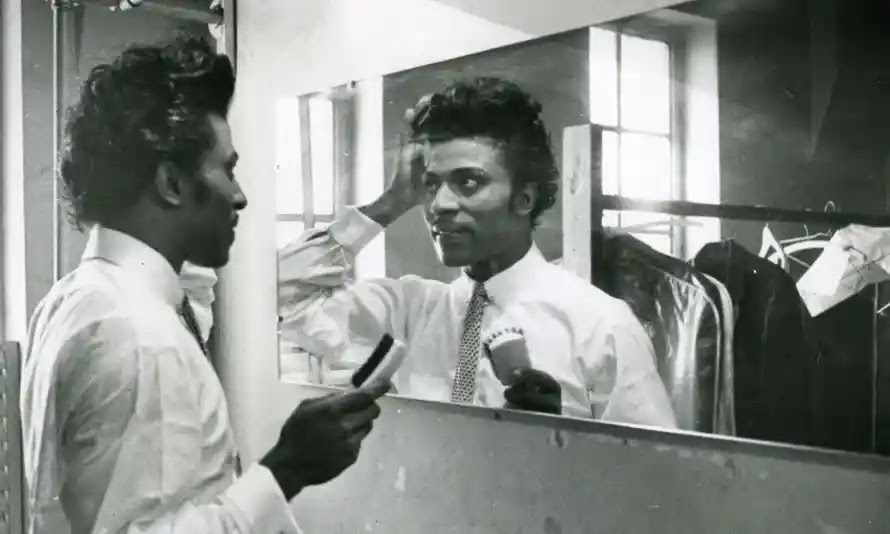
Little Richard: I am Everything - a good comprehensive look at a source point of rock music that for the first time to this depth, explored the star's gayness and how that added another layer inconvenient to previous histories of this complex figure. Just wish it had been given a stronger audio mastering.

Autobiography - intense tale of interpersonal colonisation set against corruption and the entitlement of ex-military leaders. I felt I wanted more from it, though, really, it was all but completely effective. Borderline.

Low

It Lives Inside - big budget horror has returned to the lameness it had in the late '90s before Blair Witch disrupted it. It plays too nicely, fails to scare and defies recollection weeks after a viewing. There was a potentially powerful story there about cultural assimilation and monsters emerging from it but it went the easy route and flattened out.

Missed

Monolith, Godless: The Eastfield Exorcism, You'll Never Find Me, Bird Eater, Sleep, Perpetrator, Tiger Stripes, Mutiny in Heaven: The Birthday Party, The Maiden, Bad Behaviour, and Hello Dankness. Some of these already have cinema release dates. Others will be lost to time.

Website

My first problem was that I couldn't log in to my MIFF account as the password was rejected. I tried a reset and followed the link in the email but it wouldn't accept the new one either. I emailed the info address and even posted about it on the MIFF Facebook page. The next day I had a hunch and did the reset boogie once again, this time reading the whole email and using the temporary password they'd supplied. I reset that and it worked. Um... Then I got a very helpful email telling me they'd reset it again. I took that as a karmic penance and did as they said.

There are always teething problems with the MIFF website as it always seems to go live prematurely. This year had the bizarre effect of links from my wishlist leading to a page with the message Film Not Found. I could click it up from the program itself. It made me think it was mistakenly listed.

If you searched by day (handy when you want to spread everything evenly throughout the fortnight) you had to wade through screen after screen of multimedia events and installations before you got to the movies. This is due to the earlier start times but it was very difficult to filter out of the results when on a curious browse. If you filtered around them by excluding AMCI as a venue the program was blank. The mornings had been all but wiped out. That had been a major drawcard of earlier festivals for me. Gone now.


App

The app didn't automatically update the way it had but I get impatient with these things and just downloaded it from the Google Store as soon as I could. The good news is that it was completely issue free. The old speed scrolling through tickets and wishlists wasn't an issue. Updates to the bookings from exchanges took a simple refresh. Navigation gave the edge to the app over the website which shouldn't be the case but there you go. Getting a pass or expecting to buy more than say three tickets? Get the app (for Apple and Android).


Snax

Everyone's choc tops were fine 'n' dandy with the Kino winning out as they have their own prepared ones. This year was supposedly the debut of the vaunted Gelato Bar but none of the venues I went to had them. Then, finally, they were on sale at ACMI. By the time I crunched into it it had melted to an unimpressive slop. The Forum's bar was swamped by latecomers who all seem to need a barista quality coffee before they can deign to sit in the auditorium. If I saw them swarming around there as the screening time started I proved how much more noble I was by sacrificing my choctop and striding right in. 

Look, staffing can be difficult at the best of times but there seemed to be no planning for higher demand times like evening screenings.

Vollies

MIFF depends on its volunteer staff and they have been pretty exemplary. Gone are the days of cranky8 rudeness from the mid-2000s and before when they were clearly roped into bad employment deals. When the crowd control gets to feel more of a goal than it should it leads back to management. It feels like someone went to a few crowd control seminars and hardened the line on the kind of smiling push that was happening at the exits. Fine, manage the flow but don't let it feel like replacing one load of cattle with the next.

Venues


The Forum

The Forum is both a comfort and a frustration. There were far fewer screenings there this year with no indication as to why. It's my favourite venue of the whole festival and now it's harder to see films there. The downstairs area, a beautiful huge and mystique heavy room of dim lights and whispered conversations, timelessly dark at any hour, has long been lost to some kind of corporate interest. The replacement was initially a bar no one had heard of in Swanston St and then moved for the past two years to a tatty corner of ACMI as red as the Campari they want you to buy. It's tiny and looks like 3 a.m. at a club at the wrong end of the '80s. When I went to after film drinks with friends we found other places. 

Capitol and Kino

I didn't end up going to the Capitol once. Nor the Kino. Just didn't pick anything on at the first and think of the Kino as my marginal mainstream go-to outside of the festival. 

ACMI

The refurbished ACMI was fine and dependable as a screening venue but as I was driving a walking stick I wanted to avoid stairs where I could. There were several occasions when I went ot he centre's last screening and the complicated system of lifts meant that I couldn't just get up in a lift and come back down the same way. Three times I had to negotiate steps. The situation with the front doors was similar. Getting through a revolving door with a cane can be nerve wracking so I chose the wheelchair designed auto doors beside that and got dirty looks from staff who either didn't see or care that I was walking with assistance. At one late nighter I asked the guy at the door about it and he said I wouldn't be able to avoid stairs and would have to go around Fed Square. He did suggest helping me if I could wait five minutes. I thanked him and declined. Well meant but really there was nothing he could have done to alleviate the issue. At my last screening the volunteers were getting very antsy about the audience leaving only through the lower exits. I asked one about the stairs beyond the exit door and was told, politely enough, that there were more stairs out that way then there were going up. That's like telling a vegetarian that the meal doesn't have much meat in it. ACMI, work on your access.

Hoyts

This is one of the best appointed cinema chain venues in the city and I never have a problem getting a good, comfortable seat. It used to feel like a cheat going to a big time mainstream place for the Festival but I'll choose it over my favourite antique cinemas if the session is selling fast. It's just a no  catch option.

The Comedy Theatre

I did get close to the front for Cobweb at the Comedy but one of my legs decided to cause me pain and I had to keep adjusting my sitting position to alleviate it. This was not the fault of the venue but its chairs and their uncomfortable vintage were not helping. The film I saw there, Cobweb, is about two and a half hours long.


So...

The first thing I can say is that I'm grateful to have gone to it at all, considering how bad my injury could get. The last time I missed out on a MIFF was eleven years ago when I was on crutches. I now know I made the right decision about that, considering how ill-prepared the venues were for anything less serious than wheelchairs (though I really didn't see a lot of them).  But I did it. I managed to see a lot of good movies that I might not have any other access to outside of the festival context and I'm richer for that.

It worries me that the event is shrinking, though, in venue availability and the fare itself. I found more titles than I was able to see but it's starting to feel like a set and forget event. There seems very little in the way of adventure or celebration of cinema (outside of the watch ad at a lot of the screenings). Poignantly, the inclusion of a 4k screening of Bela Tarr's Werckmeister Harmonies emphasises this. When it was programmed in 2001 there was a playful mystique to the presentation of it, a sense of a once in a lifetime event. We were being invited to witness a moment in cinema but the promo was kept simple. It seemed to have been prepared by someone who had been wowed by the film. There was nothing like that this year and there hasn't been.  

The reduction of the Forum's availability takes a lot out of the holiday for me. I like to begin and end there, just as a personal tradition. But the eleven a.m. slots have gone and it's become a slightly less attractive venue. I have no idea what was done to stop it being the festival hub but that happened and now that's been reduced to something more like a disco waiting room. But there are still good things to see and Play is a welcome addition as a continued feature. And it's still my winter holiday, cane or no, and that's still something to look forward to.


Sunday, August 20, 2023

MIFF Play ACCELEATOR SHORTS 1


Short films are a good vehicle for ideas. They can be active and sparky like good jokes or take the brief screen time to create densely structured impressions. While I find short film showcases render each title part of a seemingly interminable grind, one before a feature can be a welcome appetiser. This time, I chose to watch a thread of the Accelerator Shorts on Play so I could ration them out and given them more individual attention.

Marungka Tjalatjunu (Dipped in Black)

A young first nations man is thrown out of an urban night club by a racist bouncer and makes a journey back to his familial country to recharge. On the way he remembers his life when he was just a kid without labels or bigotry. Narrated in language from a great sadness to an outpouring of personal triumph, this Silver Bear winner earns its screen time.


Hafekasi

Verite slice of childhood as mixed ethnic girl learns both racism and reconciliation. Sweetly done.


Cold Water

Suburban aging couple with possible dementia issues starts out too cute but finds its poignancy in a twist. Performances are better than the writing but the penultimate scene makes up for that.


We Used to Own Houses

A well to do man is forced to read out a poetic statement about the need to value what we have and see. Carefully crafted, the situation is gradually revealed as we shift between images of homelessness and those who benefit from the housing crisis. Very good to see Tony Phelan back on screen.


Gate Crash

Young adults variously connect and fail to as an treated resentment rises to the surface. Visually lush with a strong audio mix but felt like it wanted to be a coming of age feature.


The Job

A woman trams it to a job which turns into a traumatic episode. Effective electronic score supports the abstract approach to the action. Use of lockdown images genuinely eerie. (Disclosure: I am acquainted with the writer/director of this film).


MIFF Session 12: WALK UP

When people in Hong Sang-soo movies say they want a little drink it will be only minutes of screen time until they are plastered. That happens in almost every scene of Walk Up and, while it might bring Hong close to self-parody his long crafted voice comes through and we find we are yet again in for a feast of nuance and thinly-veiled pain.

All Hong films are about connection. Film director Byungsoo takes his daughter who is interested in interior design to an old friend of his who works as a designer. Ms. Kim also owns the apartment block she lives in and suggests that Byungsoo consider moving in to a flat soon to be vacant. Byungsoo's daughter, left temporarily alone with Ms. Kim (both blotto) professes loyalty and hard work if Kim will give her a career start. Later, Byungsoo takes up the offer of the flat and gets involved with Jeongsu whose restaurant and cooking school are in toubled times. And so wider until we see this small cast of characters begin to question their connections as they variously feel hampered by them or even begin to get used to them.

While this is a spoilable film it is difficult to encapsulate its plot as most of what happens on screen is composed of tiny power shifts and behavioural motions. A good example of this is Jeongsu professing that she loves all of Byungsoo's films, Ms Kim, feeling some social jealousy, goading her with questions about details, trying to get her to embarrass herself (as it's obvious that she probably hasn't seen a frame of any one of them). This doesn't lead to the intended humiliation as Jeongsu and Byungsoo are well on the way to mutual attraction. Later, when he is dozing he overhears another couple making life plans and mumbles a sleepy soliloquy about wanting to be alone.

I don't know if I'm selling this well, but I might not need to. Hong produces about a movie per year. They've been appearing at MIFF for the past decade or more and his name has become a festival favourite. He just doesn't get local releases. If you don't subscribe to Mubi or go looking for physical releases, you aren't likely to come across his work. His films have none of the profile of his fellow Koreans Park Chan-wook or Bong Joon-ho but there would definitely be a market for him, however niche. If we want to try dodging the MCU epics or tentpole 'travaganze with some finely detailed miniatures this is the director for you. They aren't over long and, while exploring complexity, present very fresh and plain speaking. They just don't get screened locally. 

MIFF Session 11: STONE TURTLE

Zahara, witnesses her sister's murder at her parents' hands and escapes with her niece, Nika, to the city where she tries to enrol the girl in school. She doesn't have the right paperwork, though, and must then take her back to the island where she lives. It's sparsely populated. The residents eke out a meagre living through fishing and selling rare turtle eggs on the black market. Samad, a scientist turns up one day, looking for just such a turtle. He pays her to guide him around the island. At one point he stops dead at the sight of his brother in the jungle, he is horrified. He suspects Zahara. Their confrontation ends in murder.

I've been this plotty in respect of this film's structure. This basic scenario repeats but details of it change. Zahara is aware of it, at first spooked by the deja vu but soon starts working with it. Threaded throughout is a folk tale about a turtle that violated an instruction and turned to stone. Zahara wrote her own ending which expands on the original and includes a crucial thought on memory. As the revenge narrative repeats and changes Zahara notices the effects of the actions of everyone involved in it and how the more she learns of the twists that led them to this point the harder each action becomes and the more extreme they need to be.

This plays with a quiet eeriness throughout which does not prepare you for some of the more extreme acts but the suggestion that we are heading for a resolution that might not be happy so much as complete. As it is dependent on repetition it can make a mere ninety-one minutes feel a lot longer, even as things speed up toward the end. Without the comedy of a Groundhog Day and murder being the probable end of every reiteration, this might drag self-destructively. What stops that from happening is the central performance by Asmara Abigail who leads us with a wide eyed artlessness toward a cozening survivalism to the softly desolate conclusion.

Seldom have the paradisical beaches of the Malay Penisula been used to so morbid effect on film. Where they might normally be the setting for mai tais by the waves they are here the scene of hand to mouth living and the threat of eternal death. It's not all bleak. Zahara's reading her extension of the turtle fable takes it to a poignant beauty which fills the screen with illustration style animation that might well get you welling up. A strange reminder of the closeness of eerieness and beauty.

Saturday, August 19, 2023

MIFF Session 10: LITTLE RICHARD - I AM EVERYTHING

The reason for me to watch a documentary like this is to address gaps in my knowledge and to see if there are insights that might surprise me. I don't hold any documentary to those as standards, just chuffed when they appear. What I know of Little Richard is that his music and persona helped push the vessel of rock music in to orbit, that his nursery rhyme lyrics contained such sexuality that the whitebread artists like Pat Boone who covered him would've run screaming from the mic if they'd known. I knew that he renounced rock and roll as a sinful practice when in Australia, casting his mass of finger bling into Sydney Harbour in the early '60s and drove the wilder side of British music making through his tours, influencing the likes of The Beatles, Stones and Bowie. 

What I didn't know was that, when he resumed rock music for those tours of the UK etc. he was doing it through a kind of double think that permitted being a flamboyant rocker and a religiously devoted Christian. I didn't know his all but open gayness waws all but accepted the way Rock Hudson's was and that, when he was finally allowed by his society to express it, he had rolled back into the Christian shell, trying to renounce that, too. Little Richard's case is a complex one, the magnetic shouting voice at the centre of his songs told of these experiences with such a joy that the pain of it remained invisible through most of his time on Earth.

This means that there is a lot to talk about. Archival footage of the artist himself features him turned up to eleven with each clip. If anyone had successfully interviewed him in a quieter, soberer moment it hasn't turned up. But then, he was interviewed because he was dependably on eleven. What we are presented with is a trove of collaborators from his career and well chosen figures from now who present reflections which range from smoke blowing to insightful as the constant barraging clip show flashes on.

What this feels like at heart is an attempt to redress imbalance in the historical record. When Little Richard gets the mic at an awards ceremony and lectures the glitzy crowd with an account of his importance, he isn't just boasting, he knows his story has not been fully told. It might be bravura but it never comes across as narcissistic.

I don't know if we were served a premastered copy or that the assembly of archival and new material proved impossible to normalise (that's an audio term, btw), but while Mick Jagger's or Nile Rodgers'  accounts were pristinely clean, clips from the eighties back were often plagued by dull sound. I'm aware that this could be due to the state of preservation of the material but so much is possible now that wasn't only five years ago. I'll cease this whinge and say instead that the wealth of media on show with this rose above the limitations of the presentation. We get a lot of context for the life of a highly complex man and its exhilarating. 

MIFF Session 9: BIRTH/REBIRTH

When her daughter dies in the care of a neighbour Celie is exasperated trying to search for the body. Pushing hard against red tape and smokescreens, she identifies pathologist Rose as a person of interest. Stalking her home one day, she forces her way in and finds young Lila in bed, breathing with a respirator. Her need for closure is rapidly replaced by a compulsion to bring the child back to active life. She agrees to help Rose.

Laura Moss's debut feature treads Cronenberg territory (both senior and junior) but acquits itself of the charge of theft. There are other body horror directors but the Cronenbergs will blithely enter into the fluorescently cold medical corners of it. Rose is so detached her words and deeds evoke autism. While this is not declared as such (big can of worms right there) it proves effective in distancing her from the ethics of her actions. The more fiery emotional Celie must meet Rose's toughness which brings out her character as the result of a struggle. The only thing missing from this tale of extended parenthood is sex. The closest we get is a hand-job in the gents of a pub but even that is for a clinical purpose. This is not Dead Ringers.

It is less family building, though, than the projection of life that is centre screen here. It's a twist on Frankenstein (there's even a nod to it the dialogue as the phrase "it's alive" is set in conversation) in that the can and should/ nature and artifice questions occur. The two women variously team up and bicker refulgently in service of a goal they never quite define. As they fight or plunge further into administrative and human abuse to get their project working, the revived girl stumbles from or mumbles in her bed, almost insensate. The notion of quality of life which informs so much of the debate on assisted dying is pushed down but this is diegetic, not a fault in the writing. We are witnessing the loss of sight on the target.

Moss takes us to the edge of limits on what we can see without abandoning her film. There is an abattoir's worth of gore on screen and abuse of corpses but it is done through the filter of medical professionalism (however unhippocratic) which creates just enough distance. She understands that intent is a more potent tool than explicit violence and takes on the struggle to keep us empathetic with a pair of characters we would condemn if they were on the news. 

Marin Ireland keeps her voice flat and her face plain but allows enough self-awareness through to render her both pitiable and terrifying. Judy Reyes as Celie brings a strength in crisis desperation. Young A.J. Lister as Lila has to make a lot of her grunts and near vocalisations to keep us at bay here and on the edge of our seats there as she seems to take agency. The pallet is kept laboratory  chilled and the score consists of the kind of electronic choirs that The Knife and Fever Ray made their own.We are drawn increasingly into the forbidding realm of obsession and bodily exploration that might never reach an end. That, more than the gore, gives us the horrors here.