Showing posts with label MIFF 2023. Show all posts

Sunday, August 20, 2023

MIFF Session 12: WALK UP

When people in Hong Sang-soo movies say they want a little drink it will be only minutes of screen time until they are plastered. That happens in almost every scene of Walk Up and, while it might bring Hong close to self-parody his long crafted voice comes through and we find we are yet again in for a feast of nuance and thinly-veiled pain.

All Hong films are about connection. Film director Byungsoo takes his daughter who is interested in interior design to an old friend of his who works as a designer. Ms. Kim also owns the apartment block she lives in and suggests that Byungsoo consider moving in to a flat soon to be vacant. Byungsoo's daughter, left temporarily alone with Ms. Kim (both blotto) professes loyalty and hard work if Kim will give her a career start. Later, Byungsoo takes up the offer of the flat and gets involved with Jeongsu whose restaurant and cooking school are in toubled times. And so wider until we see this small cast of characters begin to question their connections as they variously feel hampered by them or even begin to get used to them.

While this is a spoilable film it is difficult to encapsulate its plot as most of what happens on screen is composed of tiny power shifts and behavioural motions. A good example of this is Jeongsu professing that she loves all of Byungsoo's films, Ms Kim, feeling some social jealousy, goading her with questions about details, trying to get her to embarrass herself (as it's obvious that she probably hasn't seen a frame of any one of them). This doesn't lead to the intended humiliation as Jeongsu and Byungsoo are well on the way to mutual attraction. Later, when he is dozing he overhears another couple making life plans and mumbles a sleepy soliloquy about wanting to be alone.

I don't know if I'm selling this well, but I might not need to. Hong produces about a movie per year. They've been appearing at MIFF for the past decade or more and his name has become a festival favourite. He just doesn't get local releases. If you don't subscribe to Mubi or go looking for physical releases, you aren't likely to come across his work. His films have none of the profile of his fellow Koreans Park Chan-wook or Bong Joon-ho but there would definitely be a market for him, however niche. If we want to try dodging the MCU epics or tentpole 'travaganze with some finely detailed miniatures this is the director for you. They aren't over long and, while exploring complexity, present very fresh and plain speaking. They just don't get screened locally. 

MIFF Session 11: STONE TURTLE

Zahara, witnesses her sister's murder at her parents' hands and escapes with her niece, Nika, to the city where she tries to enrol the girl in school. She doesn't have the right paperwork, though, and must then take her back to the island where she lives. It's sparsely populated. The residents eke out a meagre living through fishing and selling rare turtle eggs on the black market. Samad, a scientist turns up one day, looking for just such a turtle. He pays her to guide him around the island. At one point he stops dead at the sight of his brother in the jungle, he is horrified. He suspects Zahara. Their confrontation ends in murder.

I've been this plotty in respect of this film's structure. This basic scenario repeats but details of it change. Zahara is aware of it, at first spooked by the deja vu but soon starts working with it. Threaded throughout is a folk tale about a turtle that violated an instruction and turned to stone. Zahara wrote her own ending which expands on the original and includes a crucial thought on memory. As the revenge narrative repeats and changes Zahara notices the effects of the actions of everyone involved in it and how the more she learns of the twists that led them to this point the harder each action becomes and the more extreme they need to be.

This plays with a quiet eeriness throughout which does not prepare you for some of the more extreme acts but the suggestion that we are heading for a resolution that might not be happy so much as complete. As it is dependent on repetition it can make a mere ninety-one minutes feel a lot longer, even as things speed up toward the end. Without the comedy of a Groundhog Day and murder being the probable end of every reiteration, this might drag self-destructively. What stops that from happening is the central performance by Asmara Abigail who leads us with a wide eyed artlessness toward a cozening survivalism to the softly desolate conclusion.

Seldom have the paradisical beaches of the Malay Penisula been used to so morbid effect on film. Where they might normally be the setting for mai tais by the waves they are here the scene of hand to mouth living and the threat of eternal death. It's not all bleak. Zahara's reading her extension of the turtle fable takes it to a poignant beauty which fills the screen with illustration style animation that might well get you welling up. A strange reminder of the closeness of eerieness and beauty.

Saturday, August 19, 2023

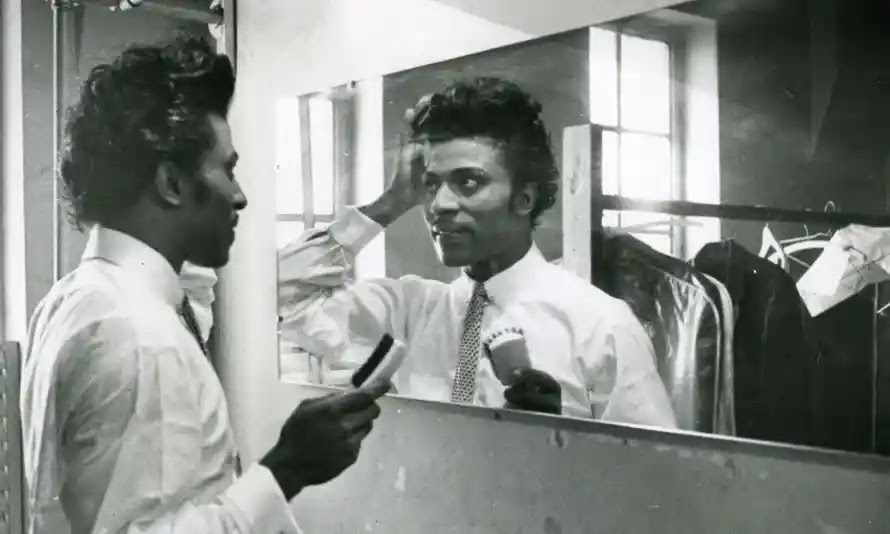
MIFF Session 10: LITTLE RICHARD - I AM EVERYTHING

The reason for me to watch a documentary like this is to address gaps in my knowledge and to see if there are insights that might surprise me. I don't hold any documentary to those as standards, just chuffed when they appear. What I know of Little Richard is that his music and persona helped push the vessel of rock music in to orbit, that his nursery rhyme lyrics contained such sexuality that the whitebread artists like Pat Boone who covered him would've run screaming from the mic if they'd known. I knew that he renounced rock and roll as a sinful practice when in Australia, casting his mass of finger bling into Sydney Harbour in the early '60s and drove the wilder side of British music making through his tours, influencing the likes of The Beatles, Stones and Bowie. 

What I didn't know was that, when he resumed rock music for those tours of the UK etc. he was doing it through a kind of double think that permitted being a flamboyant rocker and a religiously devoted Christian. I didn't know his all but open gayness waws all but accepted the way Rock Hudson's was and that, when he was finally allowed by his society to express it, he had rolled back into the Christian shell, trying to renounce that, too. Little Richard's case is a complex one, the magnetic shouting voice at the centre of his songs told of these experiences with such a joy that the pain of it remained invisible through most of his time on Earth.

This means that there is a lot to talk about. Archival footage of the artist himself features him turned up to eleven with each clip. If anyone had successfully interviewed him in a quieter, soberer moment it hasn't turned up. But then, he was interviewed because he was dependably on eleven. What we are presented with is a trove of collaborators from his career and well chosen figures from now who present reflections which range from smoke blowing to insightful as the constant barraging clip show flashes on.

What this feels like at heart is an attempt to redress imbalance in the historical record. When Little Richard gets the mic at an awards ceremony and lectures the glitzy crowd with an account of his importance, he isn't just boasting, he knows his story has not been fully told. It might be bravura but it never comes across as narcissistic.

I don't know if we were served a premastered copy or that the assembly of archival and new material proved impossible to normalise (that's an audio term, btw), but while Mick Jagger's or Nile Rodgers'  accounts were pristinely clean, clips from the eighties back were often plagued by dull sound. I'm aware that this could be due to the state of preservation of the material but so much is possible now that wasn't only five years ago. I'll cease this whinge and say instead that the wealth of media on show with this rose above the limitations of the presentation. We get a lot of context for the life of a highly complex man and its exhilarating. 

MIFF Session 9: BIRTH/REBIRTH

When her daughter dies in the care of a neighbour Celie is exasperated trying to search for the body. Pushing hard against red tape and smokescreens, she identifies pathologist Rose as a person of interest. Stalking her home one day, she forces her way in and finds young Lila in bed, breathing with a respirator. Her need for closure is rapidly replaced by a compulsion to bring the child back to active life. She agrees to help Rose.

Laura Moss's debut feature treads Cronenberg territory (both senior and junior) but acquits itself of the charge of theft. There are other body horror directors but the Cronenbergs will blithely enter into the fluorescently cold medical corners of it. Rose is so detached her words and deeds evoke autism. While this is not declared as such (big can of worms right there) it proves effective in distancing her from the ethics of her actions. The more fiery emotional Celie must meet Rose's toughness which brings out her character as the result of a struggle. The only thing missing from this tale of extended parenthood is sex. The closest we get is a hand-job in the gents of a pub but even that is for a clinical purpose. This is not Dead Ringers.

It is less family building, though, than the projection of life that is centre screen here. It's a twist on Frankenstein (there's even a nod to it the dialogue as the phrase "it's alive" is set in conversation) in that the can and should/ nature and artifice questions occur. The two women variously team up and bicker refulgently in service of a goal they never quite define. As they fight or plunge further into administrative and human abuse to get their project working, the revived girl stumbles from or mumbles in her bed, almost insensate. The notion of quality of life which informs so much of the debate on assisted dying is pushed down but this is diegetic, not a fault in the writing. We are witnessing the loss of sight on the target.

Moss takes us to the edge of limits on what we can see without abandoning her film. There is an abattoir's worth of gore on screen and abuse of corpses but it is done through the filter of medical professionalism (however unhippocratic) which creates just enough distance. She understands that intent is a more potent tool than explicit violence and takes on the struggle to keep us empathetic with a pair of characters we would condemn if they were on the news. 

Marin Ireland keeps her voice flat and her face plain but allows enough self-awareness through to render her both pitiable and terrifying. Judy Reyes as Celie brings a strength in crisis desperation. Young A.J. Lister as Lila has to make a lot of her grunts and near vocalisations to keep us at bay here and on the edge of our seats there as she seems to take agency. The pallet is kept laboratory  chilled and the score consists of the kind of electronic choirs that The Knife and Fever Ray made their own.We are drawn increasingly into the forbidding realm of obsession and bodily exploration that might never reach an end. That, more than the gore, gives us the horrors here.

Friday, August 18, 2023

MIFF Session 8: THE FIVE DAYS

Cainazzo, a young thief, snores through his sleep in prison until a canonball bashes a hole in his cell and he escapes. But should he? It's 1848, one of the most turbulent years in European history with revolutions and armed rebellions on every block. The rest of the film is Cainazzo as a young naif learning about politics the hard way. When he picks up a flag he is followed by a growing crowd who expect to be led to a battle. He picks up a travelling companion on the way and they encounter street battles, aristocrats getting high and horny on the excitement and find it increasingly tough to tell one side from the other.

MIFF billed this as Dario Argento's one comedy. That is to say his one film that isn't a bloodthirsty thriller  or outright horror. The Festival has to come up with copy to entice punters and a cult director going against his own grain gets attention. But Argento is liberal with his comedy in all of his films, regardless of how scary or violent they get. Marcus and Daria in Deep Red (as well as Carlo's mum and her dotty conversation. The cat man in Bird With the Crystal Plumage which is a massive joke with a decent setup. Miss Tanner and Pavlos in Suspiria. Argento modelled himself on another master of suspense, Alfred Hitchcock who wasn't above a dark joke of his own. No, it's not the comedy that sets this one apart, it's the politics.

The flag gag at the beginning makes a good overture here with its con-job patriotism having an immediate effect on anyone who sees it. Cainazzo's response to this  is spoilable but you can know that it is decisive and funny. While he is being schooled by a politico while walking and talking he can't even pronounce democracy let alone distinguish it from anarchy but he knows there must be something to it if people are willing to take a bullet for it. 

More abstract is how he and Romulus the baker help a heavily pregnant woman give birth safely. There is a mix of approaches here including Chaplinesque sped-up slapstick and fun with the movie props of boiling water and hot towels etc. But then the baby is born safely, regardless of the chaos outside and the two go on their way without self congratulation. The Countess at the barricade made of her house's furniture (which she encourages) gets zapped by the effect the danger has on the machismo and invites all the citizen soldiers to her bed. There is a very clear indication of consent and the scene is a lot less about sexual favour than shows of benevolence from above and how fleeting that can be. Later, there is an attempted rape by contrast and it is prevented and, however inadvertently, punished. The pair's encounter with a widow falls somewhere between but ends up being the strangest episode of all. 

Add the weird scene in the looted mansion where a denuded aristocrat schools them in cynical politics which puts him visually and philosophically more in Fellini's Satyricon than this era. What this and numerous other moments in this episodic film kept reminding me of was a strange kinship with the likes of Alejandro Jodorowski and his own clownish surrealism and hard violence. Argento is clearly interested in delineating this film from straight comedy, despite some scenes that play like nothing else. Some of the moments of street warfare throw cauldrons of ice water over that expectation.

The five days in Milan refers to a historical event, known to Italians readily. Some of those incidents are reproduced here and the rest is the swirling melee and chaos surrounding them. It's a starting point rather than a history lesson. If there is a problem it lies in the varying success of blending different forms of comedy and then them with the more severe details shown. A comedy would have everyone getting through. This one prefers to play it closer to likelihood. If there is laughter here it is that of the world when it doesn't like what it sees.

Thursday, August 17, 2023

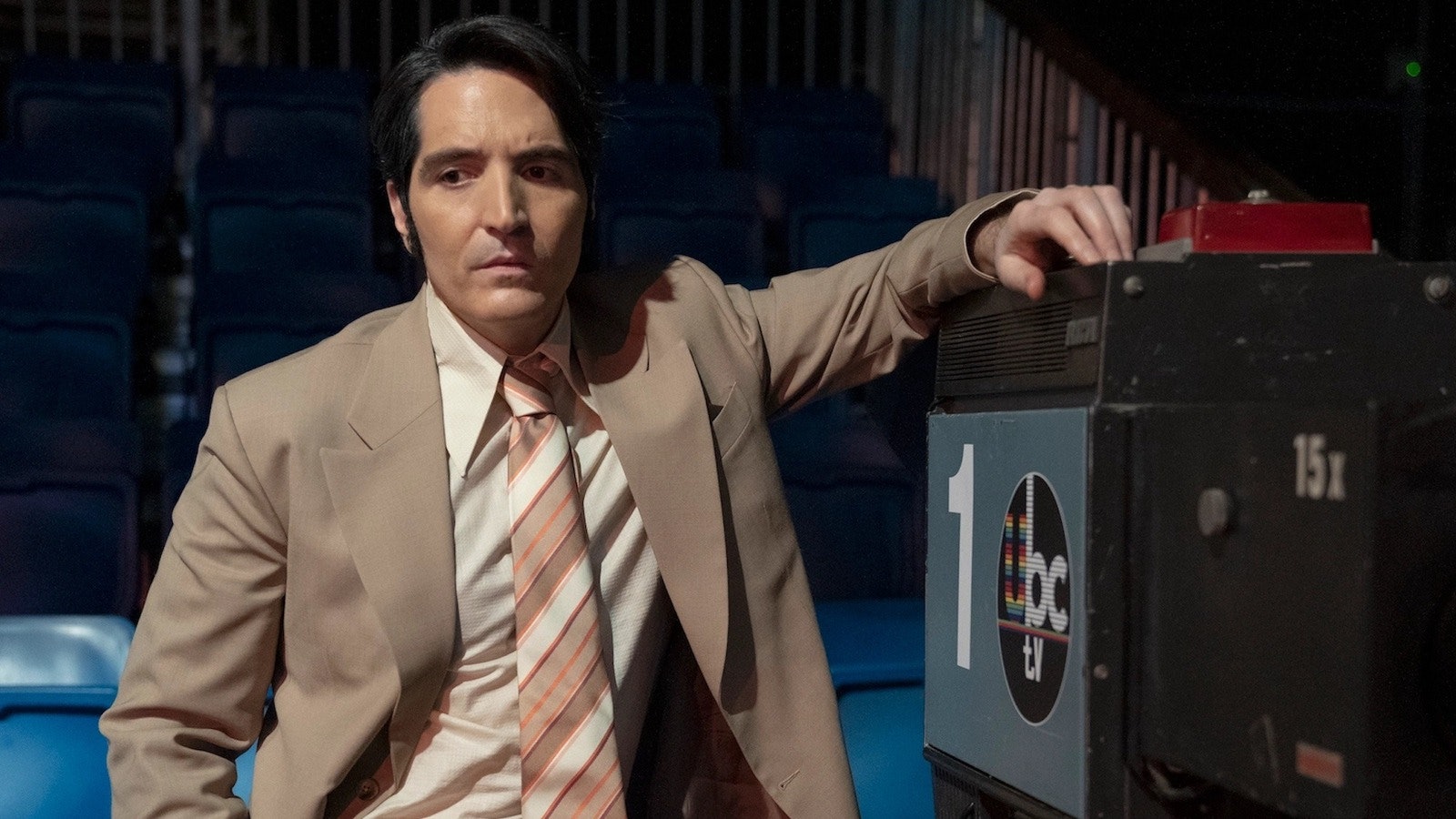
MIFF Session 7: LATE NIGHT WITH THE DEVIL

As a ploy to revive moribund ratings, a talk show host stages a Halloween show with some very special guests: a medium, a skeptic, a parapsychologist and her demonically possessed charge, a twelve year old girl. It's the late '70s and everyone remembers the sensation that was The Exorcist as well as the boom in possession movies it ushered in. Those ratings are just gonna rocket.

Sibling team Cameron and Colin Cairnes have boiled up something that seems to have brought together the best of their previous two features, the rude but funny 100 Bloody Acres and the more contemporary-minded Scare Campaign. Late Night With the Devil is a triumph of tone management and pacing. After the corny banter between host and second fiddle, the psychic's performance is kept edgy as it's in constant danger of collapse but has a coda scene that breaks it from parody or notions of fluke into the film's reality. The James Randi-like skeptic is perhaps played with too much flamboyance but we already know his career started in showbiz magic. The scene of demonic possession is straight out of the era's Exorcist rips but is balanced by the masterstroke debunking attempt by the skeptic. 

The film is introduced with a slide show describing the era, the PTSD American '70s after Watergate, Vietnam and the Manson trials. The voiceover has a cadence to it remarkably similar to William Holden's in Network and I would bet a silk pyjama that that was intentional. There is also a trove of detail about the struggling host Jack Delroy, his career and marriage that does feel like foreshadowing but it's kept interesting enough and by the time he makes his entrance as the host we feel well acquainted.

The recorded tv show forms most of what we see and counts as found footage. When Jack calls for an ad break we get a period correct card but we then go into another realm which might give some viewers pause. We go from a tv shaped aspect ratio that looks more like film than analogue video (but so did the performance sequences in the real '70s movie Network) to what can sometimes be a split screen in black and white that does in no way look like it was shot during the breaks. While I'll bet the Cairnes tried a more gluey old video look they probably erred on the side of clarity so as not to distract from the mass of information given in these sequences. Also (this is a stretch but I like it) it is a kind of callback to the dual images in the Blair Witch Project with the washed out video mixing with the monochrome 16mm film footage.

Performances are kept on a fairly even level but can frequently overheat or stray into overload. This can affect Ingrid Torelli's turn as Lilly who, at first, might appear distractingly older than her character. Then again, she has to the ol' grin and tear it Linda Blair Boogie so can get a pass. Holding everything together, though, is David Dastmalchian as Jack. Here's one to his agent who has surely earned that 10%. This year alone Dastmalchian been in everything but a Barbie. That aside, he plays the host as a live performer, continuously alert for ratings hazarding moments, diversions and saves, coming across as one who understands the need for performance in the presentation of puffy glitz. More natural in the ad breaks, we see both the character and actor live in the difference. He could have got away with a much bigger, self promoting style but opted for nuance.

The Cairnes have made a film that joins a very short list. Horror-comedy is a tough brief. Most attempts fall towards one of the sides and end up with woozy comedies. It takes a great commitment and concetrated effort to allow both things in where they must be carefully managed to keep their audiences. The likes of Scream, The Old Dark House, or Sean of the Dead feel like faith creating events beside flat parodies like the Scary Movie franchise. 

In Late Night With the Devil we get enough of each tone it will be using early on and as it progresses we are allowed to be surprised by8 outbreaks into horror, knowing the levity can be brought back out of its box when needed. That's why the possession scene with all its trappings of '70s Exorcist ripoffs doesn't feel funny and its why the combination of those tones makes the "debunking" scene so genuinely powerful. Perhaps that's the secret of horror-comedy, the creation of goodwill and respect for the bargain with the audience.  This is a little film, aware of its scale with no intention to reach beyond that but that really only points to its solidity.  You can pack it up in your pocket as the credits roll  but you'll probably want to see it again. 

Tuesday, August 15, 2023

MIFF Session 6 : SQUARING THE CIRCLE

What's your favourite album cover? Hang on, that will depend on your age. You might not have one. Ok, I'll start. The Beatles' Revolver: cartoon collage as creepy as it is appealing. Ok, Never Mind the Bollocks: iconoclasm in yellow and hot pink. Yeah, it's probably that. However, if I'm honest I'll have to admit that I did find record covers before that one could be trippy or even assaultive through their enigmatic juxtapostions of old and modern imagery. Some were like undeclared puzzles, daring you to even ask questions of them. By the time punk came around I'd only had about two years to think about this before I was rejecting it all as the work of dinosaur artists who'd somehow dodged the asteroid. But, through all that there was a name I noticed on every cover that stopped me long enough to read the credits: Hipgnosis. If you know anything about the way records looked in the '70s you knew that name.

Anton Corbijn's documentary on the partnership that went by it is absorbing and thrilling. The Uni friends who found the cool people in their native Cambridge ended up befriending the band that would become Pink Floyd. There's dispute but it is supposed by some that it was the mighty obscurity Syd Barret himself who formed the portmanteau that collided trances with two terms for being aware. And Pink Floyd would look very naked without the work of Aubrey Powell and Storm Thorgerson, two hip gnostics who clung to the scene until their brash ideas got them wowing anyone who walked into a record shop.

Corbijn who made the fiction film that surpassed the documentary on Joy Division keeps things fluent and fast with industry anecdotes as well as a lot of compelling discussion by players and witnesses about why the tiny firm of designers created a decade's look and feel as applied to its music. As Floyd and Zeppelin took to ever larger stadiums and their concepts ever more cosmic, Hipgnosis were there to design a sculptural presence for an album by that name for Led Zep or apply a cheeky idea about lush meaninglessness for Floyd's Atom Heart Mother. There is no shortage of stories to delight the old faithful or even more to fuel some Gen X hate-watching (especially when punk bursts in). Corbijn keeps it, ironically enough, quite punky with a Julien Temple-like lightness, even when the commentary needs to darken.

The overall effect is that the flood of information in this guided tour through the work of these visionaries is kept easily digestible. Storm Thorgerson is represented by archival audio and video and Aubrey (Po) Powell is present for recollection. There is a host of witnesses such as members of Led Zeppelin, Paul MacCartney, Peter Gabriel and others who, quite enjoyably, speak as customers. 

But this is the film of one who made his name as a photographer in the shellshocked post-punk years when the sounds turned industrial or unclassifiably bleak. Corbijn elicits the aid of a very astutely chosen Peter Saville to comment from the standpoint of one who admired Hipgnosis art but was able to apply his own contrasting ideas in response. He's not only ready to celebrate Thorgerson and Powell but to clarify why his own iconic artwork for Factory records formed a baton-passing.

Before I got those records by 10CC, Led Zeppelin or Peter Gabriel in the '70s I was a classical nerd. Once I hit 13 and really had to reassess that, at least in the open, I did come into the close reading that only a teenager from that time could do. And I saw a kind of cinema forming beyond the 12X12 square of the sleeves that offered worlds fuelled by the music that projected well into the big starry void fillable only with imagination. It was art like this that did that. This documentary that tells that tale is joyous. Not without a few tears, mind, but joyous all the same.

Sunday, August 13, 2023

MIFF Session 5: YOU CAN CALL ME BILL

As we open on a lushly lensed Forest we hear a slow fade up of voices. Well, voice. And that's the point. It's the voice of William Shatner and soon enough we see him, ninety something and rounded but bright eyed and completely present, a self-avowed old man who is here to tell us the things he has come to value and the lessons his life has given him. He does this sitting in a chair on a sound stage. For over ninety minutes. Stop running and come back, this is not what you think.

Divided into chapters sandwiched between a prologue and an epilogue, this character study/long interview is enriched with a constant feed of clips from Shatner's life and career. What stops it from being a feature-length bore has to do with the deftness of the archive material by choice and astute editing. Mostly, though, it's Shatner himself who regales his audience with a continuous blend of autobiography and personal philosophy, delivering his own eulogy with both gravity and charm. And, lest we should forget, he adds healthy dollops of self-effacing humour to help the medicine go down. While I'll admit that I was wincing at the first few minutes that this was not going to be a glorified stage tour night with oodles o' funny stories, I had no trouble settling in, regardless of how ponderous it might get. Shatner is that winsome.

He does have some help in the shape of director Alexander O. Phillipe. Phillippe makes movies about movies and movie makers. Last year's Lynch/Oz cornered a number of directors and asked them to talk about David Lynch through the filter of The Wizard of Oz (don't smirk, there's a lot there). Leap of Faith is one of the better documentaries about The Exorcist. Others (which I haven't seen so I'm counting them among "others") include a feature about the shower scene from Psycho and George Lucas' fanverse. He doesn't just articulate timelines, he looks for the point.

The point here is a long and varied acting career and the development of a true life character. Shatner is form fit for cultural history as Star Trek's Captain Kirk. Both character and show offered their audience a progressive approach to science fiction through three seasons of fables along social, political and philosophical lines. While the immediate aftermath to that is covered as hitting bottom, he bounced back to continued fame and performance, touching more than a few iconic moments. Thence to real space flight at the behest of brazillionaire Geoff Bezos.

Things missing from being overrepresented include the Star Trek interracial kiss, the baffling cover versions of songs like Mr Tambourine Man in the '60s and more recent musical outings, as well as the inadvertent lateral effect of being the face of Michael Myers in the Halloween franchise. However, the film (as presumably Shatner freely allowed it) insists on the real breadth of his roles to include not just old westerns and classsic Twilight Zone episodes but some of the many commercials he was in. When he speaks of an actor's commitment to performance and we see the same force applied to a poignant scene from Star Trek as a later ad that has him growling, "I want my deep - fried -  turkey!" there is, along with the compulsive laugh, a genuine sense of the actor telling his craft. He's not just mumbling about it in embarrassment, he's presenting all of it as equal. Find me one of his contemporaries who would unironically offer a Priceline commercial alongside an iconic speech. If you aren't won over by this alone when you witness it who knows what it would take for you.

Recently, I heard Shatner's appearance on Mark Marron's WTF podcast and it was a revelation. He was happy to go over his career peaks but wanted also to talk about climate change and the unexpected sadness he felt on going into orbit and looking at the Earth and the infinite void beyond. It was thoroughly engaging. When I started watching this film I missed that passion in his voice and Marron's goading interview style that brings it out of his guests. But soon enough, however lunking some of Shatner's observations might feel the sincerity just keeps coming through and that's from one who is frequently ridiculed for being over earnest. That he continues to embrace all of it, the mockery and the accolades only shows us his strength. 

After the screening I got home and put on one of his Twilight Zone episodes, Nightmare at 20, 000 Feet, and was struck by the nuance of his performance. IN the story, his character is on a plane and keeps seeing a monstrous figure on the the wing, tampering with the engine. No one else sees it and thinks he's crazy. At one point, on of the crew indulges him and the look on his face goes from relief to a dark resignation as he understands he's being patronised. It's a few seconds of screen time but it works. It just works.

Friday, August 11, 2023

MIFF 4: SORCERY

When her father is killed by a colonist's dogs, Rosa seeks justice. Er, let's backtrack. Rosa, indigenous (Chile) saw that the sheep had collapsed in the field. Investigating, she found a rough hewn rope of a kind she recognises. She calls for her father who can do nothing to reverse what looks like local magic. The Farmer comes out, gets everything wrong and sets his huge dogs on Rosa's father who doesn't get up from the encounter. Rosa seeks justice.

The local Mayor has no interest in assisting an indigene. But the local priest offers some cryptic guidance which leads her to the cabin of a local fisherman who takes her in. Rosa begins to witness strange events and is even led to some by a flock of birds circling the cabin and then flying off in one direction. This is where we are told certainly that, despite the almost verite look and feel of this sombre and powerful film, it will be playing like a folk tale and the magic that we see will be folded into the reality of the colonial brutality with craft and style.

It would be a mistake to see Sorcery's pace as listless as there is so much to consider the more we see and the base value of the powerless needing to find their own weapons sells like a tide. So, there aren't sudden acts of retributive violence or third act revelations, just a progression of cause and effect that, even when fantastic, feels natural. Horror can approach the surface but this piece is more interested in showing you its context that distracting you with violence.

With its lead actor, Valentina Veliz Caileo, a perfectly controlled surface for us and all the other characters to read what we will from her mostly placid (but never unmoved) face, a haunting score somewhere between electronics and oddly scored small ensemble strings, and its tightening grip on justice as a more powerful response than eye for eye revenge. In its final moments we come to understand this and it couldn't be more disturbingly beautiful

Thursday, August 10, 2023

MIFF SESSION 3: AUTOBIOGRAPHY

Young Rakib is watching a chess tournament on tv in the house he is keeping when the resident arrives earlier than expected. General Purnawinata retired marvels that the young man has grown from the baby he was when last seen. The General is an imposing presence and almost immediately displays a pleasure in being personally intrusive. He's in the small Indonesian town to hammer the locals into supporting a power station. While we can guess that  most of people at the meeting he addresses will lose their homes for the development. This quickly fades into the shadows of the narrative as we watch the General slowly and gently colonise Rakib. 

There are family connections and complications in this relationship which a skilled manipulator like the General enjoys exploiting. Rakib is not yet twenty but his rapidly developing conscience is ringing like a firebell. Still, he feels increasingly powerless in the situation and when the opportunity arises to turn against his own locals he not only takes it but makes the offer. What will it take to break him free of the bonds? Will he want to, by then?

Makbul Mubarak's feature debut plays like a slowburn theatre of cruelty. The General's personal power and his continuing influence with official force and the sway that both allow of the physical territory keep the young man guessing about himself. There are no clever timeline pingpongs or lateral excursions, we are watching a painstakingly linear progression, as though Rakib sees his present tense as an ever stronger prison. The future might be unwritten but it's looking pretty well estimated at this stage. A mostly electronic score is kept so subtle for the most part that it sounds like the rest of the ambient audio from the jungle and traffic. When it does rise it is poignant, consolidating the sorrow of a scene of developing grief.

Arswendy Bening Swara as the General bears himself with an intimidating confidence, making the levity or gravity of his questions or statements a matter of confusion until he reveals which it is. He is a terrifying figure whose soft voiced command exists in the same being that causes such profound damage to a character toward the middle. This is done offscreen but the sense that it is routine mixed with pleasure will get your tummy doing the seasick dance.  Kevin Ardilova as Rakib is equally impressive for the depths of his passivity which begins as deference to authority to fear of showing a raised eyebrow or curl of the mouth. We see him range into moral ire but in the presence of the older man his passive unbroken skin appear more and more doll like. It's a lesson in restraint that is writ large on a screen that often fills with his face.

Autobiography holds deep terror. It is a tribute to Mubarak that he kept the histrionics low. The General just does not need big villainous laughter or explicit demonstrations for his control to continue, he only requires other people to respect him. Once that's done, they are his. Is the scene in which he is showing Rakib how to accurately fire a military rifle a big clunking metaphor for sexual dominance? Big, yes, but not clunking. This film does not play so cheatingly.

MIFF Session 2: COBWEB

Director Kim has just brought in his latest movie but is haunted by both past and present. In quiet moments he speaks to himself about the legacy of his mentor Director Shin and his final and fatal film. After strong first features, Kim has fallen into the critical hackverse, doling out melodramatic thrillers and romance films, like this latest one. When this actually happens in real life and a table of critics heckle him as he's trying to get through lunch. He's still being judged through Shin and whatever mojo he had has left the building. Right, then! He's got it. He's going to reshoot the ending. He wants weird setpieces and a bravura long take finale, pushing things into surrealistic horror.

There's a problem. Kim is making films in South Korea in the 1970s when, as a dictatorship, every cultural artefact produced had to be vetted and politically cleansed until it was a commercial for the regime. Loose canon artists ended up as looser canon fodder. So, Kim now has a resistance from his cast and crew, outright opposition from the Studio president, and government hatchet men are knocking at the door. Still, he has a masterpiece to make.

Jee-woon Kim whose eerie Tale of Two Sisters left me speechless and whose I Saw the Devil took the tired serial killer plot and freshened it with torture has now turned to comedy. And he has turned his comedy on to his own industry and all the targets it provides, all the foibles and and pretensions it allows, and set it during a time of social vicegrip. So this comedy is one of pressure, of staving off explosions, containing outbursts and breaking through to fashion art.

We see a fair few scenes as imagined cut sequences in black and white. The main setting is on and around the soundstage of the production (which shares its title with the overall film) where a large ensemble cast fills the screen with intrigue, gags and moments of self-aggrandisement. The film technique that keeps popping up in dialogue is plan sequence or long takes, a then fashionable means of imbuing scenes with extra realism and urgency. Kim intends a very complex long take for the finale which is being dreaded by everyone who hears about it as it involves an interior on fire and so will be a one and done ... if it works. A great many of the corridor scenes and camera reversals are long takes. What this does intermittently is to highlight the frequent sways into campy performance and makes us wonder why this tone is not kept to the histrionics of the film being shot. There's not quite enough of it to be a statement of drama offscreen and onscreen equivalence but too much to suggest it's incidental.

In the lead is Korean veteran Song Kang-ho known for recent turns in Broker and Parasite, and someone who has seen more than his share of these amtics, dealt with a trove of directors with delusions of artistic grandeur, production managers who behave like gangsters and party apparatchiks who think they're film auteurs. The parade sized cast is too long to highlight here but to say that almost everything works is not a slight, it's a recognition of a marvel.

Movies about moviemaking can be problematic with conflicts of artistic interest plaguing them from the off. At worst they descend to big, clinking statements that outgrow their own vehicles (e.g. The Stuntman). At their best (e.g. Living in Oblivion, Day for Night) they invite audiences into a kind of theme park ride of  victories had against odds. Film making is hard and expensive and gets harder and dearer the more it is meant to serve individual visions. In Cobweb, the director Kim plays the character Kim the way the latter plays his cast and various forces toward the kind of bound chaos that every control economy must become or collapse. And from the thrilling finale to the final shots of this film, we get a clear indication of the darker side of the notion of pleasing everybody, as the claim of dictatorships goes (with a bucket of confirmation bias). As such it is both sobering and bloody funny.

Sunday, August 6, 2023

MIFF Session 1: IT LIVES INSIDE

Teenage Samidha is culturally wracked. She's pretty happily set into the America that her family moved to from India but is adolescently embarrassed by the old traditions. When she is approached by her estranged childhood friend Tamira, Sam chooses between her and her American friends by breaking the jar Tamira hugs as she walks the school corridors, creating her own reputation for weirdness. The shards on the floor. The ancient Hindu demon Pishach is loose in the world again.

Bishal Dutta's horror tale of culture collision and supernatural threat is a perfectly serviceable horror on the milder side. As a displaced folk tale with violent scenes, though, it carries a lot more power. Sam's wincing tolerance of her Indian heritage is in stark contrast to the ease she feels in the company of her American schoolfriends. That said, she doesn't miss sight of their frequent condescension and clunking assumptions about her ethnicity. Tamira's ookiness renders her a pariah and Sam finds her presence unbearable. Sam helps out at her family hosting the Hindu celebration but when she hears what sounds like ostracising disgust at Tamira's family, she flees the scene and goes to the school kids outdoor bash.

While this film does centre on a supernatural conflict it does do the cultural conflict better. There is genuine suspense, a well crafted monster and some effective atmosphere but these are hampered by an approach that allows them to be drawn out to the extent that the stakes feel lowered and the tension evens out. Scenes with the monster are effective but lack resonance. We see well choreographed violence and recall earlier instances but there is little mounting dread. This means that the horror only goes so far before it has to be inflated again. This doesn't make if a bad film. Actually, it stands well beside other mainstream fare from this year like The Boogeyman or M3GAN. No real memorable scares but a lot of interesting abstraction of a theme while hitting the marks and saying the lines.

It Lives Inside could play as a decent story of the pains of assimilation. Keep the horror but trim it to magical realism and you've got a nifty folk horror which won't need to ramp the scares. But this is a contemporary conventional piece, content to work adequately. You want some current horror to challenge you or dare you to enter unfamiliar places go for Skinamarink or Infinity Pool. This one is happy to serve you a jumbo popcorn with a side of personal heritage. Well, it is all it has to do. I just wish it changed the portions of those two dishes around.