Wednesday, August 28, 2024

MIFF 2024 Round Up


HAIL AND FAREWELL!

This might be my last one. I've made MIFF a winter holiday for the past twenty-one years. I've been going since the late '80s but it wasn't until 2003 that I could afford both money and time to take at least a week off and just go to the movies. From that time this was the part of the year that felt like an adventure holiday for the mind and nerves as everything from big thrills to quiet puzzling experiments would blend together in a magic lantern otherworld. And I sat in the dark with strangers and let the work world leave my body like a sigh.

I eventually took a fortnight off each year and then, having the time banked, an extra week to decompress and watch movies at normal cinemas without the queues and seating crush. I learned, after queueing around the corner at the Forum one frosty afternoon, that if I could relax and wait for the whole crowd to go in, I'd get something like the front row seat I preferred. Also, the snickering sneak of getting all ten and then an extra three sessions out of my minipass by grabbing as many daytime sessions as I could find. That led to at least one MIFF that I'd planned so efficiently, daytime obscurities and horror in the evening, that I didn't see a single film with a friend. That was a wake up.

MIFF was an escape from the press of the normal, just as the school holidays were an escape into play, books, and all the good things the ABC used to put on for us from the U.K. in May and August. Currents and undercurrents of the flow of the moving image which moved like a whole year of cinema going in a fortnight. Every year as late July approached, I felt the magnetism resonating around the corner.

But this year was one of those where that didn't happen. It's not the first but it might well be an indicator of the future. The style of the Nugent Report that recommended the outsourcing of funding and management for arts organisations has, since its publishing in 1999, leaked into arts events and institutions in the time since. MIFF has been low in this way but it recovered with some inspired leadership. Whenever the best of that has ended, the screaming void of cost cutting and overselling. It might just sound like names but whenever the head of an arts festival goes from a director to a CEO you know someone has come in to sort things out. I miss Richard Moore and Michelle Carey and their gleeful exploratory guidance. That's gone.

And then they do make it elitist. One cheap pass was introduced but the one I usually get was hiked by fifty dollars. I could see all twelve from that just by getting four of the cheap ones and still pay less. But, really, what they wanted was to sell more memberships. These stayed about the same. A fair few perks, to be fair, but at over six hundred dollars, they were well out of range for most punters. But when you continue to reduce the value of the festival bars and meeting places, limit one of the beloved venue's use, introduce reserved seating, cut the total of new contemporary cinema titles by close to a hundred and hype up a swag of revivalist screenings in the manner of premieres, I'll admit getting a membership might well seem like buying myself out of bothering with the great unwashed. So, next year, there will need to be some really special things in the program for me to bother. I'll be spending less time and money on that aspect of my winter holiday.

THE PROGRAM

I saw some good stuff but, boy, did I have to do a lot of sifting through a line up that seemed painstakingly chosen to feel like a prestige festival without teeth. Mainstream fare rubbed shoulders with indies destined for local cinemas before the last warmth had left the Forum seats. The sold out audience members for I Saw the TV Glow would be a lot more comfortable going to the Nova to see it less than a week after the festival ended. Of the twelve I saw, I'd rate about four to recommend. Most of the others were disappointments or bland, and not arthouse bland but plain and unaffecting. Very little of it seemed to want to take any chances and put pressure on audiences to touch the challenge of living cinema. 

It wasn't quite the nadir of 2000 which was so stuffed with mainstream fare and big dollar sponsor money that it felt like eighteen Saturdays in Sadder Plenty. When the stream goes main, the genre goes south. A page's worth of horror movies was all we got. There have been more in normal cinema schedules in the first quarter of this year. The streaming section was a shrunken grab from the main program. Great idea with good intentions but dull. If it's as flavourless next year, I'll be lucky to go to two I'm interested in.

Should also point out that I went to four normal cinema screenings which I enjoyed far more than the MIFF fare and had better experiences with audiences who weren't so entitled and rude.

THE VENUES

What happened to The Forum for the first week? We've already had to put up with losing the ground floor which was the most beautiful and atmospheric meeting place and chill room of any festival. Now, it's a cordoned off strip in ACMI with a bank of Campari behind the bar. The hub is the old restaurant that was there and it seemed ok but I wasn't inclined to luxuriate in its dentist chair ambience.

ACMI is an operating theatre of a cinema. It does, however, have excellent appointments and you are guaranteed a perfect screening. This and the Forum were the cinemas that had reserved seating imposed on them. Reserved seating in the wild has become a relic of COVID's aftermath with distancing and capacity ruling the notion. It existed before then but it has since become de rigeur. It's done for people who want to sit in the middle. What it means at MIFF is that all of those who get in first everywhere, take everything they can and everyone else goes to the sides, the very back, or the front, where I am, usually with a few other deviants. This year, every seething one of them that had neglected to see that you could choose your seat for yourself ended up in the outer ring and these were the Neanderthals that spread every microbe on the soles of their footwear on to the armrests of the seats in front of them. None of this was policed to the slightest degree (not that I would expect the hapless volunteers, who hold the damn event on their shoulders every year, to be trained in this).

On ticketing: a very good feature was added that reduced the clicks and fol de rol if you wanted to exchange one session for another. It only cost a buck but that's also what you had to do if you wanted to change your seats in the same session. Not. Thought. Through.

Hoyts I love as a MIFF venue as I can sit in that raft at the front where the longest legged seat kickers can never reach. Also, very good projection and audio. Ditto, Kino but their capacity cannot compete with Hoyts so a sold out session there can be a trial. 

Didn't go to the Capitol. The one session I'd booked there sold out. I've done that before and never will again. I went to the new Cronenberg instead and had a better time at Hoyts.

I didn't see any streaming titles. I was exhausted from the main program, the choice was way down on previous years and wasn't tempting. One good thing. The decision to start it at the same time as the main one was welcome. Beginning streaming almost as the cinema festival was ending was idiotic.

The Program:

It was down compared to recent years. MIFF has varied in overall quality in the decades I've been going. One of the worst featured opening and closing films of such shamelessly mainstream character that not only were they both in cinemas before the festival was over but reflected the dullest of approaches from the goose who was directing at the time. It was late '90s early '00s and made it look like MIFF was sinking into flavourless tourism.

This year the title count was down by about a hundred (but still advertised as though the number was impressive). 

The App:

Updated in good time. Normal first use glitches aside, it was all go. I made one exchange and it was reflected immediately. Also, the sales status was kept up instantly. That exchange went to Standby rapidly and I was able to swap it for another on the site. This has become one of the pleasantest features of the festival. It's where you store your bookings and wishlists and manage your experience as well as check on how full something will be (I avoid sold out sessions). A consistent winner.

Staff:

They remain personable and helpful. Didn't have a single problem (one thing that has consistently improved since the "good old days"). This festival depends on the work of volunteers. No shade on the people I dealt with. However, I don't know what the margins are these days but I bet this could improve (i.e. they could start paying them).


THE MOVIES

HIGH

ODDITY

Real horror with atmosphere, scares and quirk that works. The single most enjoyable film of the festival.


MADE IN ENGLAND: the Films of Powell and Pressburger

Martin Scorsese celebrating the works of the Anglo-Hungarian duo as they made masterpiece after masterpiece. Depth of commentary and a poignant placing of his own life story and the films' effect on him. 


A TRAVELER'S NEEDS

Hong Sang-soo only needs to keep making films like these to make me feel happy about living in the world. This despite some of the darker revelations about the human way that come out in conversations. Exposure without judgement.


TOLL

Kitchen sink melodrama from Brazil that works without resorting to anything more than committed performances of a deceptively simple screenplay. This got the fest off to a great start.


MIDDLE

THE HYPERBOREANS

I used to jump at films like this that based their approach on Brecht's ideas to tell historical stories. While this example had its charms, its coldness prevented me from looking deeper into it than I did. It shames me to admit that the Guy Maddin style denouement was the only thing that really got me engaged. Should it shame me, though, when the Guy Maddin entry in the program was so flat? 


BLACKOUT

Great idea about an alcoholic's blackouts being directly analogous to his blackouts when he becomes a werewolf. This is allowed to get sidetracked (despite some great kills) by a little man vs big man in a small town story that happens during the day. The two threads are left unsatisfyingly unresolved.


THE DEMON DISORDER

Wastes screen time  going in circles until things firm up for a fun second half that also delivers the poignant notes about the family condition.


RUMOURS

Guy Maddin has been blanding out since the wonderful The Forbidden Room a few years back. Is it collaboration with the Johnson brothers? We must all develop but, boy I miss, that misty old world cinema with the contemporary sass.


THE SHROUDS

Yes, this long term Cronenberg fan is putting a D.C. movie in the middling section. Everything about the film works but I didn't get what I was expecting.


LOW

THE MOOGAI

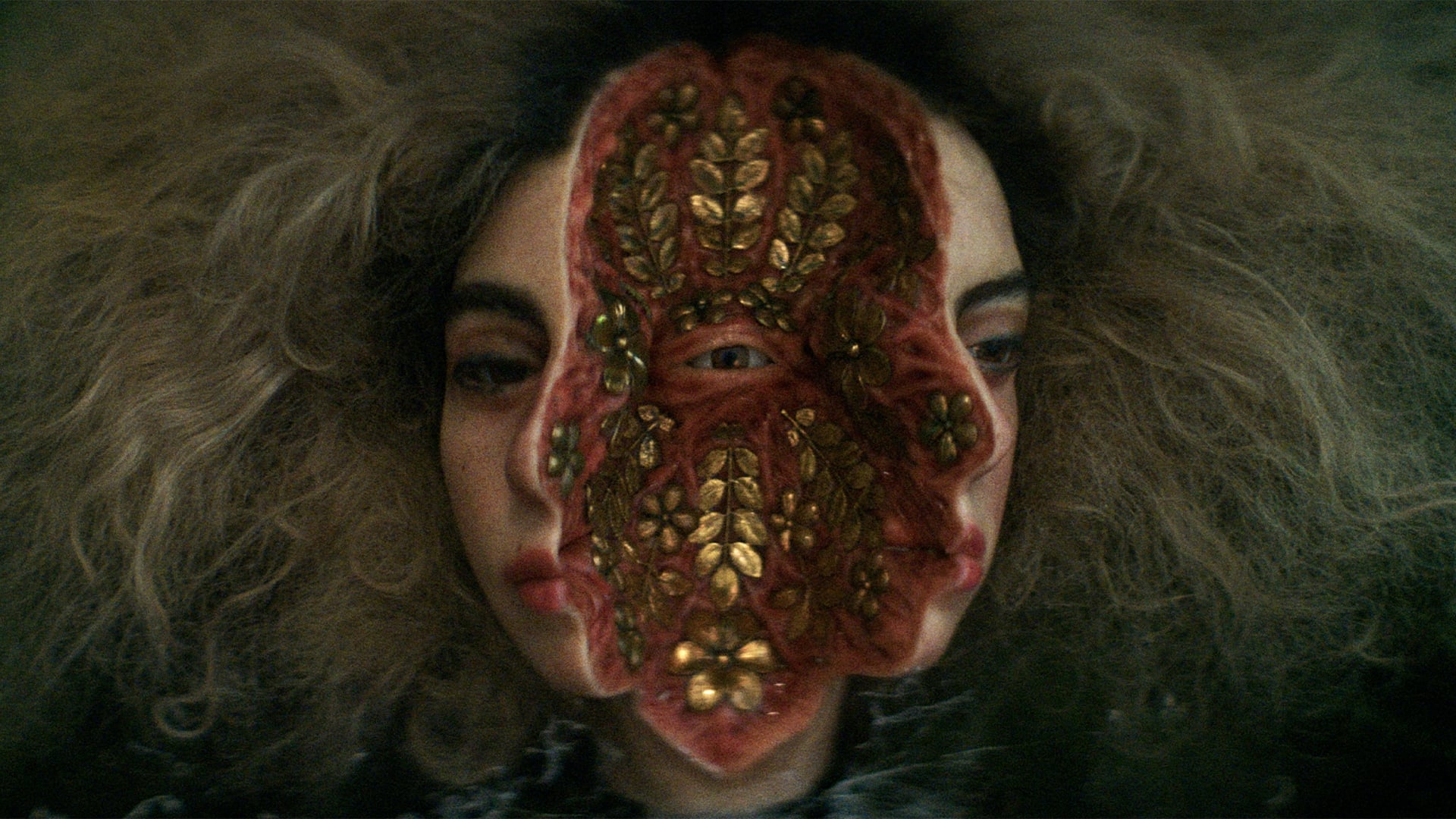
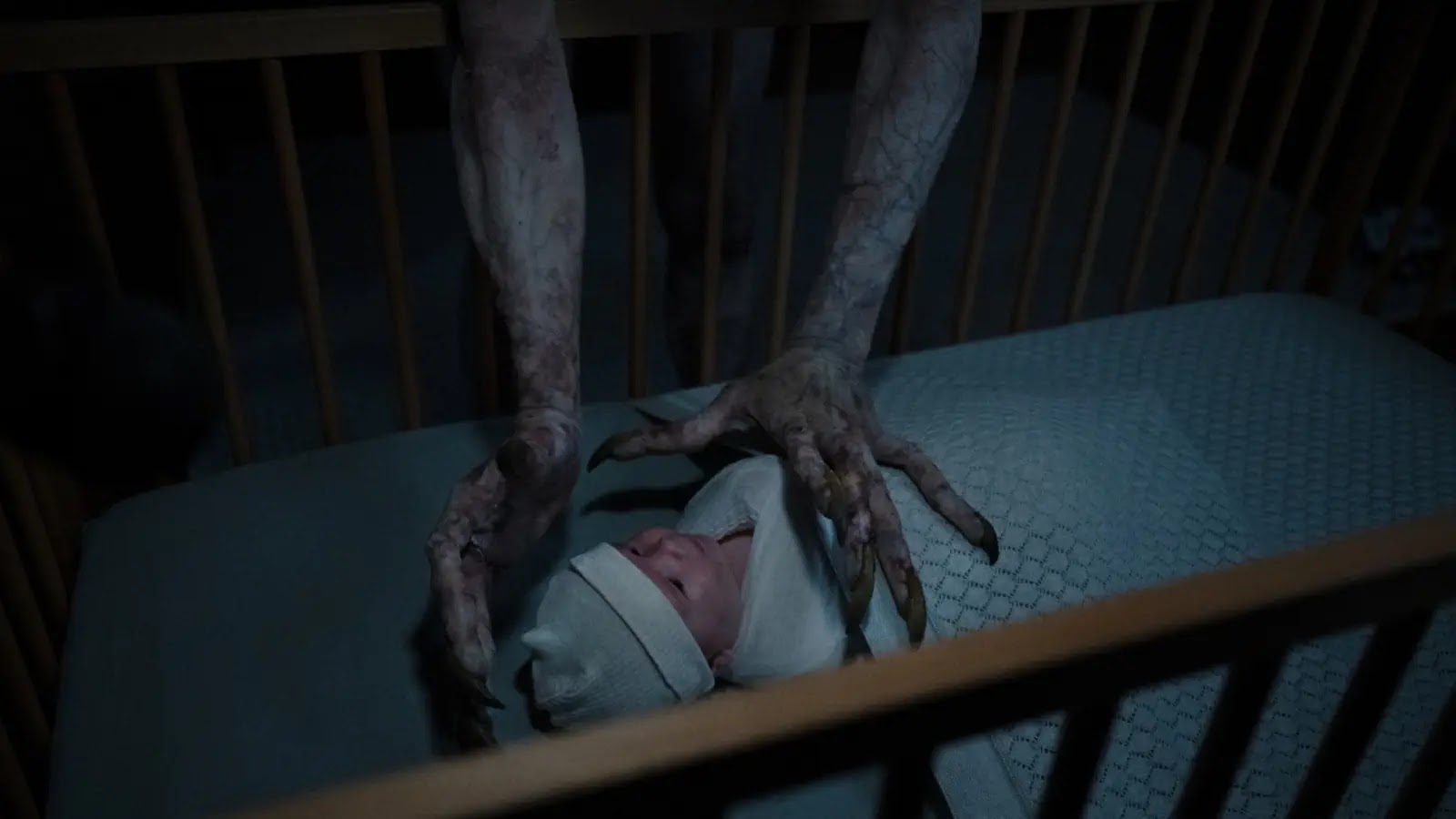
In which a highly effective short film is expanded with a bigger budget and bungled all the way through. Little to no empathy possible for the persistently unlovable lead character, the good idea of equivalence between the folkloric monster and the government snatching children left in a  gooey mess, and a showdown with an impressively realised creature fizzles. 


THE DAMNED

The conceit of putting Civil War soldiers in for the many conflicts and dodgy incursions performed by the U.S.A. is a good one but ends up as a Malik style mood piece. It's not terrible but nor is it particularly engaging.


EPILOGUE

Farewell to what will I think be my last full festival. With so many other such institutions flinging their caps out to dominating donors and philanthropy and CEOs where curatorial directors once stood, and pricing for elite tickets and reserved seating for people who can't organise themselves to arrive on time and behave considerately to others, and a raft of other unpleasant things and moments, my favourite time of year has become tokenistic movies for people who think that that's what Netflix is, and gab loudly through it as though a parliamentary decree has allowed them. From now on, I'll just go to the movies.

Sunday, August 25, 2024

Review: BLINK TWICE

Frida and Jess infiltrate the gala of a tech magnate Slater and get invited, along with a chorus line of other women to his personal island, a resort for his one-percent friends. The days are indulgent and run into each other with constantly filled champagne, rarefied cuisine, designer dresses and drugs. But the last paradise that wasn't scheduled for demolition was the one John Milton wrote about. This one is encircled by bright yellow snakes that slide through the grass close by. Someone says it: something's wrong.

Equal parts thriller and satire, Blink Twice tells a dark and clever tale under a dazzling colour pallet and music mix. The daily round of hedonism would get oppressively repetitious if it weren't for its velocity and the careful seeding of detail that makes us wonder what it is that's wrong. The second act which should express push back offers some ingenious plotting and we start to expect it to be bettered in the finale. We're right.

Accomplished actor Zoe Kravitz makes her directorial debut with this rich piece about riches and, as its co-writer with decades of industry experience, draws from the last decade's history of me-toos and smothered consent, of money bestowing power and power forgiving all. There is an introductory card about the scenes of sexual assault in the film to follow and it hits as bracingly as a warning about strobing effects. It might not be explicitly shown but the thinking behind the acts we see, their purpose and motivation are the things that pull those triggers. 

After about ten years of eat the rich satires that barely scraped the surface, Blink Twice heads straight to the core. The entitled ethics of the billionaires, tech overlords, the movie producers and flesh procurers that we've been reading about come into play here as they might have in the throne rooms of Constantinople, Rome or Babylon.

Naomi Ackie as Frida and Alia Shawkat as Jess demonstrate the fluid friend bonding that needs to be believable and work the hardest out of the cast. Monster hunk Channing Tatum shows us a man who does not care if there's a difference between what he wants to do and what convention and law allow him but renders the questions irrelevant through a veil of effortless charm. My vote for most fun performance and most horrifying is Geena Davis as Stacy the organiser who gives us a loping kind of street clown playing incompetence. Her presence among the bright young things and chiselled ex marine security men, is unsettling.

The finale delivers, after some engaging action a form of justice that we might not approve of on first look but does make sense and satisfies. Kyle MacLachlan's therapist Rich is instrumental here as he has provided one of the characters with the story's title and his understanding of it in the final scene has great resonance for anyone who's been watching closely. When actors venture into direction the result is often over generous with the cast and an eagerness to show how cleverly cinematic they can be. This just feels like a solid movie with something on its mind.

Viewing notes: I went into Hoyts this morning for this where I'd been only the previous night and had an annoying experience. Getting in and sitting where I wanted and having no one bother me felt like luxury. Two loud and talkative guys came in just as the ads were finishing but they settled and just watched. Sigh. Bliss.

MIFF Session#12: SHE LOVED BLOSSOMS MORE

A group of young scientists attempt to build a time machine to save their mother from dying in an accident years before. The work on developing the device (which is an adapted closet) has led them to create instead a machine for inter dimensional travel. Experiments include a pig returning without its skin and a chicken losing its head but replacing it with a weird electrically charged panel. This is going to take some work.

They report to a figure called Logo whom they contact via rotary phones and converted telex machines. There is a time line with a projected end and they run into funding problems and technological setbacks as they also treat the Paris mansion they work in as a kind of student share house. When their regular drug dealer, young Samantha, moves in, things are further complicated by sex and hallucinogenic sorties that include a plant with a vulva for a mouth speaking in their mother's voice.

All of this is couched in old technology. The time setting is never stated. Their computer equipment looks like its from the '80s and the phones are all old timey and the cameras they use to record the experiments are vintage video. This also seems to be how they shot the film. While its shown in scope (around 2.35:1) the image is almost entirely in low light and plagued by a haze of video noise. The intimacy of the hooting also suggests old video as it was probably 4X3 cropped to scope. This means that we follow these figures through visual distress and that seems intentional. Most of this film is a series of conversations and most of those are delivered without a character to play the Watson to explain things to. In essence, it's like a grimy version of Primer.

And yet, with all these hurdles for the viewer, She Loved Blossoms More remains compelling and poignant to the end, telling a story of grief and denial in families and the results of not getting to say the important things before the time is closed. The final line of dialogue brings this full around to the horror of the situation. This is a film that wins you through its difficulties but makes the winning stroke count.

The screening was at Hoyts. This is a plus for me as it means I can go to the island of seats in the front where there is a gap between them and all those behind. I was late enough to find that row either taken or squeezy, so I went to the very front. And then a steady trickle of latecomers came in and, most other seats taken moved into the forward areas including the row behind mine. A woman came in and sat near behind me but she kept to herself. A giant sat on the aisle seat of the row behind and, having been found in bullrushes where no seating etiquette was afforded him, shoved his barge sized boots into the seat in front, every time he moved them my row shook. I debated whether I should repeat my performance of previous years and ask them to stop or, if they prefer, I'd sit behind them and continually kick their seat. Then I realised he wasn't going to be doing it all the time and left it: this was my final screening of a festival where audiences proved to be among the most entitled I've witnessed, I just decided to weather it.  There was no guarantee he would comprehend what I was saying and I would be missing minutes of a film that was hard enough work giving it all my attention.

Then the friend of the woman behind me turned up about an hour in and started whispering audibly every few minutes. That only took a stern look but compulsive people forget that they've been cautioned. People kept wandering in, thudding to their seats after surveying the choice in gormless darkness. Something happened well behind me which engendered a burst of loud voices. I concentrated and got to the end. When the credits rolled, which were stylish and worth seeing, I got up straight away and wove my way in through the already dense column of people moving out. The foyeur, the escalators around the corner where no one else seems to go. Out to the street and past the tram stop works and through the narrow channels of the footpaths, plugged with people in Saturday mood. Then finally across Victoria Parade to the cooling Carlton Gardens. I shook my head of the monster folk and strolled more easily, knowing I'd already prepared dinner and would run a bath with a mai-tai beside me. Getting too jaded for this.

Saturday, August 24, 2024

MIFF Session #11: ODDITY

A woman, alone in a house in the country, is startled by a knock at the door. The man visible through the hatch has a weird prosthetic eye but tries to tell her that he saw someone come in while she was outside at the car. He reveals that he was once one of her husband's psychiatric patients. He tries to convince her by agreeing that she should call the police but the phone signal is bad. Will she be convinced? Her husband goes to a shop in town called Othello's oddities, run by his sister in law who is blind. Before she recognises his voice she tells him that all the objects in the shop of curios are cursed. The maledictions are lifted at point of purchase and shop lifters return the items after runs of bad luck. Their conversation and a phone call reveal a time shift. It's going to be that kind of movie.

Well, yes and no. There's a lot you can get into, describing this movie - I've just deleted three paragraphs of references obscure and wanky. While it is like Peter Strickland reimagining a chapter from an old Amicus anthology, if you don't click with any of that you will have stopped reading before you read this. What you really need to know about this movie is that is good. As a thriller with twists, turns and revenge subplots, it works with the best of them. As a thriller by the man who brought the unsettling Caveat, Oddity is surprisingly straightforward, for all its timeline shifting, and delivers on all its promises.

Writer/director Damian Mc Carthy (he uses that gap in the spelling of his name) has brought all the compelling atmosphere and looks of Caveat with its diseased fairytale house art direction into a story simple enough to withstand some tough ruptures here and there and bounce back up to serve its audiences. A jump scare builds to violence but then at the climactic music cue flashes to the results of the violence without needing to show the act, itself a violent moment, both heavily arthouse and narratively effective. The near constant electronic score keeps things solid with deep drones and mounting waves of dissonance.

The small cast is mostly Irish but Gwilym Lee (a superb Brian May in Bohemian Rhapsody) is the cold English centre as the doctor, his pulse almost visibly under control as he meets setbacks or sudden fortune. Carolyn Bracken plays twins Dani and Darcy so individually it almost backfires as you watch and work out if it's the same actor. Steve Wall's quiet confidence fleshes out as sadism profoundly enough to be wary of his every appearance. Caroline Menton sustains her thankless role as the difficult girlfriend Yana. 

Mc Carthy has gone from a promise of an individuality no longer widely applauded to a more conventional vehicle that retains the character of his debut. My hope is only that he continues to find strength and explore further the means for a career without submission to mainstream smoothing. You just hope some film talents never compromise.

Friday, August 23, 2024

MIFF Session #10: THE MOOGAI

Young couple bring their second child home after a birth that has involved the brief clinical death of the mother Sarah. After some culture clashing between Sarah, her biological mother and her foster mother) the new child attracts the attention of the spirit of the Moogai, a First Nations boogieman who snatches children. Sarah finds this out through a ghost girl identical to her daughter except for the ghostly white eyes. Superstition battles rationalism until the Moogai either retreats into the shadows of tradition or appears in full terrifying form.

This film attempts something interesting: making a horror fiction out of an historical horror fact. A prologue sequence plays a scene from the time of the stolen generations whereby the Australian Government broke up First Nations families with bad intentions and disastrous results. That's how you make a local fable work. The problem is that it cannot work as a film as that relation between source and execution is not allowed to breathe and take form. The screen is crowded with side issues that are given such equal weight that they rob the story of its suspense and distract the audience from the centre. It's a writerly film in that ideas that sounded good at the time have been allowed inundate a screenplay that should be lean and tense.

This means that every fresh scare feels repetitive instead of contributing to a mounting dread. Each supernatural crisis (and some of them are very strong) is allowed to dissipate into the general vibe and we start feeling like we're waiting for the big showdown as we sit through a lot of support acts. When that comes, it's well done and the monster of the title is well designed and brought to life with a message about reconciliation and shared grief. By then, it has felt like a slog.

Here's the thing. If I say this film has history I don't mean it addresses history. It does that but its more crucial history is with the film festival itself. In 2020 Jon Bell's short film of the same name won awards at MIFF and deserved them for a tightly constructed and genuinely eerie tale of ancient legends creeping into the life of a city couple. The final shot sends shivers (it might still be viewable through SBS on Demand). It's fifteen minutes long and doesn't waste a second of that. This expansion, instead of going deeper, just adds more baggage. It reminds me of the difference between Andy Muschietti's impactful short horror Mama and the big bloated mess he made of it when Hollywood came knocking with a budget too boundless to resist. Then and now, the short said it and the feature sank under its own weight. Bell has clear talent. Now he will have to fight twice as hard to get his next one off and running. If the mainstream is the light, please, as artists with things to say, run to the darkness. Your ideas will look even better there. It's counter intuitive but it keeps proving true.

Thursday, August 22, 2024

MIFF Session #9: THE DEMON DISORDER

Families are hard. When you're on uneasy terms with your brothers over old grudges because your dad died for causes somewhere between dementia and demonic possession families get really hard. So, when Jake braves Graham for support after years, he really has a case. Reluctantly but fearing the worst, the pair return to the family home to sort out what youngest brother Phillip is going through. It's not going to be pretty.

Pretty? It's going to be disgustingly ugly. While this intriguing approach to a possession movie takes its time gathering itself together when it does it bolts along, springing through body horror, bush humour, and excruciating extractions of strange things from areas of human bodies. With all that silicon, movie blood and workshop-fuls of effects material there can be a lot to respond to but the cast make a lot of it, pushing themselves forward beyond the invisible curtain that the goo and viscera brings down on the scenes.

Writer/Director Steve Boyle has been a VFX maestro for the likes of The Matrix and Hobbit movies and based this screenplay off an old idea he had that posited a non-religious possession film. The session Q&A following the screening had him suggest that there were several valid interpretations of what the distress and physical afflictions on screen might mean but the starting point was his own father's dementia. A late scene in which John Noble as the father says of his advancing condition that it is pushing him out and replacing him. Without that statement in the Q&A that was where I went on seeing that scene, having experienced the disturbing effects of dementia in my grandfather.

The Demon Disorder only has to be a fun and icky romp through the troubled scission of brothers to band and fight their demons but its strength lies in the resonance of the real things beneath the story, the things that gave it birth and nurture. 


Review: STRANGE DARLING

A woman runs in terror through a wood. She has a wound to her head. A stocky man is in pursuit with a rifle. We are told that this film of a spree of a serial killer will be presented in six chapters. Then, when chapter 3 pops up straight after we understand that they just won't be in expected order. This, at first, might draw a sigh at yet another '90s style thriller where something happens but the next bit happened before it. That's how this comes across until it becomes clear that we are looking at something that knows you're thinking that. This film is about assumptions and plays on how they affect things like sexual consent, assistance, obedience and a raft of other issues. I'm not talking about plot at all because this is a film about assumptions and that means it's about twists. If anything I write here entices you into seeing this tight and witty thriller, you are best going in blind.

But I can talk about Willa Fitzgerald's beguiling turn as The Lady, Kyle Gallner's expertly measured physicality, the charm of the mountain people cameos and how this two hander becomes, when it needs to, an ensemble piece and then effortlessly drops that when the action has no time for it. While there is a strong use of pallet, costume and shooting style to give this piece the feel of an integral whole, its need to chop and change from chapter to chapter can result in low empathy levels for the main characters as the film progresses. You forget about this during action sequences but it becomes glaring in dialogue heavy confrontations. An emotionally well-tuned epilogue does a lot of smoothing (not how you'd expect) but the movie can still give you the impression that it was an exercise more than an urgent creative project.

That said, it entertains from go to whoa and doesn't outstay its welcome by a second. A big white on black  card at the beginning declares that it was shot entirely on 35mm film. This is performed by actor Giovanni Ribisi and looks beautiful with neon lit nights and homely country sunshine and such fine grain that you have to squint to make it out. I'm as unmoved by the boast of it begin shot on film as I am by a band declaring their new album was recorded and produced completely in analogue. Considering how beautiful contemporary digital video looks (without the grain) the statement is a signal to hipsters (assuming that urban animal still walks among us). It would bother me more if this film's action was less muscular than it is. And that would still leave room for bother if the theme of assumption were less smoothly streamlined into the telling than it is. But it works, a sharp thriller that delights, poses questions and won't break the attention bank.

Viewing notes: I saw this at the Nova in Melbourne and you should, too  .... or wherever it's convenient.