Showing posts with label MIFF 2024. Show all posts

Wednesday, August 28, 2024

MIFF 2024 Round Up


HAIL AND FAREWELL!

This might be my last one. I've made MIFF a winter holiday for the past twenty-one years. I've been going since the late '80s but it wasn't until 2003 that I could afford both money and time to take at least a week off and just go to the movies. From that time this was the part of the year that felt like an adventure holiday for the mind and nerves as everything from big thrills to quiet puzzling experiments would blend together in a magic lantern otherworld. And I sat in the dark with strangers and let the work world leave my body like a sigh.

I eventually took a fortnight off each year and then, having the time banked, an extra week to decompress and watch movies at normal cinemas without the queues and seating crush. I learned, after queueing around the corner at the Forum one frosty afternoon, that if I could relax and wait for the whole crowd to go in, I'd get something like the front row seat I preferred. Also, the snickering sneak of getting all ten and then an extra three sessions out of my minipass by grabbing as many daytime sessions as I could find. That led to at least one MIFF that I'd planned so efficiently, daytime obscurities and horror in the evening, that I didn't see a single film with a friend. That was a wake up.

MIFF was an escape from the press of the normal, just as the school holidays were an escape into play, books, and all the good things the ABC used to put on for us from the U.K. in May and August. Currents and undercurrents of the flow of the moving image which moved like a whole year of cinema going in a fortnight. Every year as late July approached, I felt the magnetism resonating around the corner.

But this year was one of those where that didn't happen. It's not the first but it might well be an indicator of the future. The style of the Nugent Report that recommended the outsourcing of funding and management for arts organisations has, since its publishing in 1999, leaked into arts events and institutions in the time since. MIFF has been low in this way but it recovered with some inspired leadership. Whenever the best of that has ended, the screaming void of cost cutting and overselling. It might just sound like names but whenever the head of an arts festival goes from a director to a CEO you know someone has come in to sort things out. I miss Richard Moore and Michelle Carey and their gleeful exploratory guidance. That's gone.

And then they do make it elitist. One cheap pass was introduced but the one I usually get was hiked by fifty dollars. I could see all twelve from that just by getting four of the cheap ones and still pay less. But, really, what they wanted was to sell more memberships. These stayed about the same. A fair few perks, to be fair, but at over six hundred dollars, they were well out of range for most punters. But when you continue to reduce the value of the festival bars and meeting places, limit one of the beloved venue's use, introduce reserved seating, cut the total of new contemporary cinema titles by close to a hundred and hype up a swag of revivalist screenings in the manner of premieres, I'll admit getting a membership might well seem like buying myself out of bothering with the great unwashed. So, next year, there will need to be some really special things in the program for me to bother. I'll be spending less time and money on that aspect of my winter holiday.

THE PROGRAM

I saw some good stuff but, boy, did I have to do a lot of sifting through a line up that seemed painstakingly chosen to feel like a prestige festival without teeth. Mainstream fare rubbed shoulders with indies destined for local cinemas before the last warmth had left the Forum seats. The sold out audience members for I Saw the TV Glow would be a lot more comfortable going to the Nova to see it less than a week after the festival ended. Of the twelve I saw, I'd rate about four to recommend. Most of the others were disappointments or bland, and not arthouse bland but plain and unaffecting. Very little of it seemed to want to take any chances and put pressure on audiences to touch the challenge of living cinema. 

It wasn't quite the nadir of 2000 which was so stuffed with mainstream fare and big dollar sponsor money that it felt like eighteen Saturdays in Sadder Plenty. When the stream goes main, the genre goes south. A page's worth of horror movies was all we got. There have been more in normal cinema schedules in the first quarter of this year. The streaming section was a shrunken grab from the main program. Great idea with good intentions but dull. If it's as flavourless next year, I'll be lucky to go to two I'm interested in.

Should also point out that I went to four normal cinema screenings which I enjoyed far more than the MIFF fare and had better experiences with audiences who weren't so entitled and rude.

THE VENUES

What happened to The Forum for the first week? We've already had to put up with losing the ground floor which was the most beautiful and atmospheric meeting place and chill room of any festival. Now, it's a cordoned off strip in ACMI with a bank of Campari behind the bar. The hub is the old restaurant that was there and it seemed ok but I wasn't inclined to luxuriate in its dentist chair ambience.

ACMI is an operating theatre of a cinema. It does, however, have excellent appointments and you are guaranteed a perfect screening. This and the Forum were the cinemas that had reserved seating imposed on them. Reserved seating in the wild has become a relic of COVID's aftermath with distancing and capacity ruling the notion. It existed before then but it has since become de rigeur. It's done for people who want to sit in the middle. What it means at MIFF is that all of those who get in first everywhere, take everything they can and everyone else goes to the sides, the very back, or the front, where I am, usually with a few other deviants. This year, every seething one of them that had neglected to see that you could choose your seat for yourself ended up in the outer ring and these were the Neanderthals that spread every microbe on the soles of their footwear on to the armrests of the seats in front of them. None of this was policed to the slightest degree (not that I would expect the hapless volunteers, who hold the damn event on their shoulders every year, to be trained in this).

On ticketing: a very good feature was added that reduced the clicks and fol de rol if you wanted to exchange one session for another. It only cost a buck but that's also what you had to do if you wanted to change your seats in the same session. Not. Thought. Through.

Hoyts I love as a MIFF venue as I can sit in that raft at the front where the longest legged seat kickers can never reach. Also, very good projection and audio. Ditto, Kino but their capacity cannot compete with Hoyts so a sold out session there can be a trial. 

Didn't go to the Capitol. The one session I'd booked there sold out. I've done that before and never will again. I went to the new Cronenberg instead and had a better time at Hoyts.

I didn't see any streaming titles. I was exhausted from the main program, the choice was way down on previous years and wasn't tempting. One good thing. The decision to start it at the same time as the main one was welcome. Beginning streaming almost as the cinema festival was ending was idiotic.

The Program:

It was down compared to recent years. MIFF has varied in overall quality in the decades I've been going. One of the worst featured opening and closing films of such shamelessly mainstream character that not only were they both in cinemas before the festival was over but reflected the dullest of approaches from the goose who was directing at the time. It was late '90s early '00s and made it look like MIFF was sinking into flavourless tourism.

This year the title count was down by about a hundred (but still advertised as though the number was impressive). 

The App:

Updated in good time. Normal first use glitches aside, it was all go. I made one exchange and it was reflected immediately. Also, the sales status was kept up instantly. That exchange went to Standby rapidly and I was able to swap it for another on the site. This has become one of the pleasantest features of the festival. It's where you store your bookings and wishlists and manage your experience as well as check on how full something will be (I avoid sold out sessions). A consistent winner.

Staff:

They remain personable and helpful. Didn't have a single problem (one thing that has consistently improved since the "good old days"). This festival depends on the work of volunteers. No shade on the people I dealt with. However, I don't know what the margins are these days but I bet this could improve (i.e. they could start paying them).


THE MOVIES

HIGH

ODDITY

Real horror with atmosphere, scares and quirk that works. The single most enjoyable film of the festival.


MADE IN ENGLAND: the Films of Powell and Pressburger

Martin Scorsese celebrating the works of the Anglo-Hungarian duo as they made masterpiece after masterpiece. Depth of commentary and a poignant placing of his own life story and the films' effect on him. 


A TRAVELER'S NEEDS

Hong Sang-soo only needs to keep making films like these to make me feel happy about living in the world. This despite some of the darker revelations about the human way that come out in conversations. Exposure without judgement.


TOLL

Kitchen sink melodrama from Brazil that works without resorting to anything more than committed performances of a deceptively simple screenplay. This got the fest off to a great start.


MIDDLE

THE HYPERBOREANS

I used to jump at films like this that based their approach on Brecht's ideas to tell historical stories. While this example had its charms, its coldness prevented me from looking deeper into it than I did. It shames me to admit that the Guy Maddin style denouement was the only thing that really got me engaged. Should it shame me, though, when the Guy Maddin entry in the program was so flat? 


BLACKOUT

Great idea about an alcoholic's blackouts being directly analogous to his blackouts when he becomes a werewolf. This is allowed to get sidetracked (despite some great kills) by a little man vs big man in a small town story that happens during the day. The two threads are left unsatisfyingly unresolved.


THE DEMON DISORDER

Wastes screen time  going in circles until things firm up for a fun second half that also delivers the poignant notes about the family condition.


RUMOURS

Guy Maddin has been blanding out since the wonderful The Forbidden Room a few years back. Is it collaboration with the Johnson brothers? We must all develop but, boy I miss, that misty old world cinema with the contemporary sass.


THE SHROUDS

Yes, this long term Cronenberg fan is putting a D.C. movie in the middling section. Everything about the film works but I didn't get what I was expecting.


LOW

THE MOOGAI

In which a highly effective short film is expanded with a bigger budget and bungled all the way through. Little to no empathy possible for the persistently unlovable lead character, the good idea of equivalence between the folkloric monster and the government snatching children left in a  gooey mess, and a showdown with an impressively realised creature fizzles. 


THE DAMNED

The conceit of putting Civil War soldiers in for the many conflicts and dodgy incursions performed by the U.S.A. is a good one but ends up as a Malik style mood piece. It's not terrible but nor is it particularly engaging.


EPILOGUE

Farewell to what will I think be my last full festival. With so many other such institutions flinging their caps out to dominating donors and philanthropy and CEOs where curatorial directors once stood, and pricing for elite tickets and reserved seating for people who can't organise themselves to arrive on time and behave considerately to others, and a raft of other unpleasant things and moments, my favourite time of year has become tokenistic movies for people who think that that's what Netflix is, and gab loudly through it as though a parliamentary decree has allowed them. From now on, I'll just go to the movies.

Sunday, August 25, 2024

MIFF Session#12: SHE LOVED BLOSSOMS MORE

A group of young scientists attempt to build a time machine to save their mother from dying in an accident years before. The work on developing the device (which is an adapted closet) has led them to create instead a machine for inter dimensional travel. Experiments include a pig returning without its skin and a chicken losing its head but replacing it with a weird electrically charged panel. This is going to take some work.

They report to a figure called Logo whom they contact via rotary phones and converted telex machines. There is a time line with a projected end and they run into funding problems and technological setbacks as they also treat the Paris mansion they work in as a kind of student share house. When their regular drug dealer, young Samantha, moves in, things are further complicated by sex and hallucinogenic sorties that include a plant with a vulva for a mouth speaking in their mother's voice.

All of this is couched in old technology. The time setting is never stated. Their computer equipment looks like its from the '80s and the phones are all old timey and the cameras they use to record the experiments are vintage video. This also seems to be how they shot the film. While its shown in scope (around 2.35:1) the image is almost entirely in low light and plagued by a haze of video noise. The intimacy of the hooting also suggests old video as it was probably 4X3 cropped to scope. This means that we follow these figures through visual distress and that seems intentional. Most of this film is a series of conversations and most of those are delivered without a character to play the Watson to explain things to. In essence, it's like a grimy version of Primer.

And yet, with all these hurdles for the viewer, She Loved Blossoms More remains compelling and poignant to the end, telling a story of grief and denial in families and the results of not getting to say the important things before the time is closed. The final line of dialogue brings this full around to the horror of the situation. This is a film that wins you through its difficulties but makes the winning stroke count.

The screening was at Hoyts. This is a plus for me as it means I can go to the island of seats in the front where there is a gap between them and all those behind. I was late enough to find that row either taken or squeezy, so I went to the very front. And then a steady trickle of latecomers came in and, most other seats taken moved into the forward areas including the row behind mine. A woman came in and sat near behind me but she kept to herself. A giant sat on the aisle seat of the row behind and, having been found in bullrushes where no seating etiquette was afforded him, shoved his barge sized boots into the seat in front, every time he moved them my row shook. I debated whether I should repeat my performance of previous years and ask them to stop or, if they prefer, I'd sit behind them and continually kick their seat. Then I realised he wasn't going to be doing it all the time and left it: this was my final screening of a festival where audiences proved to be among the most entitled I've witnessed, I just decided to weather it.  There was no guarantee he would comprehend what I was saying and I would be missing minutes of a film that was hard enough work giving it all my attention.

Then the friend of the woman behind me turned up about an hour in and started whispering audibly every few minutes. That only took a stern look but compulsive people forget that they've been cautioned. People kept wandering in, thudding to their seats after surveying the choice in gormless darkness. Something happened well behind me which engendered a burst of loud voices. I concentrated and got to the end. When the credits rolled, which were stylish and worth seeing, I got up straight away and wove my way in through the already dense column of people moving out. The foyeur, the escalators around the corner where no one else seems to go. Out to the street and past the tram stop works and through the narrow channels of the footpaths, plugged with people in Saturday mood. Then finally across Victoria Parade to the cooling Carlton Gardens. I shook my head of the monster folk and strolled more easily, knowing I'd already prepared dinner and would run a bath with a mai-tai beside me. Getting too jaded for this.

Saturday, August 24, 2024

MIFF Session #11: ODDITY

A woman, alone in a house in the country, is startled by a knock at the door. The man visible through the hatch has a weird prosthetic eye but tries to tell her that he saw someone come in while she was outside at the car. He reveals that he was once one of her husband's psychiatric patients. He tries to convince her by agreeing that she should call the police but the phone signal is bad. Will she be convinced? Her husband goes to a shop in town called Othello's oddities, run by his sister in law who is blind. Before she recognises his voice she tells him that all the objects in the shop of curios are cursed. The maledictions are lifted at point of purchase and shop lifters return the items after runs of bad luck. Their conversation and a phone call reveal a time shift. It's going to be that kind of movie.

Well, yes and no. There's a lot you can get into, describing this movie - I've just deleted three paragraphs of references obscure and wanky. While it is like Peter Strickland reimagining a chapter from an old Amicus anthology, if you don't click with any of that you will have stopped reading before you read this. What you really need to know about this movie is that is good. As a thriller with twists, turns and revenge subplots, it works with the best of them. As a thriller by the man who brought the unsettling Caveat, Oddity is surprisingly straightforward, for all its timeline shifting, and delivers on all its promises.

Writer/director Damian Mc Carthy (he uses that gap in the spelling of his name) has brought all the compelling atmosphere and looks of Caveat with its diseased fairytale house art direction into a story simple enough to withstand some tough ruptures here and there and bounce back up to serve its audiences. A jump scare builds to violence but then at the climactic music cue flashes to the results of the violence without needing to show the act, itself a violent moment, both heavily arthouse and narratively effective. The near constant electronic score keeps things solid with deep drones and mounting waves of dissonance.

The small cast is mostly Irish but Gwilym Lee (a superb Brian May in Bohemian Rhapsody) is the cold English centre as the doctor, his pulse almost visibly under control as he meets setbacks or sudden fortune. Carolyn Bracken plays twins Dani and Darcy so individually it almost backfires as you watch and work out if it's the same actor. Steve Wall's quiet confidence fleshes out as sadism profoundly enough to be wary of his every appearance. Caroline Menton sustains her thankless role as the difficult girlfriend Yana. 

Mc Carthy has gone from a promise of an individuality no longer widely applauded to a more conventional vehicle that retains the character of his debut. My hope is only that he continues to find strength and explore further the means for a career without submission to mainstream smoothing. You just hope some film talents never compromise.

Friday, August 23, 2024

MIFF Session #10: THE MOOGAI

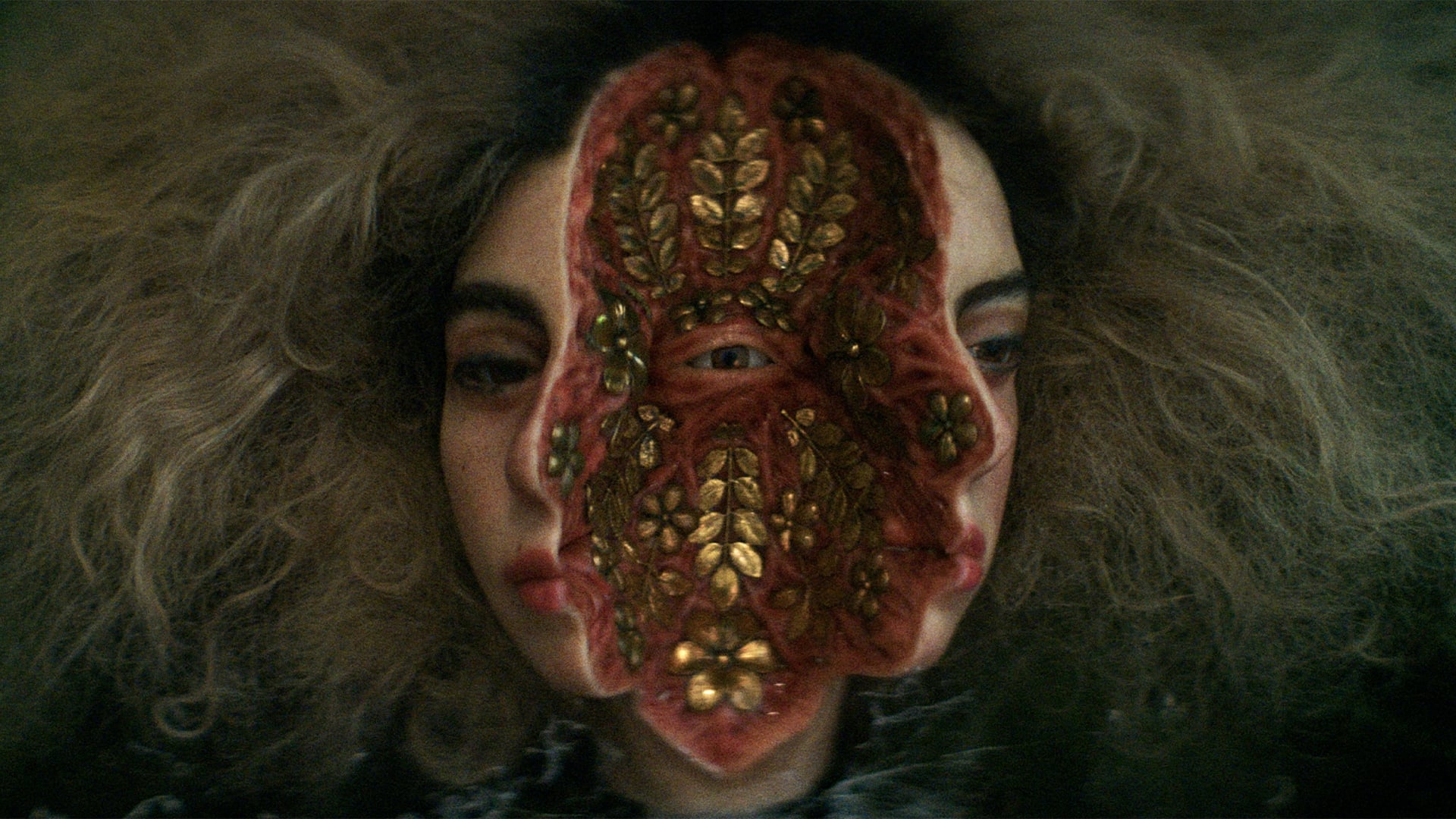
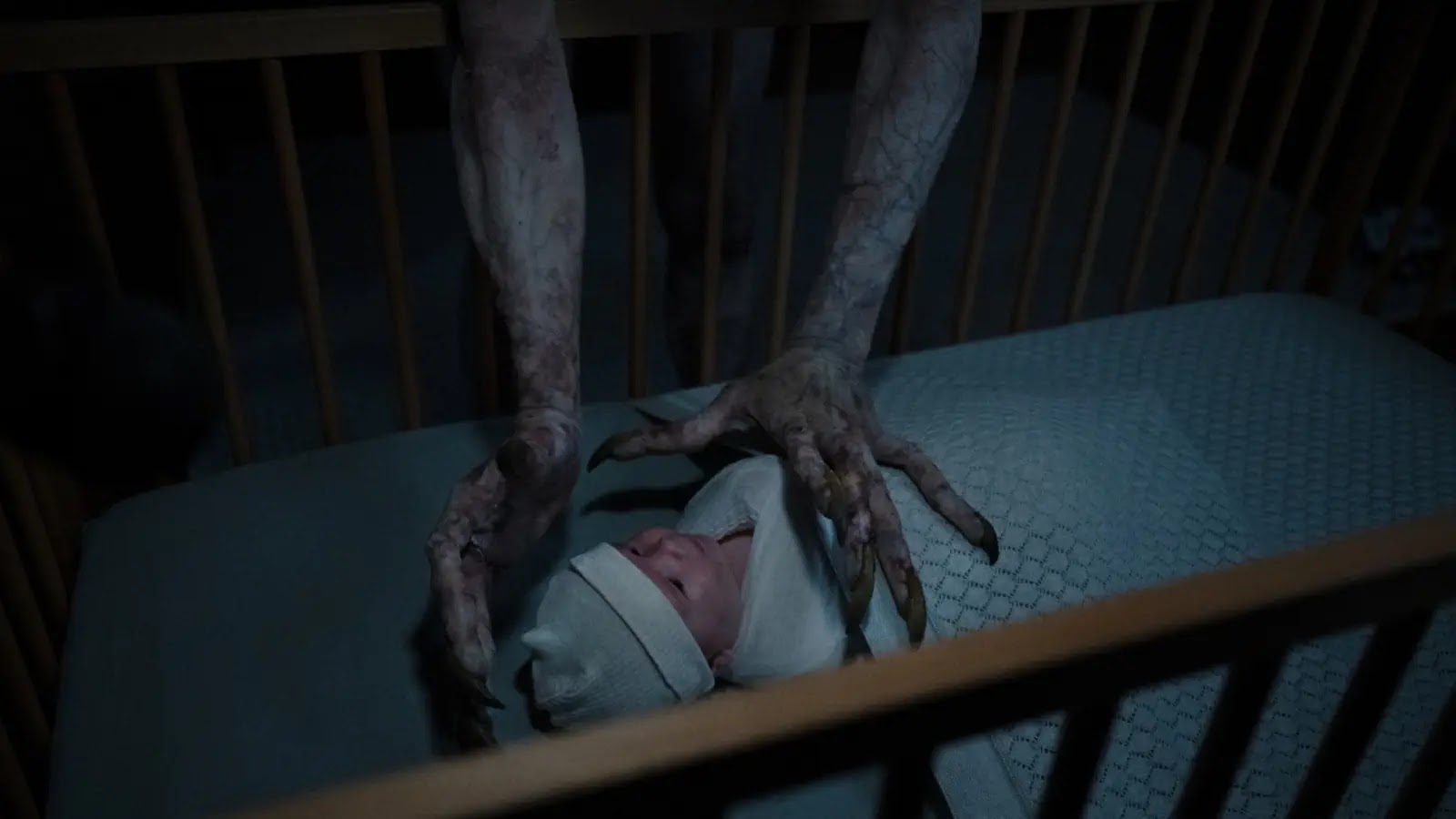
Young couple bring their second child home after a birth that has involved the brief clinical death of the mother Sarah. After some culture clashing between Sarah, her biological mother and her foster mother) the new child attracts the attention of the spirit of the Moogai, a First Nations boogieman who snatches children. Sarah finds this out through a ghost girl identical to her daughter except for the ghostly white eyes. Superstition battles rationalism until the Moogai either retreats into the shadows of tradition or appears in full terrifying form.

This film attempts something interesting: making a horror fiction out of an historical horror fact. A prologue sequence plays a scene from the time of the stolen generations whereby the Australian Government broke up First Nations families with bad intentions and disastrous results. That's how you make a local fable work. The problem is that it cannot work as a film as that relation between source and execution is not allowed to breathe and take form. The screen is crowded with side issues that are given such equal weight that they rob the story of its suspense and distract the audience from the centre. It's a writerly film in that ideas that sounded good at the time have been allowed inundate a screenplay that should be lean and tense.

This means that every fresh scare feels repetitive instead of contributing to a mounting dread. Each supernatural crisis (and some of them are very strong) is allowed to dissipate into the general vibe and we start feeling like we're waiting for the big showdown as we sit through a lot of support acts. When that comes, it's well done and the monster of the title is well designed and brought to life with a message about reconciliation and shared grief. By then, it has felt like a slog.

Here's the thing. If I say this film has history I don't mean it addresses history. It does that but its more crucial history is with the film festival itself. In 2020 Jon Bell's short film of the same name won awards at MIFF and deserved them for a tightly constructed and genuinely eerie tale of ancient legends creeping into the life of a city couple. The final shot sends shivers (it might still be viewable through SBS on Demand). It's fifteen minutes long and doesn't waste a second of that. This expansion, instead of going deeper, just adds more baggage. It reminds me of the difference between Andy Muschietti's impactful short horror Mama and the big bloated mess he made of it when Hollywood came knocking with a budget too boundless to resist. Then and now, the short said it and the feature sank under its own weight. Bell has clear talent. Now he will have to fight twice as hard to get his next one off and running. If the mainstream is the light, please, as artists with things to say, run to the darkness. Your ideas will look even better there. It's counter intuitive but it keeps proving true.

Thursday, August 22, 2024

MIFF Session #9: THE DEMON DISORDER

Families are hard. When you're on uneasy terms with your brothers over old grudges because your dad died for causes somewhere between dementia and demonic possession families get really hard. So, when Jake braves Graham for support after years, he really has a case. Reluctantly but fearing the worst, the pair return to the family home to sort out what youngest brother Phillip is going through. It's not going to be pretty.

Pretty? It's going to be disgustingly ugly. While this intriguing approach to a possession movie takes its time gathering itself together when it does it bolts along, springing through body horror, bush humour, and excruciating extractions of strange things from areas of human bodies. With all that silicon, movie blood and workshop-fuls of effects material there can be a lot to respond to but the cast make a lot of it, pushing themselves forward beyond the invisible curtain that the goo and viscera brings down on the scenes.

Writer/Director Steve Boyle has been a VFX maestro for the likes of The Matrix and Hobbit movies and based this screenplay off an old idea he had that posited a non-religious possession film. The session Q&A following the screening had him suggest that there were several valid interpretations of what the distress and physical afflictions on screen might mean but the starting point was his own father's dementia. A late scene in which John Noble as the father says of his advancing condition that it is pushing him out and replacing him. Without that statement in the Q&A that was where I went on seeing that scene, having experienced the disturbing effects of dementia in my grandfather.

The Demon Disorder only has to be a fun and icky romp through the troubled scission of brothers to band and fight their demons but its strength lies in the resonance of the real things beneath the story, the things that gave it birth and nurture. 


Wednesday, August 21, 2024

MIFF Session #8: A Traveler's Needs

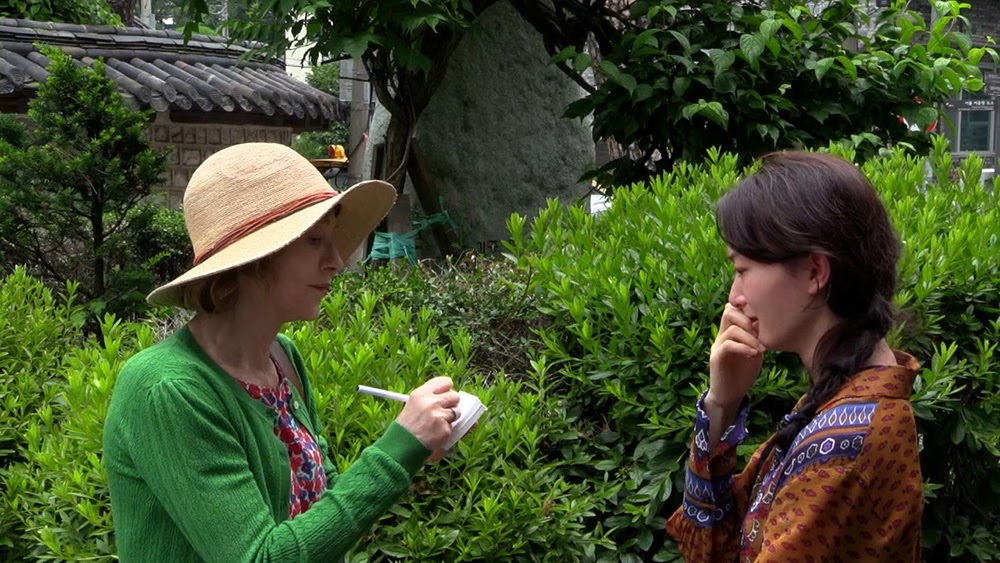
Iris teaches French to locals in Seoul where she has moved. Her method is to initially communicate in English, interrogate the student and write a series of observations (often waywardly different to the answers) in French on cards and give them a cassette with their conversation on it. The first two sequences show this in action and a third shows how she has established herself locally with a much younger man in his apartment.

Hong Sang-soo's deceptively light touch, allowing comedy through often strained conversation (here, between people who speak their second language, English) whereby characters reveal their depths to we witnesses through the screen. Hong's observation comedies keep the emotional content low (until it needs venting) and the conversational tone to the dining room or afternoon stroll level. Their charm is between the lines and under the voices. 

Here, the eternal Isabelle Huppert gives us an aging woman living by her wits and exploiting everyone she can in the nicest possible way. Her marks aren't unwitting, she does get challenged about the formality of the "training" and that it costs money and the man's mother almost rages about the inappropriateness of the arrangement he has with Iris. Where there is reconciliation between combatants it is always done with enlightened experience or at least a willing self-deception. Huppert plays this odd role with a breeziness that assumes her Frenchness will carry her and is happy to expose her own flaws with a disarming smile if not a gentle but profound evasion.

It can be hard trying to describe a Hong Sang-soo film and why they are so funny when they deal with things like conflict, contempt, scamming or deception and why the laughter should feel so light when it is so constant. I don't mean the indulgent titters of festival audiences with beloved circuit darlings but genuine mirth. I could go in and boil it in a test tube but the magic would go up with the steam.

Monday, August 19, 2024

MIFF Session #7: RUMOURS

When your movies are as signature as Guy Maddin's the slightest deviation in style will send the fanbase into conniptions and seizures. Maddin made his career with films that looked like they were shot in 1911 with audio from 1927. Often overlooked in this aesthetic is how the dialogue and actions of the characters were a lot bolder than that suggested. But there was a cosiness attached to the dawn of cinema world we entered at the Maddin by-line. So, when the G7 world leaders lined up in the opening shot of Rumours in crisp digital video and vibrant colour, I thought: oh crikey, what will the fans be thinkin'?

It would be remiss of me to omit the presence of recent collaborators Evan and Galen Johnson who were to varying degrees standing beside Maddin in the creative control bit of the credits. The screenplay for Rumours is credited solely to Evan Johnson. A brief title sequence seems to suggest the kind of old movie world building but when it zaps back to contemporary clarity that short glimpse is the anomaly.

I'm going to do something unusual for me, simply because it says it all in a few words. The IMDB synopsis goes like this: "The leaders of seven wealthy democracies get lost in the woods while drafting a statement on a global crisis, facing danger as they attempt to find their way out." That pretty much tells you all you need to know, including the irony at the heart of the film.

The leaders struggle to concoct the statement they need to assure the waiting world that the worst will be met with the best. At dinner, they fall prey to the food and wine or mentally wander, rendering them incapable of doing more than expressing a kind of writer's block gibberish. When the servants vanish and the dignitaries appear to be alone, they take to the path through the surrounding woods to get back to civilisation, workshopping the statement without success, while joining in the recitation of a previous statement as though it's an old school song. There are forces and figures in the woods like a giant brain, a diplomat who can now only communicate in Swedish and a gaggle of self-pleasuring zombies. What does it all mean? The ending ties the bows and presents a logical conclusion.

The conventionality of the look appears well before the halfway mark to oppose the absurdism of the situation. These people who are remote from the effects of whatever crisis rages outside of their bubble, who are confounded by the task of reassurance, even one as tokenistic as this, is the stuff of fairytales and the concluding address has a dream logic strangeness to it which feels oddly comforting.

The audience around me included a lot of titterers. I always offer doubt with this:  maybe they are seeing something funny which is bypassing me completely. All too often, it's down to either an unfamiliarity with the type of film they got vs what they expected, or that they expected so much from what they knew that they turned the laughter switch on to automatic, set and forget. There is a wealth of humour in Rumours but it's not Flying High with a belly laugh in every line. If they are responding like that because Guy Maddin films bring that out in them then maybe he should return to the old look and feel. But that would only threaten him with stasis and saturation. This is an enjoyable film from beginning to end but it got me thinking about what are probably the wrong things.

Saturday, August 17, 2024

MIFF Session #6: THE SHROUDS

Karsh a widowed tech tycoon has invented a means of dealing with grief that involves shrouds that allow fine details of the deceased in graves that are somewhere between headstones and wildlife cams. He is struggling to cope with the loss of his wife Becca whose bones are in such a container in 3D, zoomable form. In examining the remains he notices strange anomalies appearing on the bones. Then the graves a vandalised in a targeted attack and he sets out to find out who and why?

This near future scenario is the new feature from David Cronenberg, the inventor of and Mosaic leader of the body horror sub-genre. The theme of connection with the dead emerges from his own recent experience in becoming a widower himself. His wife Carolyn died in 2017. Cronenberg has admitted the personal connection.

It is unavoidable: the lead, Vincent Cassell, is given lighting that accentuates his chiselled features and a mane of white hair brushed back and resembles no one so much as Cronenberg himself. Cassell rolls back his physicality to a contemplative stillness and keeps his voice clear but projected only as far as the conveyance of meaning demands. If you see this film, have a look at a recent interview video with the director and note the quiet curiosity and gravity that Cassell also saw in his presentation of Karsh.

If the theme of death and its treatment in Western hands might produce some juicy shocks on screen. But remember Cronenberg's personal calling to make it. The pace is slow and deliberate the texture smooth and audio-scape gentle and solemn. What does offer the kind of cultural ideation here is also from recent experience but not just Cronenberg's but the world's. There is a wealth of bruised conspiracy thinking in the dialogue, whether from the dispossessed or those closer to the workings of the machine; the digital insect swarms of rumour, fantasy scenarios and the sadder fear-mounted snarls of the frightened and powerless, feel like they come straight out of the pandemic. 

Cronenberg can have a tendency to pack a lot of exposition into conversations while walking or even direct addresses between characters of varying power status. Here, they feel all but disposable, sounds that seem designed to engender paranoia in Karsh and his world, rather than lists of details to remember later. In this film they are less confessions or accusations than whispers in the cathedral. 

There has been no announcement by Cronenberg of this being his last film, nor anything of the health-compelled retirement like David Lynch's recent announcement. It might really be here in front of us to present a response to real grief. But, knowing Cronenberg, he might be prepared to rest, knowing that this was his last will and cinematic testament. I bet it isn't, though.

Wednesday, August 14, 2024

MIFF Session #4: MADE IN ENGLAND - THE FILMS OF POWELL AND PRESSBURGER

The first Powell and Pressburger film I was aware I was watching was Black Narcissus. The only reason I knew that and recall it was that it was on just after prime time on Channel 9 in Brisbane, introduced by a host whose name I do not recall. While I and my studenty household had a good ol' chortle at some of the histrionics the film began to seduce us break after break until the end when crazy Sister Ruth emerges from the door to the bell platform looking like the most unearthly evil figure we'd ever seen (the still I've used does not do it justice). The shots  of that face go right through you and it still sends a shiver if I see it today. After that, if I ever saw the Powell and Pressburger by line on any film it became essential viewing. I learned that I'd already seen The Red Shoes as a child (more scares in one of the dance sequences from that time) and probably one of the war movies which the ABC would play late at night. And then I learned about Peeping Tom, the one that Powell made after the partnership broke up and the one that ended his career. I say learned rather than saw as this film that asked dangerous questions about the nature of cinema was all but impossible to see. Eventually, years later, after the move from Brisbane to Melbourne, a friend lent me a VHS dub from tv and everything I suspected about Powell, alone or with his longtime collaborator came coldly true. From that time, I am still catching up.

Before this, the housebound young Martin Scorsese who would note the director credits of the films he saw on tv knew a lot of the work by the time he was well enough to leave the house and start making his own films. Their profound effect, the blur of reality and magic and the solid colour when seen on a cinema screen, made their way into his own film practice. Scorsese is the host of David Hinton's documentary and we couldn't be better served.

Scorsese weaves his own story in with the one he is telling about the duo as a testament to their influence upon his films and the sheer wonder of them to begin with. This is enriched with a wealth of clips from their career when the account settles into the timeline. A gratifying amount of interview footage with the otherwise elusive Pressburger as well as Powell (some with both) does a lot of work. 

Scorsese, in entwining his own story in with theirs (he knew Powell who became a colleague during the '70s and '80s), presents a celebration that allows for the injection of sobering failure into what might have been a cinematic hagiography (like Scorsese's own documentary about George Harrison). What saves it from this is the director's own intense scrutiny of the films and their workings; Scorsese is not just shilling, he's fascinated. Fascinated is how this film left me.


Monday, August 12, 2024

MIFF Session #3: THE DAMNED

A platoon of Union troops during the Civil War are sent to an uncharted area of America as a measure both exploratory and military. No one seems to know which of those it is nor, quite what they are meant to be doing. They march and set up camp at the end of the day as the more experienced soldiers school the greenhorns in the use of the newer rifles and revolver pistols as well as techniques for sentry duty. Here and there we hear conversations about why they joined up and what they think of the war. And that's pretty much it.

Stephen Crane's short novel The Red Badge of Courage is plagued by two assumptions on the part of those who haven't read it: that it was written during the American Civil War and, that it is action packed. Crane was too young to have served in the war and published his imaginative work three decades after it was over. Most of the novel is set in the various camps and administrative situations and only in the final chapters does this heat up into action. The book is about a young man wondering how he will respond to the tests of warfare before, once neck-deep in it, how nothing he thought was anything like he finds it. While this film might feel like a lot of soldiers on a weekend workshopping retreat, it has a lot to owe to Crane's work with its raw dialogue and mix of homespun existentialism and old fashioned traditions. The soldiers, given a temporary reprieve from the fighting are left to guess what they are doing and the means they use to plug the holes in their understanding are not always convincing, even to them. 

There is an eerie quality to the setting here and while the film never trips over into supernature or horror, the sense that these are soldiers without warfare who do not comprehend where this has left them. When there are skirmishes with the enemy they are abstracted by concealment, knowable only by the flashes of rifles in the brush. As they travel further away from the conflict and its justifications, as they tread further into a frigid kind of ascension there is nothing more for them to do than wonder at the silence.

A strange film that will not appeal to many, The Damned is nevertheless, bold filmmaking. If you can imagine Terrance Malik or Andrei Tarkovsky attempting a film of The Red Badge of Courage you might get this. Be aware, if this description should entice, this is among the longest that eighty-eight minutes has ever felt for me. I think I'm the better for it.

Sunday, August 11, 2024

MIFF Session #2 THE HYPERBOREANS

An actor and psychologist, Antonia attempts to make sense of the life and politics of Chilean figure Miguel Serrano who began his adulthood as a Marxist but turned to fascism and spent his public life exploring what he was convinced was its mystical aspects. Antonia begins by apologising for the thieves who stole the film that was made of this and explains that she must begin again with the means she has at her disposal.

She walks through sets variously realistic and symbolic where flat marionettes appear as characters in the tale of Serrano whose influence guided Pinochet. At first, this intentionally fanciful approach strikes as cute but it isn't long before we can see the point of it in expediting the story and, through a fluidity of roles and personae, giving us a solid idea of the point of it. There is a lot of theatre on screen as props and backdrops act as editing devices as well as scenery and the tension is sustained between an often naturalistic performance by Antonia Geissen and the grotesque figures she interacts with. There is a lot of Brecht in the presentation.

Anyone who made it all the way through Beau is Afraid will not be surprised to find that filmmakers Cristóbal León and Joaquín Cociña contributed a great deal to the middle section with the theatre troupe and puppetry. I found myself happy to comprehend enough to keep following and allowing a lot of it to pass by and then at the end of the modest running time, when the extraordinary effort of this stark cinetheatre all but turned into a Guy Maddin movie, I felt rewarded. The final word is given to Antonia and her marionette as they take turns in the same space to bid us farewell.

It's films like this that make me treasure MIFF, the strange and expanding worlds of filmmakers who dare to remind us that cinema is a blank wall until you shoot shadows at it and all the creature comforts of classical Hollywood are only one offering. This one is not for everyone (those it's not for would argue that it's not for anyone) but it was for me.

Friday, August 9, 2024

MIFF Session 1: TOLL

Suellen is a single mother, fending for her young adult son Tiquinho but griding her gears over his burgeoning queerness. She works shifts at a tollbooth, arguing change from fresh old men and bitchy older dowagers in the traffic. When she discovers her boyfriend Arauto is a thief (bag of heavy watches he hid in her room) she casts him out. Her work colleague Telma, who trades sex for toll clearance, is disgusted by the flamboyant Tik Toks Tiquinho has been posting, recommends a gay conversion program. Suellen is interested but the cost is steep. She calls Arauto. They work it out.

The description melodrama is perennially stained with stigma, giving rise to images of histrionic personifications of good and evil. All it really needs to mean is that the question of morality is pushed to the centre. Carolina Markowicz's solid verite film is a melodrama about life below the line in contemporary Brazil and keeps the performances on the right side of natural. The press of "have" over "have not" is clear in the thick ochres of the landscape and fluorescent white of the workplace. A mob boss's smile on hearing an excuse from a drone player last for seconds but tells chapters. These are performances set in a palpable reality.

Yes, the toll of the title spreads into Suellen's life and practice. She seems more superstitious than religious but her determination to cure her son of unmanliness brings her to a place below her own moral radar. The scenes of the program with its achingly laughable class activities and self-deluded bullshit bring home not so much her own delusion but desperation. This film does not quite go where you expect. There are no sudden and refulgent revelations but the final moments suggest something profound has been put before us.