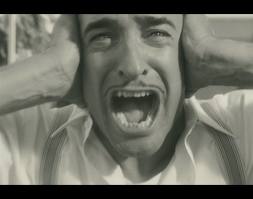
Monday, February 13, 2012

Review: Tinker, Tailor, Soldier, Spy

George Smiley a grey eminence in British espionage, is called in from retirement to expose a mole. The alarm bells sounded when an extremely exclusively secret mission was thrwarted through an obvious and troubling betrayal. Ok, action movie time! No, and again, no. This is not just a spy story, it's a John Le Carre spy story. There's a difference.

This is not a Bourne/Bond sparking circuit board of a spy movie, it's a tale of patient deduction, of examining evidence and testimony, of gauging the meaning of a lifted brow or turn of phrase to establish the fundamentals of loyalty or guilt. This is told through time shifts and is ordered more from the importance a given scene's information holds than a linear progression. A near constant shift between past and present is eased in an elegantly few shots of Smiley's visit to his opptometrist: big 70s square glasses = present: small round 60s frames = past. There are other signifiers of this kind of shift carefully interwoven into the film's fabric to inform without distraction. Care is a good word to keep in mind with this piece as everything you see on screen and hear from the speakers has been put there with expertise.

Now if I say that when the plot's chief revelation happened my reaction was simply, "oh, it's him" rather than anything like, "ahaaaaa!" it isn't from disappointment. This film does have a plot and its tight but it also has a number of themes which are of equal or even greater importance playing throughout. These are what I have taken with me.

The first of these is the portrayal of post-empire Britain, a place of smoke-filled burnt-brown office walls, raindrops on dirty windows, and the kind of fatigue that seems to keep all its victims in a life long grip. It's the 1970s and the UK hasn't been a player in the grinding Cold War for about a decade. To all but the very inner circle, the spy was an unwelcome relic, a dowdy reminder of the hysteria of the 50s. What might strike the common punter of the time as dusty irrelevance is the focus, a lot of clerical work, but that's just the way it looks; what's at stake is what's always been at stake: national security.

The other theme is a human, personal one that forms an examination of betrayal, whether at the level of high spies or in the kitchens and bedrooms of the people you know. To me, this was what the film was about: the central hunt for the mole and its many passing revelations of the worst of human desire and resulting distrust and violence, building a picture of a society in perennial trouble where friends and colleagues are contacts rather than intimates and love, however powerful a force it remains, a thing of quantifiable value for use in trade.

I'm mentioning the cast this late in the review as their excellence (a roll call of UK greatness, past and present) forms the texture of the stories of this film (ie both the spy story and the personal ones) more than is usual. If you want a demonstration dvd of underplaying for your home cinema system, this is the title to get.

Tomas Alfredson shows that he has the strength to move from something as signature as Let the Right One In into such a subtle piece as this which puts him on my to-watch list of promising careers.

Tinker, Tailor cannot be for everybody as a spy movie but as a film about aging, disappointment, and simply making the decision to shut up and start coping, its a powerful sleeper in its own right.

Sunday, February 12, 2012

Review: The Artist: a self responding question

It's 2012, why go and see a silent movie? Try this: a man who looks like a cross  between Douglas Fairbanks and Sean Connery escapes torture at a military prison and flees by foot, car and plane until suddenly he runs in behind a screen showing the movie we've just seen. A group of nervous Hollywood types glare at him. Behind them, the end credits start rolling. Tension. Our hero takes a peep around the screen. The audience is applauding rapturously. He thumbs up to his cohorts. Suddenly they too are in rapture as though they hadn't heard for themselves. Why go and see a silent movie in 2012? Because the jokes in silent movies are grouse.

This is a tale of a movie star in Hollywood's golden years. George Valentin, having allowed his applause to take weight, skips out in front of it, taking as many bows as he can. His costar gives him a resentful finger as he introduces his "real" costar, Jack Russell, Uggie who walks from the other wing toward the star on his hind legs before doing his part in a play dead trick. Life is a walking paradise for this man. But then we've already seen the title card that tells anyone who knows a smidge of cinema history something important: it's 1927, the talkies are coming to town. To town? To the known Milky Way Constellation. George's days of stardom are numbered.

Cue the new breed. Plucky young hopeful, Peppy Miller (a kind of young Natalie Wood), literally stumbles into stardom, falling into the arms of George on the red carpet. The cameras flash and a star is born. A rapid montage of her rise from chorus girl to dramatic bit part later and the pair are reunited on the set of one of George's spy actioners and he gives her a break. Not long after, George's self financed darkest Africa adventure opens on the same night as Peppy's star debut, a talkie. As she's already seen it and has never stopped worshiping George she is in tears watching him sink into the quicksand in the final reel as the near empty cinema wakes up for the end credits. Reversal of fortune guessable almost to the last detail.

 But the tale is only part of what The Artist is about. Silent cinema took its pantomime seriously and worked hard to deliver its extra payloads of theme and commentary, developing its own grammar and symbology.A whole mini-cosmos of significance in gesture, editing, lighting etc etc was created. But The Artist isn't really about cinema history even to the light extent that Singing in the Rain was, unless you consider that history to include 2012.

The Artist is resolutely a contemporary film and it's because of its monochrome palette, use of music and occasional foley sound and initially jarring restraint to the 1.37.3333....:1 aspect ratio (my younger readers need only look a the next example of one of the saddening old tvs left out on the nature strip to experience a 4X3 frame). The Artist knows it's a silent film. It loves the fact. From the extraordinary sequence where George can hear every sound except his own voice to misdirection joke towards the end that was so good that it was met with two waves of laughter.

But even the fun had with the characters variously knowing or not that they are part of a silent movie the film delivers emotionally as the plot demands deeper emotion from them. The climactic scenes are genuinely fraught and build to a high tension. If there be gimmicks in this movie they are cast aside by this point. We sit on the edge of our seats and ride along with it.

And that's why you go to a silent movie in 2012: it brings you slamboombang back to the potential of cinema not just to entertain but to grab you, your friends and everyone else in the room whether you know them or not and keep you in its grip until the credits start rolling. Here's a tip: see this at as full a session as you can, this film needs to be shared. When the end title came up at my screening I experienced an odd but satisfying tribute for a silent movie. It came from the centre of the crowd and spread quickly until everyone was joining in, giving a very loud round of applause, just like the one we couldn't hear at the start of the movie.

Quite simply, a must.

Wednesday, February 8, 2012

Review: Kill List: is rough tough enough?

A year on from a botched job, hitman Jay, is nursing a bad back and cruising along with his young family. He doesn't get a lot done at home apart from finding rabbits in his backyard which he home-slaughters, fries up with wine and eats from the pan while enjoying the sun on the lawn. His wife knows he's a hitman and wants him to stop all this moping around the house, make some money and get back into his trade. Sounds like a black comedy so far, doesn't it? Well, Kill List does have its intentionally funny moments but for the most part it's one of the most relentlessly unsmiling films I have seen since Eden Lake. Like Eden Lake, it's British, very British.

One night, Gal, ol' pal from the hitman circuit, comes by with his girlfriend for a dinner party where he offers Jay a job. It's a multi target hit with a big payday and the chance to make up for "Kiev". We never learn what happened in Kiev to send Jay into disgrace but watching most of the 95 minutes of this film we are led to make a decent guess at what might have happened. But something's wrong here.

The oddness begins with the contrary pull of the high gloss scope cinematography and the severity of the action, dialogue and performances. The resulting intensity ensures that we are completely embedded in the location and situation with the way out locked tight. I would never call this film theatrical but the sense that there is no normal life going on outside of any of its given scenes which borders on the claustrophobic. And then we get to the characters themselves. Each of the main players is granted a measure of warmth but it does little to endear them to us. These people feel real ... too real ... as real as the lift where your nightmares might gather you all together. The scene at the hotel restaurant where Jay "objects" to the A.A. meeting going on loudly behind them is very funny but also a frightening depiction of effortless intimidation.

Ok, so we have here a mean as mustard British crime film sold as a horror piece. Why? For most of the running time we get a series of blunt acts which are played with violence that is confronting but not so much that you'd call it horror. But then, interwoven throughout and heading for the big gear change in the finale, we get clear hints that forces beyond the human brutal ones are at work. This is mostly done through the meetings between the clients and the hitmen which are increasingly sinister and then the gratitude creepily expressed by the targets seconds before they are killed. But for me the most genuine shiver came from a silent moment about two thirds of the way through when a character appears well out of context, looking up at Jay in his hotel room window from the blowy black night of the street below. A creepy portent, though we don't yet know what it is pointing to. Another moment so creepy that it goes through you like an x-ray involves someone waving.

Another point of contrast that needs a mention is the use of full screen title cards that herald the hit about to happen. Stark white letters on black identifying the targets as THE PRIEST or THE LIBRARIAN. This at first feels too forced, like someone showing us he knows his old Scorsese and Tarantino movies (and their influences, of course). This eventually finds its place and is used right up to the final scene, often, through its sudden and stark contrast with the colour of the cinematography, jolting us into expecting something nasty. It doesn't get much nastier than the final card.

Most of the responses I have encountered about this film complain about the ending, saying that it is too abrupt a change in direction to sustain credibility. I'll confess to having the same misgivings when I saw it. There we are in severe verite land and then for the last few minutes of screen time we're in another film with no decent preparation. Too much happens without prior cause. And that ending ... WHAT?

Well, if you have read much of the content of this blog you will know that I profess a lot of tolerance for where a film wants to take me, and a resistance to obeisance to mainstream convention. So, why the whinge here? Indeed, why? Kill List liberally peppers its severe plot with hints that a bigger picture is going to develop later and that it will do so without the protagonist's knowledge or consent. His creepy aristocratic client even calls Jay and Gal cogs. So, it actually plays fair. So, what's my problem?

My problem is that I fell into the film's own trap by accepting the realist tone of its first and second acts and resisting the fantastic tone of its finale. Some commentators have suggested it is a dream and others an hallucination but really the only adjustment needed for the viewers of this film is patience.I don't mean patience with the apparently casual sharp turn the film takes at the end but the viewer's patience with him or her self. This is a piece that reveals itself only after it is over.

If you stare at a negative image for a few minutes and then suddenly look somewhere else you'll get a fleeting positive image. You can't keep it, it even seems to physically slide out of your view. But you can remember it and if you are quick you can recall details. Well, that's what this film is like.

The more I think of it the clearer my impression of its structure becomes. The first act is a failing equilibrium, a family wasting without outside nurture, consuming itself. The second is the solution as Jay goes hunting or questing. The third is a kind of apotheosis, a crowning as Jay is confronted with the consequences of his being very good at his job. If you've seen the film you might appreciate the understatement of that.

Perhaps its intensity leaves too little room for welcome. The characters are very hard to love; you need to be content to understand them rather than  concerned for them. The contrast with their scenes and the ooky kooky scenes of the mysterioso clients jars rather than intrigues which leads to the sensation of abruptness at the ending. But this is not Paranormal Activity which snatched mediocrity from the jaws of effectiveness for its ending. No, it's much more like Irreversible with its bludgeoning way, or Inside's eye-popping and quiet end following its onslaught, or Martyrs with its profoundly unsettling close that places all its unrelieved violence firmly in context (however uncomfortable that context is).

So, why am I forgiving it now when I made such moan on freshly seeing it? Time. Also, as we do with every piece of narrative art we get through, I remember it in reverse, from its extraordinary finale back to its ruthlessly ordinary opening

Kill List is a strange film that will probably be condemned to cult status at its highest. The refusal to streamline its two opposing forces will daunt anyone who expects a service industry approach to the stories they encounter. That's not a slight, just a caution. If you go into this film expecting something like Drive you will probably be left resentful. I do not love Kill List but I am beginning to admire it. Why, I don't know. It's like that last troubling conversation you had with a friend that you still can't work out and won't until you see them again. So that's what I'm going to do....

Tuesday, January 24, 2012

Shadows 2009-2011: R.I.P.?

Actually the last day of MIFF 2009, but I thought the pout matched my mood.
 From autumn 2009 to summer 2011 I projected movies on to a wall and then a screen at a gallery in Collingwood. I had a conviction about the need for an alternative cinema experience somewhere between a dvd night and the long gone arthouses of this town. It was meant to be both relaxed and challenging. Going by the people I met while doing this, talking and drinking with them, I got the message that I was doing a pretty good job.

I screened my last at ABC Gallery in December 2011 with the understanding that if continued in the same venue in 2012 it would have to be on a night other than the usual Friday as mine host Milos needed the night to spend more time with his son. That outranked my film night so I began thinking of putting feelers out for a similar venue. If I'd been planning to try to talk Milos around to resuming on Fridays with a different frequency those plans were dashed with his plummeting fortunes in January 2012 when he suffered a stroke and was given two weeks notice to quit the gallery. (If you think I'm being frivolous about this issue, read the previous two posts.)

I made a tentative query to the folk at Long Play in North Fitzroy who were generous with their information and open to discussion. Their discouragement of Friday as a regular night was given with pragmatic reasons but were happy to discuss other nights of the week. They are kept in mind. There are other avenues and existing options that I will be investigating over the next few months. But things have changed for me, as well.

First, I have been working on my graphic novel The Monsoons for years now and I am using this hiatus from Shadows as an opportunity to finish it. My blog Monsoon Days, detailing the process and background, is also taking up both time and enthusiasm.

Second, I'll have to confess to some exhaustion where Shadows is concerned. This has nothing to do with my love of sharing these films. And I haven't run out of them. It does have to do with the fact that even in 2011, when my lowest numbers were higher than the average attendances of the previous years, I perceived a drop in the audience which was only indirectly related to its size. The drop I've been noticing is in the acceptance of the very material the night was established to offer.

I had one curatorial goal in mind with Shadows and that was the message that cinema is a blank canvas. It's just a medium. A painting doesn't have to resemble its subject literally. A poem doesn't have to rhyme. Music does not need melody. Cinema does not need narrative, even if it's fiction. So, if a movie plays fair by declaring itself in the first ten or so minutes to be outside of convention, don't judge it through convention. I'm sorry if that offends anyone but it's just common sense.

No one needs a degree to understand that something's out of the ordinary. And if you do understand that, isn't it better to ask why it took that different path rather than complain about it as though all films are an extension of the general service industry and should be made to a tiny set of standards? I began to receive so much intolerance of the diversity I was trying to celebrate that I had to concede that I'd failed. At best, I was providing entertainment in a homey environment. Nothing wrong with that, it's fun, it's just that my purpose had been knocked out of the ring. So while I still relish the idea of putting on adventures in movies, for the moment, in this breath, I also dread it.

I know, I know. It wasn't you. And it wasn't every night. I was frequently gratified to find some difficult pieces met with open arms. I also learned to include titles that would please rather than stimulate and there was more than a little resignation involved in this. See, I didn't want to establish some rarefied circle of connoisseurs, I wanted to take the kind of thing typically considered exclusive, and reach out with it, demonstrate that, for all its obscurity or idiosyncrasy, this or that film had real things to offer, "quality" and high culture be buggered.

This means that, however temporarily, I am back to doing the thing I wanted to extend rather than rely on, dvd nights in with friends. I love doing that but loved more the opportunity of using the current accessible technology to go beyond my circle of friends to any who could make it to the dark of the screenings to taste something new.

So, I might be back but if I am it won't be for months yet and I have no idea where. Meantime you could do worse than check out Screen Sect at Bar Open, Fitzroy, Cine Cult at 303 High St, Northcote and the ones who almost stole my title, Shadow Electric at the Abbotsford Convent. I know I will be.

That vented, I thank you, I thank you all: ye comers and bummers, cinematic gourmands and holiday makers in unfamiliar climes, ye textbook bashing guardians of form and cine-Pollyannas, ye scriveners and disciples of the sprocket and the perforation, ye slaves unto the image, ye spielers of the spool, ye custodians of cool, ye talkers, ye baulkers, ye seven-rule chalkers, ye teachers, preachers, screechers and beseechers of the flickered visage, ye tickled and ye soured, ye bored and snoring sailors of the rapid eye movement, ye bold invigorated, ye toe-testing newbies, ye architects of new sensation whose thrill-quest beats the scoobies, ye dogmagogues and spirit-chasers, ye dipsos of the framerate, ye critics and ye cynics and ye early-cab-sav mimics, ye mudrakers and champions, ye hedonites and scions, and all ye blazing grenadiers of the shadows who came to see and hear and yell and drink and laugh and silently consume the light before you and all the sounds around you in the spirit of the adventure of the Notion: thanks for coming.

PJ


This one IS from a Shadows night. Meg, Dean and Kate.

Monday, January 23, 2012

Milos on the mend: slow but sure

Chris, Sonia and I went to visit Milos on Saturday afternoon. He's currently in the St George branch of St Vincents out in Kew. Having heard little of his developing condition I had only the vaguest notion of what to expect but when we got to his room we found him awake and pleased to have company, sitting in a motorised wheelchair. It had been reclined for his comfort. He looked like a suburban dad in it.

He launched straight into the story of how he came to be there, the morning when he woke dizzy and wobbly which degenerated into the stroke that got him. Very luckily, his co-tenant Alexander realised something was wrong and he was hospitalised within an hour of the attack. With strokes the sooner they are treated the better chances of recovery.

He came to in hospital, disorientated and unfocused, confusingly not in control of his movements or will. The days that followed brought details back to him in the form of memories returning as well as visitors. He says he remembers the visit that Miriam and I made but my own memory includes experience of his tact.

If I had worried that we would be staring around the room in silence for an hour I needn't have. Milos told us of the attack, the days in hospital and being brought here to Kew where he will be for perhaps another two months in recovery. What this means is that you have that time to pay him your own visit, if you can. He will greatly appreciate it.

He jokingly asked me when my next screening was on and while I left that at a smile, one thought led to another  and Sonia suggested getting a portable dvd player. We went thirds in one just after the visit. I'd told him I had relabelled some of the old Shadows discs to make them more recognisable and put them in a satchel. I'll add a few more to the collection and we'll deliver the player and discs within the next week. (Could you part temporarily with a dvd or two while he's there?)

One thing that hasn't been affected by the stroke is the Milosian sense of daily comedy. He told us he'd been banned from operating the wheel chair as he kept hitting other patients while he was distracted by the pictures on the wall and the better looking nurses. So he's back to L plates.

Just after he had been relocated from St Vincents in Fitzroy to the Kew facility he waited in his room, examining the walls. A doctor came in to check his chart. She was Indian, and beautiful. An hour later a cleaner came in to set up the adjoining bathroom. She was Indian. Shortly after that a pair of nurses came to help him into bed. Both Indian and pleasing to the eye. Later in the afternoon a decidedly Anglo doctor came in and asked a question to test his sense of orientation: "Do you know where you are?" asked the doctor.

"India," said Milos flatly.

It was probably the first occasion when his temporary incapacity to smile fully served his humour faithfully.

A visit or series of them would help to exercise those facial muscles, methinks.

PJ


Sunday, January 15, 2012

Goodbye, ABC: Thank You, Thank You, Thank You, Milos


Those of you who came to have such fun at the last Shadows Screening of 2011 and were there for my introduction will recall that I suggested that it would be the last screening for the year but perhaps also forever. Well, I'm glad you remember that as it will serve to cushion the blow I'm about to deliver. Actually, two blows and, considering the focus of this blog it's hard to know which to start with.

Actually, it isn't. The most important news is that Milos Manoljovic suffered a stroke last week. He's ok. He's as ok as people who have strokes can be. He can speak and move but will require continued treatment to get him back on his feet and walking amongst us. This might take months. He has been given two week's notice by the owner of the ABC Gallery who, again, has failed to put an application into this year's Nobel Peace Prize. No more Milos at the ABC.

As there is nothing I can do about that I'm going to spend a few paragraphs  thinking about this.

I loved films at ABC. From the moment I walked into the Gallery in the winter of 2007 I was hooked. A friend of mine Dean, was showing one Japanese horror film I loved and another that I hadn't seen. I'd been to small time enthusiast's film nights over many years and knew what to expect: a ratting super-8 projector near the door of a small white room peopled by a lot of bereted students on cushions on the floor, their legs going numb from the cramped elegance enforced upon them, a pair of casks of red and white goon warming  in the corner, some naff  but fun old public service announcement shorts form the cold war about self-preservation in the event of a commie H-bomb going off in your neighbourhood, and maybe a Russ Meyer flick or two. Ok, I'll go along to one and say I've been. Well...

There was a bar, a real bar, and it had a real licence. And there was a digital projector which was busy casting a BIG picture on to the white wall at the other end of the large space. The walls between were crowded with canvases which had an intriguing ... lurk to them. The sound was crystal clear. All I had to do was choose a chair at one of the unmatched cafe style tables and watch the film.

The wall where the movie was moving was whitewashed brick. It had a texture. Here and there a nail or rivet or something stuck out form the surface creating its own miniature De Chirico shadow on the image. I couldn't have cared less. I was being treated to a Japanese horror film which I had no idea existed. Its title was Matango and I couldn't place its vintage. It was so thickly atmospheric and intriguing that I forgot all about the wall's bumps and spikes, sipped wine and relaxed into complete absorption.

Dean carries his own personal sharpness effortlessly, he has some good ideas. One of them was that a good cinema only needs a projected image and sound and a place to comfortably watch and listen. That achieved it could happen in an igloo. We had just lost our last major art house in Melbourne. Well, here it was, as fresh as a whim, right in front of me. Dean had thought it up and done it. What else could I want? More, that's all. More.

I got it. We all did. Time Capsules gave us unjustly forgotten whackfests like Nicholas Ray's Bigger than Life, more Japanese genre that I hadn't even scratched the surface of in my own wanderings, whole nights of blasting obscure and trippy animations from the world of history and the history of the world, Busby Berkley's cosmic Broadway rubbing shoulders with flavoursome delicacies and rare finds. Time Capsules was a tribute to free thought in the projected image and hooked my Thursday nights. After the film there were people to meet and argue with (in a good serious fun way) and there was whiskey, beer and wine. Somewhere between an arthouse cinema, cool bar and a dvd night with friends it often felt like a shared discovery and a celebration of it to follow.

This was the answer. It called out from the void left by the closure of the arthouses mid 2000s. People not only doing it for themselves but defying the unspoken directive to huddle indoors for dvd nights. It brought the crowd back, the strangers in the dark who are the best people to share an unseen film with. A bar and an attitude of the purest fuck-you to the assembly line of the mainstream. It was gold class arthouse.

I ran a few screenings with three others in 2008 when Dean scheduled some travel. I chose four titles, wrote them up on his blog, read about them and presented them. Dean had curated his screenings, taking care to read an introduction to each, priming his audience for the night's discovery. So did I. And if going to the screenings had been zappy putting them on was pure thrill. When the opportunity came for me to do my own I seized it.

This is where the mighty Milos really comes in. It was his place all along and he ran the bar with a saturnine humour, keeping the punters going with his tongue-in-cheek observations, opining from deep thought on the films just seen, lodging a log splitter into a tree stump, lifting it over his head and bringing it crashing down on to the concrete floor in a single motion and feeding the wood heater with the shattered remains. We needed heat. That's where we got it from.

It was Milos who encouraged the nights. He kept them going. With my varying fortunes in the first year of Shadows I decided to begin the new year with an unintentionally disastrous dual program which served by a schedule that no one could decipher. After the inevitable first few fizzers it was Milos who said: just go weekly again, we'll work it out. I did and slowly rebuilt. And patiently, Friday after Friday, he prepared the room, swung the tables and chairs into place, chopped the wood and stoked the fires, made sure there was ice and enough beer and wine. And even at my abject screenings, the ones that drew in a mighty four or five, he silenced my protests that I would really get people coming in for the next one, by saying: I like the night, anyway, people will come if they want to. He'd then pour me a wine and refuse my money.

The first year was not all gas and gaiters (what is, though, seriously? Sounds horrible, doesn't it, GAS and GAITERS) and my struggling effort was frequently interrupted by either a double booking or an invasive one. My earnest complaints about this had to be swept under the rug when I realised that I was still very lucky to be continuing with the thing when it was bringing in so few people and not fulfilling its promise or my amibitions for it. It would have been both justifiable and merciful for him to terminate Shadows and just host parties instead which would at least have paid his rent. But, no, after the interruption I just came back and he let me.

As things slowly improved at the screenings, attendances first stabilising and then, last year, swelling, I understood that I was only there because Milos enjoyed the idea of it. Not just because he got a crowd of people to meet on a Friday night or saw the occasional film that surprised or delighted him from the menu of great dirges I prefer to show the world. He let me because he liked what I was trying to do. It was important to him.

When I heard the news of his attack last week I went to visit him with friend and Shadows regular, Miriam, who'd told me the news. Hospitals make me feel frail but this was necessary. We got in early evening and found the ward. He was asleep, fathoms down into a profound slumber. We went for a stroll to chat and bide some time before trying again. This time he stirred. Miriam spoke to him but he was so woozed out by his condition and whatever they had given him to allow his landing some ease. He looked at Miriam and then at me, he didn't seem to hear us speak his name, he saw two strangers at his bedside. There was nothing we could do so we left quietly.

The heatwave had broken and the evening was bright and cool. I shuffled back home and then on to the thing I was going to, seeing nothing but those strange, uncomprehending blue eyes. It was haunting me. And then I remembered he didn't have his glasses on. He's virtually blind without them. We might as well have been Bert and Pattie Newton for all he knew.

Reports kept coming in. He was affected by the event but recovering. Miriam called after a later visit with a happier impression and suggested I hot foot it to St Vinnies before Milos got shipped out to Kew for months of physio. No definite date on it but I figured I could leave it till the next day. So I fronted up and found out from the pleasantest receptionist I've encountered in a long while that I'd missed him by about four hours. She offered to put me through to the Kew facility but I declined with thanks and left working out how I was going to get there in the coming weeks. It'll happen. It'll have to. It's too important not to.

So, and by now this other bit really does feel like the soft news story it is, no more Shadows at ABC. I'll look and ask around but I've had a pretty good run, had some fun and maybe even reached out and touched a few. For that, I have to thank Milos Manojlovic.


Wednesday, January 4, 2012

Review: Melancholia

Fade in. The gold and ice beauty of Kirsten Dunst. Her gaze is resigned. Objects fall through the unfocussed light behind her. They are birds plummeting to earth. Charlotte Gainsbourg carries a child and runs across a golf course, her feet sinking into the damp turf and leaving dark holes behind her. A black horse struggles to stand but collapses. A huge blue planet moves into earth like two movie stars' heads coming together for a screen kiss. The world is ending. This is how Melancholia begins.

The opening sequence seemed absurdly long until it dawned that I was watching an overture. I was listening to one, as well. The gigantic plaintive musical theme that I couldn't quite place was revealed with a little googling to be the overture from Wagner's Tristan and Isolde. Then, after we see the fate of everyone we are about to see in the film we get a chapter title with the name Justine.

And then we have comedy. An extreme high shot of a narrow winding country lane. Into this small scaled nature moves a huge white stretch limo that is not going to make it from the bottom of the frame to the top without a lot of trouble. Inside the car are newlyweds Justine and Mike (Kirsten Dunst and Aleksander Skarsgard, the Viggo Mortensen you have when you can't have Viggo, also known as Eric the Viking Vampire from True Blood). Both of them have fun trying to get the monster car through the tiny lane. When they finally get to the reception at the mansion owned by Justine's bro-in-law they are met by a frowning sister, Claire (Charlotte Gainsbourg) who reminds them that they are two hours late and the reception is now all but ruined.

The reception has cost Claire's husband John (Keifer Sutherland) so much money he never names the sum but continually introduces the topic into conversation. Justine's father (John Hurt) is a happy drunk whose sad resignation to his life's failure gives him a shambling dignity. His ex and Justine's mother Gaby (Charlotte Rampling) is an arid and bitter woman who is bursting to let everyone know what she thinks of marriage. Justine's boss (Stellan Skarsgard, Aleksander's father: not relevant but we're going through family relations so what the hell?) is still at work in his wedding tuxedo sending his bug eyed nephew after Justine to get a tag line for an ad.

Etc etc ... A complex sprawling told in more or less real time with use of shaky cam digital video. Sounds like blergh? Maybe but it proves compelling. The mass of inter-relations and microplotting that give this chapter its Pieter Breughel the Elder earthy grandeur is all backdrop, though. This isn't Festen nor is it attempting to be. At the centre of this happily chaotic celebration there lurks a dark spirit. Justine proceeds to alienate everyone present (everyone!). It takes her a while but she goes about it patiently and certainly. By the end she is alone.

Chapter 2 is Claire. Charlotte Gainsbourg talks to her husband Kiefer Sutherland about her fear that the big blue planet Melancholia is about to fly by the earth will really collide with it, rendering everything they are and know to space dust. He tries to reassure her that that won't happen and as an amateur astonomer is keenly looking forward to the event. In these doubting days the family takes delivery of Claire's half sister Justine who is so deeply into her affliction that she has to be coaxed to lift her foot to step into the bathtub. As Claire forages in every human corner for hope, Justine, in chilling resignation, tells her that there is no justifiable hope and that they must give up to the inevitable end of days.

There are directors who never seem to go out of fashion and whose whole body of work is labelled good in polite society. The Coens are in this group. There are others whose work features an exception either way. People who loathe David Lynch will usually give him Blue Velvet or Muholland Drive. And there are director's whose place at the top of conversants' admiration has long been cold and vacant, regardless of their output since. Lars von Trier lives here.

He has been generally out of favour since Breaking the Waves back in the mid 90s. And then there was Dogme 95 which kept him there. And then there was a series of foot in mouth gaffes at press conferences that had him virtually put a "kick me" sign on his own back. The most recent one of these was his rambling admiration for Hitler's architect Albert Speer which turned both weird and sour as Kirsten Dunst beside him quite visibly wished she was somewhere else (Youtube it!).

For me, I take von Triers' films one at a time. I don't hate any outright but some I don't care much about. What I do like is his steady hand at melodrama (see also Almodovar for this as a redeeming feature) his ease with experimentation and the warm and deep results of his direction of actors. I took some pains above to list some of the cast because it's a splendid one and unusual for such roll calls, not one is wasted nor allowed to phone it in.

I've enjoyed Kirsten Dunst as a screen presence since the Interview with the Vampire way back when and have found that she drives even indifferent vehicles well (Mona Lisa Smile). Along with the Gyllenhall siblings she is among the most compelling of her screen generation, lifting whole films with little effort. Even though she is in such fine company here and the playing is more ensemble than individual, her performance centres the whole two hours twenty minutes.

That is important to this film because, although it has been dismissively called Festen meets Armageddon, Melancholia is neither social realism nor sci fi. All told this film is not about a wedding gone wrong nor an interplanetary disaster it is about depression. The grinding black defeat of depression is present in every frame and its host is Kirsten Dunst's performance. Whether facing off the lens in the first shot with an unblinking gaze of certainty, swaying drunkenly by herself in the golden-hued crowd at the reception, chugging a great quantity of cognac straight from a bottle of Hennessy XO, suddenly crying into her favourite food at the dinner table or quietly preparing her sister and nephew for the end of the world, Dunst holds us with her glacial precision. There is no warmth in this embrace but we don't want to disengage, so powerful, so pitiable, so pure. This is a fable of depression and has at its heart the kind of simple message that all fables must carry. In this case a single word will do: Cope!