Monday, January 27, 2025

Review: WOLF MAN

Blake has survived his childhood with a survivalist father in the wilderness to be a freelance writer with wife and daughter. When he receives government certification of his father's death despite the body not being found, he has an idea. Going out there and staying at the farm might help him get some closure on the relationship that been so alienating. He persuades his career journalist wife it might also be good for the family as a bonding experience. So, off they go, into the wilds of Oregon and get lost. Happily, an old childhood acquaintance is there to help but this doesn't end well. Soon, the family are hurrying to the old farmhouse, pursued by something savage and large. Blake's wound begins to trouble him more than being painful. He begins to see the world through very different eyes.

Leigh Whannel's follow up to The Invisible Man shows him tackling another distant relative from the old Universal horror stable. This time, instead of cleverly removing the veil of subtext to the theme (Invisible Man's domestic abuse) Whannell plants the family unit a little under the surface as the monster story takes front and centre place. He avoids repetition by confining most of the action to a single night as Blake succumbs to the infection and metamorphoses into the wolf. His draining ability to communicate with his wife and child being the dysfunctional family theme to the fore but never at the expense of the threat.

Christopher Abbott again displays a great capacity for believable pathos as Blake. Parts of his transformation where he understands he can no longer talk are quietly heartrending and echo the sadness of his husband and father trying to keep a family from collapsing. Julia Garner as his wife Charlotte must tread deftly between showing her contempt of her husband without us giving up on her. Matilda Firth is natural as young Ginger. 

The remaining character is less the werewolf than the wilderness whose lightless confinement is brought close to our eyes. The barely visible treeline is all threat. The sight of the condensed breath shimmering over the edge of the lookout shelter seen in the prologue and later, at crisis point, is a Spielbergian touch that proves very effective in consolidating the powers of the monster.

This one has got some lukewarm reviewing around the traps but I was constantly engaged by the human threads and alerted by the action. While Whannell's Upgrade and Invisible Man provided a lot of tech bravado and ticked the boxes and beyond, Wolf Man is kept to its tasks and boundaries and presented something effective and manageable. That sounds like faint praise but, really, it's a sigh of relief that more wasn't made of what is always a simple tale that delivers a clear tragedy.

Sunday, January 26, 2025

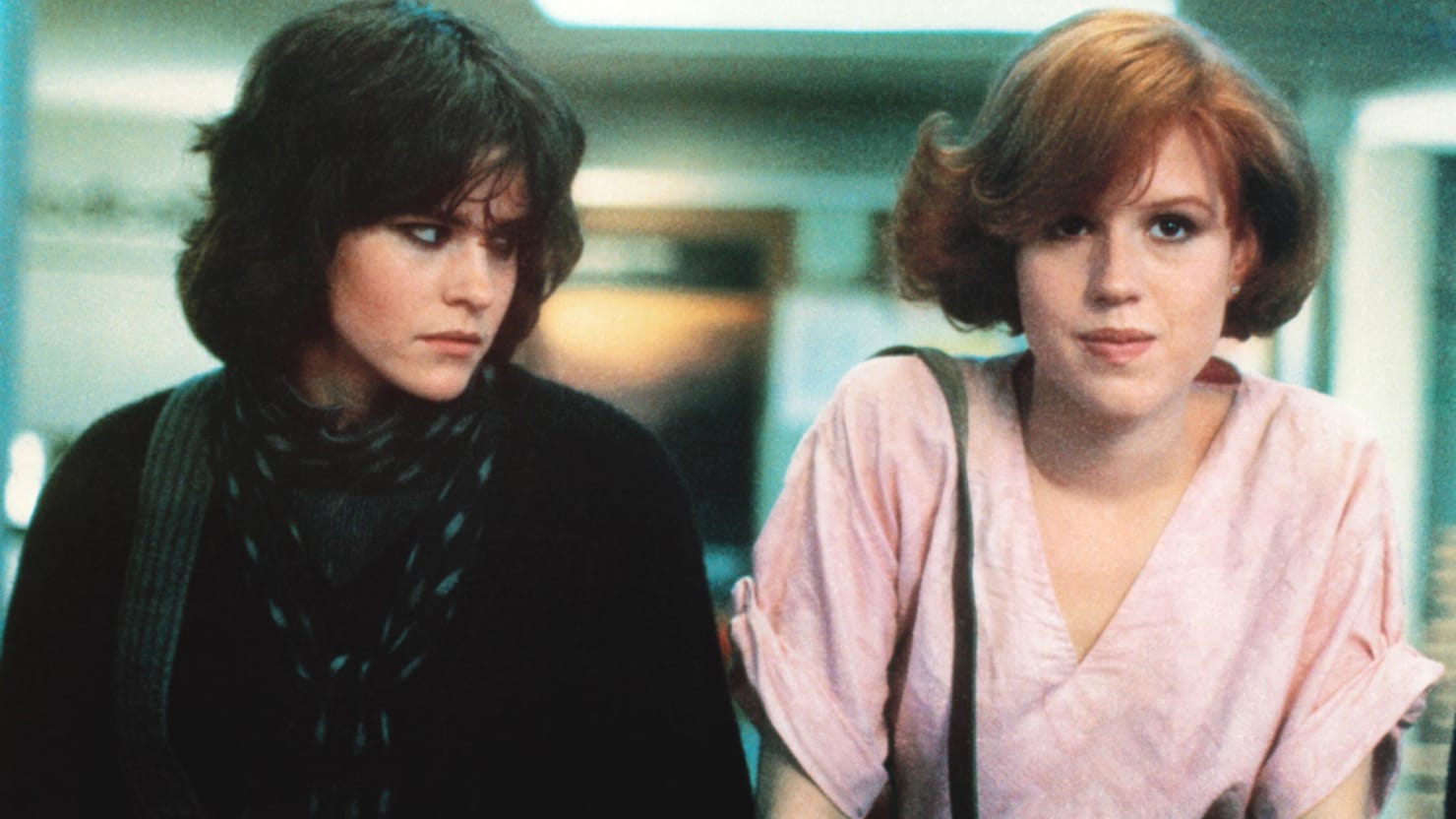
THE BREAKFAST CLUB @ 40 (SPOILERS AHOY!)

Five schoolkids serve detention on a Saturday. They each have to write an essay about who they think they are. Left to themselves after getting drenched in the contempt of their middleaged teacher, their differences start igniting and in the ensuing prolonged teensplosion they end up actually doing the assignment with an elected designated essayist. Sounds like a young conservatives workshop. Oops!

Is that harsh? This movie was designed to hit with the established teen cinema market that had swollen by the mid '80s into a screaming hormonal rage. It was given as a olive branch between the yet to be nicknamed Boomers and X'ers but also to reflect on the times and how they are always tough on teens. It pretty much does exactly that with a lot of energy, a good ear for dialogue that doesn't patronise the demographic, and a credible arc and round up that ends with a warming freeze frame of defiance. So, why do I hate its guts?

Well, let's spring back to the obviously relevant Elizabethan period of theatre for a second. In Shakespeare's time, love stories were comedies. They had the same formula as modern day rom coms, from meet cute to marriage. Shakespeare wrote his greatest love story as a tragedy. Way to start an arms race. Same thing here. Teen movies were comedies with gross out humour and generationalism and they ended in sex to various degrees of success. John Hughes had already joined this trend with his Sixteen Candles which had all the trimmings (even chucking in an indigestible side of racism for the times). The Breakfast Club, which had been gestating for years, wiped the table.

While his teens are teens their interaction and speech are not branded as teens like they were in Porky's. John Hughes had emerged from the great ick of the National Lampoon movies with an apparently clean bill of social health. The kids are sexual but it's no longer horny boys and walking semen receptors. Sex carries a danger but it's an interpersonal one not a smirking threat. By the same token these aren't just adults in waiting, either. As their conflicts draw out the issues, they reveal the problems of the growing awareness of their age group against the resistance of their parents' generation, as they try to navigate their own way from childhood to the grown up world. None of them wants to be their parents but neither the ambittered old bastard Vernon the teacher. They have themselves to create and that has to be done by themselves, without guidance.

So, Bender's obnoxious feather ruffling that gets everything going really does have to be scattergun and destructive. He doesn't know where he's going, either, but he knows how to clear jungle with a machete. Part of Hughes's effectiveness, here, is to resist all the tropes of the genre, even those he'd added himself in Candles. If it had been five Benders, we'd just get more Porky's. There is a contrivance in the characterisation along very trad personification lines: Bender is the rebel, Claire the popular beauty, Andrew the athlete, Brian the nerd and Alison the weirdo, or resistance, ruling elite, convention and chaos. Peel the veneer of casting and dialogue and it's a medieval passion play. But that's not the problem, here.

Judd Nelson's Bender is so constantly taunting that the movie is over halfway through before you ease off wanting him dead. Molly Ringwald's Claire show's vulnerability believable for her unpreparedness for unusually hard attack. Emilio Estavez's Andrew is all squeaky clean surface and raging confusion a scratch away. Anthony Michael Hall's Brian has the best opportunity of range, sucking up to Bender's power or Andrew's when it rises, in constantly alert self-preservation. But it's Ally Sheedy's Alison who gets to me most personally as she is of the tribe of latchkey fantasists whose creativity in the absence of guidance is all self mythology. Her initial frenetic herky jerky quirks are overplayed but as soon as she is forced into dialogue she works better than any of them. But she is also the centre of the problem with this movie.

Not that it's a bad movie. Hughes keeps the single location interesting as a dynamic space for the kids to bounce around and off each other. His performance direction (apart from Sheedy's overcooked weirdie slapstick) is muscular and nuanced, from Bender's space invasion to Brian's skittish affinity shifts. His management of the arcs within the big arc is impeccable. It's easy to see why this gave him a career as visible and nameable as Spielberg's in the same era. The Breakfast Club is a brilliant movie. It's just a brilliant movie that sucks.

It's not because of Alison's makeover but that's the thing that flings the curtain aside and exposes the wizard as a fake. At the end, after everyone else has been sorted and given their prize for turning up, alpha chick Claire takes Alison aside and art directs her out of her individuality, taming her sub-Siouxsie shag-mop, replacing the near goth eyeliner with highlighter and debagging her anti-sexualising op shop outfit with something out of an Eisenhower era yearbook. She looks like she farts vanilla essence. She approaches the stunned Andrew like a spacecraft floating toward its station dock. A little talk and tweaking and she's ready for the great mangle of adulthood.

Why is this bad if it really only points to a realistic outcome? It's bad because it claims that the conformity that almost all teenagers fall into (whether against the big world or their own peer pecking hells) is not just inevitable but desirable. Alison, who was the the sexiest character of the five through her initial refusal to engage with the others to her barnstorming personal chaos, was more of a rebel than Bender the walking bumper sticker. We've spent one and a half hours with the claim that the conformity of Andrew or Claire or Brian was just wrapping for individualistic rage when all of them were really just longing to get back into the cosy middle only to drag the sole genuine thorn in the side into softened consumable form. It's the mid '80s and this is American punk.

What I mean by that is this: having been completely outclassed in the late '70s by the tougher and more genuinely political British punk, the thing that was called punk in America started copying its style and sound until it attempted to outdo it without getting the point about it being anti-competitive. From this arose the false narrative (now pretty much accepted) that UK punk was the copycat. This prevails because its carriers are culturally dominant and live at a time when preference trumps truth. Ponder that when you watch the cast react to a toke of cannabis as though it's hospital grade meth and the music presages the revisionist rockism of the US '90s.

The Breakfast Club tells us the way to conformity the way that rebellion is always sold when it becomes marketable: it gives its audience the illusion that because they enjoy the onscreen revolt, they are themselves rebels. Bender's freeze frame fist pump might as well be a sales exec celebrating a campaign. It's not just Alison getting microwaved into flavourless sludge as she effectively is, that just lays bare the problem, it's that we're meant to do the same thing in the cinema seat or the beer and pizza night and sing along.

Hughes did have an effect on the teen movie, including the better Pretty in Pink and the pukefest of Ferris Bueller's Day Off. Others, under its influence, even did a little better. But, really, what the world of teen cinema needed was Heathers which cleansed the dishonest earnestness with bruising satire. And then Porky's came back in the '90s with American Pie and its clones. Why? Because Porky's was still closer to what the teen ticket buyers had wanted from movies about themselves, "the lineaments of gratified desire".  Whenever that happens the real non-conformity will rise again, like 2000's Ginger Snaps or 2023's feloniously underseen Bottoms, before being stamped down by the mainstream. Your mission, should you decide to accept it, is to locate those ones and, happily, a world of digital memory awaits the adventurous explorer. See The Breakfast Club, of course, but relish Heathers.


Sunday, January 19, 2025

LYNCH IS DEAD! LONG LIVE LYNCH! or How I worked out what I feel about David Lynch's passing.

David Lynch died last Thursday, my time. I think. It's not clear. I read it in the early morning on Friday. My cat woke me just before his breakfast time. A Facebook friend posted a billboard, white bold against purple. I found a good photo and posted that with a short caption. I got up and fed Nox.

It was a work day and I delayed it by listening to a podcast on the way in. Work days without management figures are treasures -- And Cut!

That was the beginning of my fourth attempt at this. I get to the point where I describe my work day, delaying my reaction and I'd use the phrase, "and then I felt it". And then I'd dry up. One of my life's most profound influences dies and I had no idea of how to describe what I felt about it.

This was easier with Bowie, a few years back. His brilliance and achievement, even if mostly stuffed into one decade, capped with one last gesture as a kind of gift and bird-flip at once and then off the mortal coil he went. Tears of joy and sadness all at once. The decade before, it was Syd Barrett going. I was wrong about this but my impression was that he had a few good years in his youth before he mentally exploded and shuffled around in decreasing circles until Death just remembered to take him one afternoon. It made me cry. (His post-fame story is a lot warmer than that but that's not for this blog.) But these examples are easy ones. Why didn't I cry or feel desolate at David Lynch's passing?

It's not that I've fallen out of love for his work, I'm devoted to it, still. 

I'm too old to be an obsessive fan of anyone or thing anymore and that's only right. But I have been. In my teens, plundering the previous decade's rock music my hair was a Beatlesque mop. That got chopped during punk and neatly shorn on the back and sides for post-punk. At Uni I smoked fat French cigarettes because I was a Jean Luc Godard fan. I'd been fastening the collars of my shirts for years but felt a big endorphin rush as soon as I found out that that's how David Lynch dressed, too.

As a Lynch fan I could get embarrassing. Someone mentioned the name or a title and I became the bloke at the party with the acoustic guitar. I understood that then but didn't care that much. True cool is icy and passionless and I never want to be either. I'm not like that now and I don't mourn the passing of my cloying enthusiasm. So, is it just age? Have I traded a personal-boundary-pushing youth for a quiet and boring pre-retirement? 

What I'm going to do is list the main titles and write something short in celebration and see if I can touch the wonder again.

Eraserhead
This is a world that didn't exist outside its creator's head and, as ugly and horrifying as it got, is a place I felt a longing for.  I saw this many times at the Richmond Valhalla, panicking as the title came up but I wanted to live there. It remains the weirdest sense of home I've ever had from a work of fiction.

The Elephant Man
I saw this before Eraserhead and before I knew who Lynch was. I was zapped by the grayscale Victorian London, a city of elegant drawing rooms and thick black smoke and the story of dignity at the centre. 

Dune
Ok, so this one embarrassed me. I saw it with my brother in law who neither knew nor cared who Lynch was and both of us shrank into our seats. Arresting visually but deflatingly tacky. I thought Lynch had hit a wall and was probably settling into his bed somewhere in a tip.

Blue Velvet
I took my erstwhile to see this at Hoyts. When Frank comes in and violates Dorothy I was sweating bullets. After, we walked through the foyer in silence and it was on the street in the bright still-morning sunlight that she looked at me and said, "that was fantastic". It felt recognisably conventional and interstellar and the bizarrely comforting nausea I'd felt all through Eraserhead played through it like a music score.

Wild at Heart
This had a big lead up and I was dreading what it might confront me with. The brutality starts right away and there's worse to come along with some dazzling spectacles. But my estimation of it began draining quickly. I can see the obvious chemistry between Dern and Cage but I just can't like them. When it's a love story, that's a problem.

(Time out. Around the late '80s/early '90s I dreamed I was at a dimly lit cocktail party, standing  by the fireplace, talking to David Lynch. A woman came up to me and said, "David, they've put the food out." I smiled and gestured toward Lynch and told her, "Oh, no, I'm Peter. This is David." That's the kind of person I was, even in my dreams.)

Twin Peaks
Arresting and haunting and deliriously quirky until it runs off the rails and starts consuming itself. Still one of my favourite shows, though and a rewatch kept me going through lockdown. I loved the sense of community among the people I knew who were into it. Blue Velvet has started the Lynch brand as de rigeur, and the late '80s /early '90s is when the term Lynchian entered the parlance. The second season of Twin Peaks is where the new fans got off the boat, leaving us true fans to sail alone. That's going to come up more, here.

Fire Walk With Me
The Twin Peaks prequel was not what the show's fans wanted and this was the one that had them earnestly telling all who'd listen that it was meaningless rubbish. It's where I started questioning why I troubled to find offence in contrary opinions about the things I loved. Haters really only tell you about their own limitations rather than the thing they're hating. Genuine criticism is welcome, but no criticism is genuine if it's given in spite. FWWM gives us another strange world, a real-world troubling issue, and an extraordinary central performance from Sheryl Lee. I don't watch it often but am moved by it when I do.

Lost Highway
This took a lot of views before I felt it. To quote someone from an antique Usenet post, it's a cold film about a bad man. It's a challenge to feel empathy for either incarnation of the protagonist but the film is more about our observation of him. The moments I came to see as entry points were the Mystery Man/phone scene and, later, when the lighting creates what looks like one shadow of Fred chasing another. Both are deeply eerie and resonate in ways new to Lynch films. I love it now. Two different acquaintances at the time approached me, The Lynch Fan, to tell me gleefully that they almost chose this one at the video shop but went, "naaah", rounding off this Wildean display with grins of earnest self-congratulation.

The Straight Story
In which Lynch does Disney. Mary Sweeny, editor and wife, gave Lynch this one to do as a project to address his waning profile. The irony of the title is that there is a very dark undercurrent of neglect in the main character's life that is only vaguely suggested. The surface, reconciliation between two aging brothers, can be easily enjoyed in its own right. Undersung but moving.

Mulholland Drive
Lynch salvaged a tv pilot after cancellation (no, not that kind) and added an ending that went further than a simple knotting of loose ends and suggested a similar circularity to Lost Highway but one, this time, that engenders a heart rend. This won Lynch back his audience, if only temporarily but it did appeal to a younger demographic, as well. I adored this with its intense performances and rendition of Hollywood as a smouldering nightmare.

Inland Empire
And then he lost even a few of the rusted on. This epic sprawl hops around storylines like a body-jumper horror movie and you need to keep track of a number of iterations of the central character. If Lost Highway made it easy by limiting this to two, Inland Empire loosens its belt and charges into the shadows. Old fans were actually disgusted by what they saw as a weird for its own sake pile of debris but it isn't all that hard. The subtitle does a lot of work: A woman in trouble. This refers to an unwanted pregnancy/abortion and the kind of fugue state of Lost Highway and Mulholland Drive but offered as way out of control as the woman attempts to evade her guilt. People who didn't have trouble with things like Eternal Sunshine or Primer seemed to find this unworthy of the same effort. To be fair to them, Lynch offers few signposts (and fewer still that work) and the film is ugly, shot on consumer grade digital video of the early 2000s. 

I waited half an hour in a queue with a filling bladder and sat through its three hours in an uncomfortable grind. Maybe that was method watching, though, as I enjoyed the whole thing. But that's a point I make often about Lynch. His movies are not intellectually deep but deeply emotional. I still sigh to witness the whiteboard lectures of YouTubers with different coloured markers drawing a lot of little arrows between points. This was Lynch final feature film.

Twin Peaks: The Return
This was shown in Australia on the streamer Stan and doled out weekly (so no bingeing until it was all there). I found it wondrous, irritating, exasperating, angering, joyous and, finally, when the end formed from the rest of the run, poignant and heart rending. It racked its viewers and many gave up (especially with the Duggie episodes). I can report that a second viewing removes all the anxieties about certain subplots and helps you ride to the finale. There was no word on Lynch's health at this stage but it did feel like a farewell. 

So, there's a lot of "let the art flow over you" in all that, trust this artist because it's good for you. That's not really my intent, though, it's more what I feel. And that's from the movies, the sights and sounds but also the stories and the cathartic bursts through darkness toward hope and brilliant light. David Lynch was an artist who transferred his dreams and passing thoughts onto surfaces like canvas or cinema screens without translation but with such deliberate conviction and pursuit of detail that the most sickening scenes could feel beautiful. His name made it into the dictionary because of his uniqueness and into my heart with the courage of his art. 

So how do I feel now that he's dead?

Too much and it's all blurry. But maybe that's it. Maybe I should just stop wasting my time trying to define it when the lesson is telling me to embrace the undefined. I'm not feeling nothing. It's a few things but they're all vague. So that's what I'm feeling, the uncertain, the perplexing, the warm and the weird, the sadness and the joy. The colours and the atmospheres are all still with us, the testaments of positivity beyond the voids and violence. The man is gone and I'm sorry for that. And all that he did to keep the cinema an interesting place to go is still with us. My atheism doesn't admit of the concept of a spirit but the motion of ideas from a screen to an audience, from one film maker to generations of them to come, a spreading evangel of creativity is a tangible alternative.

Saturday, January 18, 2025

THE ELEPHANT MAN @ 40

Surgeon and medical academic Fredrick Treves discovers a man, John Merrick, with extraordinary deformities at a carnival. It's Victorian England and that's how John makes his living. Treves's initial interest is the academic version of freak alley but, as time and adversity come into play, he finds much more to Merrick than met the eye. As grand society courts John, gutter society wants to see the freak. This can't end well.

If  you have seen images of the real Merrick (Joseph, changed to John for the film for some reason) you might have no problem with the choice made for the film's director, David Lynch. Lynch was already known for his midnight movie long term hit Eraserhead which centres around a mutant baby. It was Mel Brooks who hired him after seeing Eraserhead. Party time, right? Right, except that the film is a sombre story of a man against the world with a theme of human dignity. David Lynch would forge a reputation that led to his surname itself meaning weird and as Lynchian as The Elephant Man gets, it's the film often left off lists of his work. Like 1999's The Straight Story, it just doesn't seem Lynch enough.

There's no shocking violence, no one swears, most of the performances are restrained and there's nary a note of screwed up jazz coming through the speakers. All true, if those things are all a movie needs to be a Lynchfest. However, there is an affinity glowing from the screen that allows audiences an easy path to the sense of siege within Merrick, surrounded as he is by the best and worst intentions and how they can approach under false pretences. And then, in the end, if there is no cure for this (the condition or the way the world uses it) there is a quite finish that would be schmaltzy if it weren't so eerie. So, it's perfectly Lynchian, just not sensationally so. For all its bizarreness, Eraserhead, Lynch's Ur text, is also pretty subdued. It's Dune and Blue Velvet and Wild at Heart that get the shock and crazy flags flying. 

If anything, it's more poignant to watch how Lynch handles the kind of cast he would never have again. I don't mean high profile (Dune had more of that) but in a very British tradition of suggestion over expression. Anthony Hopkins as Treves shows range from rage to troubled mumbles, always seeming to find his position's need of reserve straightjacketing. As good as he is, he's nothing compared to John Hurt whose haunting eyes peer out of thick prosthetics and whose voice struggles for each syllable he utters. Lynch would seldom return to performances like these and they pass from scene to scene as though sculpted.

The deep grey scale to stark contrast black and white of the pallet keeps the focus on the drama and tragedy of it and builds a world where cells of elegant lifestyles are fashioned by the world of filthy industry as it belches steam clouds and malignant black smoke. And then there's the score. John Morris' theme is a marvel of a blend of profound sadness and outright creepiness. Street piano figures the haunting minor melody over booming celesta. Each reiteration is a baton pass, the first is in the mid and low strings and then recorders to oboe. Then there's an eerie descending figure from the top of the piano and piccolo. It is a masterwork of evocation. Later, Samuel Barber's Adagio for Strings is used as it would be for the rest of the decade as a poignancy for hire piece. But Morris' score, apart from making good use of the motifs in the main theme, plays like conventional orchestral cues.

There's that word conventional which is supposedly verbotten to use in conjunction with Lynch's output. The truth is he has no great trouble making conventional cinema when required. An old box set  came with a full disc of Wild At Heart extras including over an hour of outtakes. They were all perfectly functional scenes which would have fit perfectly if left in. Lynch took them out for running time considerations but he chose those because he wanted to make one of his movies, not anyone else's. 

The production of The Elephant Man was under a lot of pressure. Lynch's design for the Merrick prosthetics was taking a lot of time and he couldn't get it the way he wanted it to the point where he hit a wall, exhausted and confused. Eraserhead had taken about four years and he did it as he could fund it but that funding came from jobs as well as grants. This time the pressure was on with a relatively gigantic budget and actors he wasn't entirely confident with. If he wanted a shot as mass distribution, he really had to cut a lot of his big ideas away and work as straight as he could. This is why, when Treves sees Merrick for the first time, Hopkins registers a paralysing shock. The only movement apart from the slowly tracking camera, is from a single tear that forms on his left eye and rolls down his cheek. It's a genuinely moving moment. It's also a genuinely mainstream moment, manipulative and clear. By the time Hopkins is almost fading into the decor for his crucial question of whether he is a good or bad man, Lynch gives him all the time in the world and it's Oscar worthy. There isn't a moment in Eraserhead or Dune that would let you say that.

If I'd heard of David Lynch before seeing the ads for The Elephant Man, I'd forgotten. The images made it look like it was made in the 1940s and that intrigued me. I roped in a gang of old school mates at a pub session and we went. We were all starting Uni and looking forward to big changes as we crossed left our teens. After the interest-free short that they'd play before movies in them days, the feature came on and settled everyone down as the creepy theme music appeared and the weird prologue ran with its black and white slow motion elephants and woman in agony. The build up and delayed reveal disgusted one of us as it struck her as sensationalist and cheap. Then when it happened, we screamed with the nurse who opened the door to his room and saw him. 

All of that was dynamite but then the movie grew up and asked us about what we might do when confronted with such shocking difference, join the yobbos from the pub, pay a visit to say you did and gather social tokens? And then the finale where we are assured by a maternal voice that nothing will die. That would ring trite except that it sounds under distressed nature recordings and images of white smoke imploding and an expansive star field that stretches to infinity.

So, I loved this movie before I knew I should. When I saw Eraserhead years later at the Griffith University cinema I was completely rapt and had found my favourite film of all time. David Lynch had smuggled himself into the mainstream. He'd even got eight Oscar nominations. While he moved on to a gigantic flop he took its lessons and pushed his vision into the mainline until it took and his name was added to the dictionary. That started here. 

Friday, January 10, 2025

HELP @ 60

Ok, so The Beatles were having a very big second conquest of the world and the idea of the second movie came up. It was contractual like the first one but the plans were off the charts. Colour, massive cast, worldwide locations and a whacky plot that brought them somewhere between James Bond spoofing and pop art. The world was waiting. So, what went wrong?

Well, to start with, it was all of those things listed above and more, but also a far cry from the enhanced documentary that made A Hard Day's Night work across decades. This is before you get to the now unacceptable racial comic stereotypes and highly uneven whimsy that add up to a mess with good songs.

There is a plot. A sacrificial candidate to a Kaliesque Indian cult cannot be executed because she sent the ritual ruby ring to Ringo as a fan gift. This sets the ersatz Thugees on the trail of the Beatle to either retrieve the ring or sacrifice him by a deadline. The Beatles seek assistance from several sources like Indian mystics, jewellers, Scotland Yard and some rogue scientists who discover the ring's potential for weaponry and join the chase. The chase takes them to the Austrian Alps and The Bahamas among other locales and everything kind of romps home to the end credits.

While there are Anglo-Indian cast members, the main roles of the Thugee cult are played by a sub-cast drawn from British talent at the time like Leo McKern, John Bluthal, Eleanor Bron etc. They are in various stages of blackface and affect the kind of accents that even the canonical Goons sported when a quick laugh was needed. There's really no pedalling back from this, although there is a meta commentary in the Indian restaurant scene where all the staff are played by Cockney's who mention union regulations. 

That reminded me of something much later, the Yiddish speaking Native Americans of Blazing Saddles and, later still, the tribal characters in Cannibal The Musical who are played by Koreans who protest their Native American authenticity. Both of these examples stand spotless in the frequently dodgy comedy of both those film makers. The restaurant staff almost redeem things but once that scene has played we're back to the goodness-gracious-me bad guys. The only reason they are Indian at all is because of the deadly cult of the scary Asian climes. I've just imagined the cult as West Country Druids and it's immediately funnier. This is spilt milk, of course. I would oppose revisionism to wield an AI brush to this one. If you sit in front of it you are going to get some tidbits from the playbook of The British Raj by way of end-of- pier comedians and panto.

A cleverer counterpoint to this is the scientist constantly complaining about the build quality of British supervillain weapons. His use of and disgust for the various lasers and mismatches of international power connections plays like a smart parody of Bond movies' catalogues of spy weapons and would have sat comfortably in an episode of the spy-fi show The Avengers and certainly found regular appearances in the soon to appear Get Smart. Could The Fabs have squared off against the boffins as main baddies with music technology forces like guitar feedback? They'd already done I Feel Fine, by then. Ok, that is the kind of embarrassingly goofy thing that a groovy minded senior of the time might have thought up, but it's the end of my holidays and I'm overheating.

And where are The Beatles themselves in all this? On the sidelines with dialogue wisecracks more zany than funny, action-mannequins in their own movie. It's important to remember that initial screenings of this film were to the demographic who screamed like Boeing jets every time one of the guys had a close up. Almost all the humour is aimed at that bullseye and, where it had been percussive and genuinely funny in the first film, doesn't really have to do much in this one as the comedy focus is aimed away from the stars and on to the cast of clowny others.

What you do get, though, is the songs of the first side of the album of the same name which have them at the peak before Rubber Soul pushed them irrevocably into the critical stratosphere. All of them play like contemporary music videos (the title track actually is an old timey performance clip). All the song writers, teamed or individual, are approaching heights of craft.

As you watch these performances and witness the sidelining of the stars it might well occur to you that you are looking at celebrities in a bubble. They are both too well known and approaching unknowable at this stage. The gigs keep getting bigger and the hits keep coming. The interviews get more guarded and the blackened windows of their limos are wound all the way up. They can't make another Hard Day's Night, it, oddly, would now appear too contrived, too fake. This precursor to the Batman and Monkees TV shows is about as candid as they can allow themselves. The members of the band were a lot less enthused about this film than the first one. They'd grown creatively restless and the I-love-she-loves-we-love assembly line had already frayed beyond repair. They'd seen the mightiest adoration that any small collective of their species could and the only thing new to them was lurking in the shadows. And they'd adopted slower drugs, getting through each pincushion day in a haze of cannabis coughs. 

I wonder what a third film might have been like in this series, a movie after the adventurous and darker corners of the Revolver album were known to their fans and the general public. A psychedelic pioneer? Ninety minutes of solipsistic twaddle? The closest we get is Lennon's role in Richard Lester's How I Won the War, colourful, absurdist and edgy but destined for the bargain bin. The year after that, when the bubble developed a leak with Magical Mystery Tour, the effort to embrace the weirder times was eclipsed by the more genuinely psychedelic Yellow Submarine cartoon, the year after that. Maybe that's as futile as the single disc White Album that fans persist with, beyond the point where it is either healthy or useful. But that this was the second and last statement of Beatles movie as PR exercise, we were left with what feels like a second episode you watch just to get to the third. Then again, we are talking about a music group.

Help is a film best watched lightly. It doesn't have the quaint pretensions of John Boorman's Catch Us if You Can but is unhampered by the cuteness (however more engaging) Herman's Hermits vehicle Mrs Brown You've Got a Lovely Daughter. The Rolling Stones were not a fit for loveable fiction features, being far better suited to documentaries (and what documentaries). The Kinks might have done something intriguing, if they'd been asked. And Cliff was a distant recollection, destined to follow the St. Trinians movie after Christmas lunch. 

But that's the thing. Movies built around musical acts have never quite convinced Hard Day's Night does because it was a one off, a fictional documentary made with funny people. The recent The Nowhere Inn with St Vincent playing herself is cushioned with fictive invention and acquits itself as an oddity. More celebrated are the legend makers that blithely pursue the real with gleeful fabrication like Almost Famous. And there are too many like Eddie and the Cruisers or The Doors which lie as embarrassing stains in the carpet that resist cleaning. Help is of its time, offering a high def colour record of how a PR engine overheated, never to start again.

Wednesday, January 8, 2025

WILD AT HEART @ 35

Sailor and Lula are lovers. For reasons drizzled over the course of the plot, Lula's mother wants Sailor the hall away from Lula. At a ball Sailor is approached by a hitman whom Sailor despatches until the guy's brains are decorating the staircase. When Sailor gets out of prison, Lula meets him at the gate and they speed off. First a gig, then break parole going interstate drawing a growing force of interested parties in hot (even deadly) pursuit. By the end of the story they will have been stretched to snapping. Jeeze, they were only in love.

David Lynch was riding high in 1990. Blue Velvet had been hauled up out of obscurity by sage champion Pauline Kael and his collaboration with Mark Frost on the initial hit series Twin Peaks had made him such a household name that the term Lynchian became part of what you said. Something, anything, odd or just not immediately comprehensible, Lynchian. Then he did something ... Lynchian. Instead of producing something along the lines that had given him his celebrity, he made a conventional movie.

It's my contention that Blue Velvet is a conventional thriller. It's frequently extreme in its violence and challenging with its sex but it makes narrative sense from beginning to end. The early episodes of the TV show have more outright weirdness to them. But Wild at Heart plays like a lot of movies from the decade just ended; young adult, neo noir flavoured and wall to wall needledrop music. The '90s would continue this. If you baulk at the witches of Oz in Wild at Heart, God knows what you'd make of the ghost of Elvis in the slightly later True Romance. Moreover, if you have ever seen the deleted scenes from the movie, you will know by their conventional tone, how mainstream Lynch was thinking for this one. 

There is, all said, plenty of Lynchian stuff on screen, though. Freddie Jones's walk-on at a bar with his voice all heliumed, going on about pigeons and Willem Dafoe's art directed teeth serve that end. Sherilyn Fenn's accident victim and her heartrending monologue and Harry Dean Stanton's exit, also. You could probably find at least one Lynchian touch per scene but they stick out in Wild at Heart where they seem at home in Blue Velvet. Eraserhead is constructed wholly from them and there are many in Dune. Even The Elephant Man has them (albeit woven more seamlessly in). Because the narrative is kept close to Barry Gifford's source novel (he co wrote the screenplay with Lynch), the timeline is central and the Lynchian bits more like seasoning.

What is Lynchian is the overall insistence on the central romance. For all his trips beyond the Scorpio nebula in visual style and performance direction, Lynch is as sentimental as a Christmas tree when it comes to things like love or hope. This is why the Wizard of Oz references don't feel out of place, however superficially fantastic. Laura Dern's Lula shares a moment of damaged hope with her character in Blue Velvet when she pleads for order in her universe which has been battered by shock. Sailor's serenade to her at the gig with a big goofy Elvis number as the girls around them scream as though everything suddenly transported back to the '50s and he really was Elvis is played for laughs but incompletely, the gesture of it is dressed to impress. See also, though more soberly, the performance at the end. These moments weave into the picture without notice as, whether we want to own it or not, they are part of every Lynch film.

Sailor and Lula are depicted as rock 'n' rollers, bad kids with pure hearts but they only barely keep from pushing through to being garish trash. Lula is less like a riot grrl than Sandy at the end of Grease. Nicholas Cage trips over himself channelling Elvis but only really gets as far as a Vegas tribute. They are campy rather than dangerous. To be fair, this has more to do with the characters own ideas of their image and we aren't meant to swallow it whole, even if David Lynch seems to. If you want rock 'n' roll bad you need to turn to Willem Dafoe's Bobby Peru with his pencil thin physique, stumpy metal teeth, sleaze moustache, and slinky, evil sliding gait. A kind of distillation of Blue Velvet's Frank that could take the mic at a gig and flatten a whole audience.

Wild at Heart is a road movie where the fugitives are fleeing from the previous generation which is gathering strength every time you see them. The extremity of the effort is explained as the plot develops and it has to do with the sins of the father, and uncle, and rival of father, and almost anyone on the ancestral tier of Lula's crazy mother (played by Dern's real mother). The sins of the past are invested on the future generation. A few mentions of the depleting ozone layer are enough to give this credence. Sailor and Lula want to get to California with the intention of severing all ties and as the vistas west open up to the extent that we see a lens distorted horizon to suggest the world's curve is welcoming them from its edge. For all their naivete and puerility, they do have a point and whether it's the magic of New Orleans to the open road, they are living what they set out to live. And then, when the world catches up and tears them from each other and they approach the grown up task of repair, the depiction of difficulty of the job is refreshing as it feels earned.

The film had quite an advance campaign. I recall reading frustratingly small tidbits about its content and eagerly pored over the few production stills seeded to the media. If the public was temporarily infatuated with David Lynch, my own fandom was reaching fever pitch. I imagined barely discernible darkness within shadows, black smoke and old black grease on machinery, biological anomalies and shocking violence. I imagined watching something I dreaded seeing. 

This is from the experience of seeing Eraserhead repeatedly at the local Valhalla from the midpoint of the '80s. Every time, whether I could rope someone else in or had to go on my own, I would sit there, watching the credits fade in and panic. The Baron Harkonnen's rape of the servant boy in Dune left a scar and all of Frank's antic's are with me still from Blue Velvet. There was a lot of rich cinema around then, aimed squarely at my demographic but Lynch was in the lead as he wasn't like any of the others and could build worlds from whims that stayed with his audiences. That year, while the USA and UK got to see the first season of Twin Peaks, the extended pilot was released to Australian home video. I watched it many times, fearing and being wowed by the end scene in the red room, knowing only that it was twenty-five years later, not a dream sequence but a sequel scene. It freaked me out and I had to keep watching it. To know that a whole new movie was coming at the end of the year felt like a gift.

I saw it three times in one week, roping any number of people in to join me. We'd quote it at gatherings, parties, the pub, anywhere. That flowed through to the second season of Twin Peaks the following year when so much of it started fading and looking tacky. After that point, anyone who'd jumped on to the wagon reacted as though they'd been cheated and the response was predictably childish. When a friend approaches you to inform you that they made a positive decision not to try one of your favourite things, you start learning a little more about them.

What can I say, the film flows like a well told story of the highway. It burst with colour and magic, even if some of that was just veneer. It made a sleeper hit of Chris Isaak's Wicked Game and was one of the first mainstream movies to feature a significant remix of an established song. It consolidated the career of Nicholas Cage, allowing him a leap into quirky action roles for the coming decade. Dern fared less well but has had more than a few decent highlights and to this day walks with the respect of her peers and public. I would dress in the mornings before work listening to the soundtrack CD and mentally move around in the space it suggested. For all its reputation as the choc top Lynch movie, it still has its own power. Never again was he so fun but never again so light (if you are thinking of The Straight Story, you need a rewatch). For me it's of its time, it's time in my life.

Tuesday, January 7, 2025

ANORA: Review

Anora, who goes by Ani, works at a strip joint, doing laps. One night the boss comes in and asks for her to work a customer as she speaks Russian. He, Vanya, is young and cute and ready to party. He asks for her again and soon it becomes a habit. It's all sex, beats, Gameboys and drugs and then in a Vegas hotel room, in the depths of multi-faceted intoxication, he proposes marriage and after knocking it back as a joke she accepts. Their walk-in marriage ceremony reaches the outer protective human shell of Vanya's family who are billionaire oligarchs back home. Annie is not their idea of marriage material. When their operatives barge in, Vanya flees. They take Annie as collateral in their hunt for him, not quite getting how strong she really is.

Sean Baker's film is the New World Order as an urban road movie. After the Russians swapped dogma for a chaotic version of neo-liberalism and became harder to define, the notion of oligarchs as local warlords with global reach arose. Anora doesn't wipe that notion from the table (on the contrary) but does make gleeful use of it to tell a tale of the pursuit of personal integrity. Ani doesn't have qualms about her profession, she does fine by it, it's when it's weaponised by the thugs that it becomes a problem. While her union to Vanya wasn't as naïve as it looks to the family minders, her growing understanding of what they see as the stakes adds to a compelling complexity. She drives around in their car over a night on the Brooklyn streets knowing that she might not like what she finds at the end of the quest.

If you've seen the trailer you might think this is the kind of high calorie romp that the '90s made famous and, while it runs on some of that energy, it plays for smiles rather than laughs and keeps its eye firmly on the issues. Actually, if you've seen the trailer I'll offer the strange spoiler that the exciting remix of Blondie's Dreaming does not appear in the film. Baker is again, more interested in the themes of that song, as he was in the extraordinary The Florida Project: poverty and urban subsistence across the road from Disney World. And again, it works a treat.

Mikey Madison owns every frame of this film in the title role, even when off screen. She is the sober counterpart to the chaotic party monster Vanya, fearless when she knows the stakes are soaring, and fun as hell. Mark Eydelshteyn's Vanya is a beautiful young endorphin receptor who might either explode from a break in the constant hedonism or find a higher plain of existence by it. The more we know him the better we know which of those is more likely.  Karren Karagulian as the chief Armenian mobster has the most to do to redeem himself from monstrosity to humanity and it takes more than dialogue to do it. It's a ceaselessly energetic turn. More quietly but with funnier highlights is Yura Borisov as Igor, roped into the operation and increasingly aloof from it. His part in the moment of Ani's catharsis is profoundly moving.

Baker holds the whirlwind of plot and emotion he has created on a need to be firm basis. The film does drag a little here and there (I could have lived with a much shorter plane ride toward the end) but there is so much heart and humanity injected into the film that it feels part of the colour scheme. While it doesn't resemble either, I was emotively engaged the same way that I was when I first saw the Tarantinoesque multi-thread movies of the 2000s and the stronger films of Hal Hartley. If nostalgia, it's that: the longing for the feeling that decades old indy cinema used to warm us up by. I've missed it. Well, now it's here again and not a sly movie quote in sight.