Showing posts with label MIFF 2016. Show all posts

Sunday, August 14, 2016

MIFF Session #16: THE UNKOWN GIRL

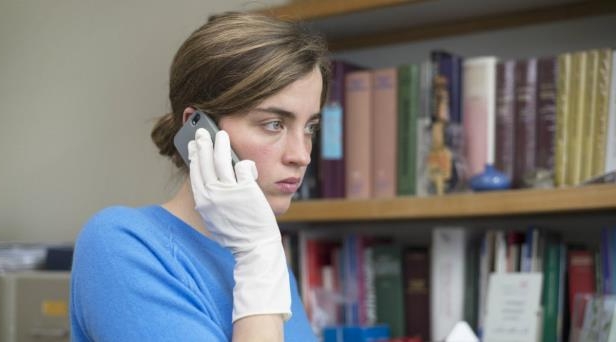
Jenny, a young GP in a small Belgian town, is taking her intern through some tough criticism. He froze at an urgent moment and while she's being firm but fair he's taking it hard. The door buzzer sounds but she stops him responding, saying that all their patients know it's after hours and need a little tough love themselves. He storms off soon after. The next day she is stopped by two detectives who want to see the practice's security camera footage. A woman was found killed nearby. And there she is on the recording, the one who pressed the buzzer.

Racked with guilt, Jenny takes a still from the video and begins her own investigation. The victim carried no identification. Beginning with those closest to home she passes the image around but no one can identify the girl. Going wider, she establishes that the victim had been a sex worker and had just come from a client before her death. This takes her into some very dodgy territory, both police and local thugs warn her off the trail. But she's too haunted and can't stop.

Adele Haenel plays against her delicate youth with a hard seriousness. She lets us know the struggle that Jenny has been through just to get to this lower link on the medical food chain. When she is threatened with physical violence her surprise at her vulnerability feels genuine. And as her driving guilt over the death morphs into more of her sense of responsibility we understand the strength she is gaining from it. Gravity ensues.

The Dardennes have been my go to struggle-core team for a few years now (I was very late to them but now think they just have no competition). They've taken the grey-day look of social realism and found riches within it so that their visual style is both signature and unobstrusive. Their observation of the delicate balance of life at the bottom is always compelling because it's always driven by performance performance performance. That's what takes these unsmiling tales of life from grim-oop-north grinds into essential dramatic cinema. That's what we have here.

MIFF Session #15: HEDI

Hedi is a young Tunsian whose life is controlled for him. His mother manages his salary and gives him an allowance. He's about to wed in an arranged marriage. His boss notices how little he cares for his job and not only won't give him time off for his honeymoon but sends him to a regional branch to solicit car lease deals with local businesses. There, he meets a woman whose concern when he has appeared to take an important call touches him. He had lied about the call to amp it up but later approaches her with the truth and an apology. Later during a moonlight swim their mutual attraction sparks and Hedi, for the first time outside of the cartoons he draws in private, feels alive. Oh, and there's that wedding in a few days...

Mohammed Ben Attia's debut feature is confident but subtle, asking serious work of its cast and lensed with a deceptively plain eye. If it should remind you of a lighter Dardennes brothers film you ought to know that they are its producers, recognising in the new filmmaker something akin to their own fearless examinations of the dispossessed and drifting.

Majd Mastoura brings to the title character a kind of imprisoned wonder as he comes to recognise the possibilities beyond the plan with a blend of a comic deadpan and surprise. That's a lot of work in a film that is determined to show the dangers of personal freedom visible almost immediately after the first burst of escape. One to watch.


MIFF Session #14: GARY NUMAN: ANDROID IN LA LA LAND

Gary Numan was a gift in the late 70s. Punk had imploded and at that stage it was very difficult to find anything that was happening in its wake. Tubeway Army didn't try outdoing the rock onslaught of the first wave but came in through a different door. His crystal stare and awkward-boy voice rode the swell of tides of synthesisers that were tighter than the ones on Low and more intense than Krafwerk's. It was great pop that felt like a horror movie and it was exactly what I needed. I listened to Down in the Park in the heat of a Townsville spring and shivered.

After pushing pop music into a decidedly unrock few big years his fortunes plummeted and he fell from favour, releasing fewer and fewer records to a public that had forgotten him and were somewhat ungratefully drifting back into rockness in the alternative scenes. And this, three decades later, is where we find him, visibly older, married with kids, standing up to a life of Aspergers and depression, making a new album.

While the film is generous with backstage views of the creative process most of what we get here is the continued struggle and the clearly beneficial family setting. It's actually quite a relief when his wife and daughters are on screen (the quartet of them are joyous camera hogs) not because Numan is so dire (he's personable, self aware and carries his own charm) but because they remind us that he is no longer in the nadir that he fell to in the wake of his fame.

And that's what the concern is here, not the journey but the arrival. The time and strain are evident on his face which often fills the screen. If nothing else, his candour and the wrinkles and all approach serve as reminders of how unforgiving a public is when it comes to the ageing of its idols and the assumption that their natural state is the pursuit of fame until death. It troubles us to think that a creative life without this urge is possible as it means we lose control of them. But here it is, certainly motivated by the need to make a living but also, as it must be on some level, for its own sake. See also, Syd Barrett

This thoroughly enjoyable portrait is kept trim. The family life quotient is there as it should be and never feels like padding. It's not for the beginner, perhaps (there's just not enough early career material on screen) but it does offer a solid depiction of survival in an industry which doesn't even tolerate many first acts. You could instructively double bill it with The Sunnyboy ... but maybe empty all those depressants in the bathroom cupboard first.

Friday, August 12, 2016

MIFF Session #13: RIGHT NOW, WRONG THEN

Cheon-soo, a young film director, in town a day early for a screening and lecture, takes in some local colour and meets Hee-jeong, a young painter at a local tourist attraction. At first awkward, their conversation establishes connection enough for Cheon-soo to suggest coffee. The cafe conversation warms them up enough for Hee-jeong to invite him to her studio where he praises her new canvas. At dinner they get drunk enough for her to invite him to a social gathering. Here, the wider conversation reveals his earlier praise to have been drawn from platitudes in interviews he has given. And then, as his vulnerability and confidence soaring, he reveals a truth which scuttles every lovely thing he had established with Hee-jeong that day. The next day's screening and Q&A session fizzes and he wanders back to his life in deflation.

A title card that reverses the first one appears and the entire story replays with one big difference: the pair are more candid and truthful with each other. From the first halting chat it is clear that things are going to turn out very differently. Within the parameters set the two outcomes are polar opposites because of this. While new steps toward romance take more time and effort they are also more binding and durable. We also feel very differently about them this time.

The wonderful Hong Sango-soo who made a fan of me at MIFF 2014 with Our Sun-hi has done it again. With characteristic attention to detail and nuance, strong casting and a firm hand on performances we have another astutely observed and deceptively light social comedy about self representation and the value of truth vs pleasing fiction. Of the title and the two versions I don't know if we are to see them as a kind of oblivious Groundhog Day, parallel universes, or simply a patiently constructed essay in the value we place on our statements when we want something. In the end any of those interpretations work for me and I, for one, did not resent the quick revelation that we were going to relive the same hour long story once the second title card gave way to the exact same opening shot of the previous story. I was just happy to see it again.

MIFF #12: THE DEMONS

Felix, a bright ten year old boy, absorbs pretty much everything around him in his quiet outer neighbourhood of Montreal and it makes him worry. His observations of his father's intimacy a female family friend stop short of anything damning but not knowing all of it only makes it worse. He worries about his own sexuality as he puts a more gullible boy through an increasingly edgy role play game. He worries that that experience might have given him AIDS. Worse, the boy he played that game with (and who is subjected to a cruel prank later) is abducted, raped and murdered by a local paedophile and is haunted by the boy's gaze in the dark of his room at night. The demons of the title are made of this.

And so on. Woven through this are scenes of genuine warmth and others of astutely observed behaviour with the sense of a continuum between childhood and adulthood increasingly evident. There is real energy at work to this. One scene involves Felix and his two siblings physically coming between their parents during a severe shouting match which travels from room to room until collapsing in a believable group hug of regret and exhaustion. It's not just the impressive choreography involved and the expert lensing but the question that arises in the viewer about what he or she would have done as a child in that situation. The paedophile's seduction of the boy is appropriately nauseating as it begins to take and the predator's power engorges.

But that's what this film cannot transcend, a group of serious and impressively managed scenes that hit their targets before flatly moving on to the next. There is an overall arc which ends in a poignant moment of affirmation but it left me shrugging. Why? Because this is cover version of early Michael Haneke. One take scenes, often with ostensibly neutral setups, sudden and puzzling use of sourced music, and the overall sense that the chief motivation for every action is pain. I'm not a fan of Haneke but I appreciate the effort he puts into adding real weight to his pieces, building dread with great competence. Here we have dread-shaped Lego blocks arranged in an appealing diorama. But it's still just Lego and we indulge it, perhaps even admire the skill involved. The problem is that where once it was just blocks, Lego developed into a vastly enabling library of figures and movable parts so that we expect the slickness. And the hobby kit arms race just promises greater authenticity while really only delivering more plastic lookalikes. Like this.

Thursday, August 11, 2016

MIFF Session #11: THE LURE

A group of friends are having an evening of song and drinking at a river bank. The heads of two beautiful girls pop up out of the water and deliver a song in shimmering harmony begging to be allowed on shore. One of the friends watches something offscreen and screams.

A high class club where the singer on stage is taking the band through a thudding rock version of I Feel Love. The wizened manager is brought back stage to see the two girls of the opening sequence in a dressing room. About to throw them out for being underage a sidekick bids him wait. He tells the  girls to disrobe and we see their strange genitaless bodies. The sidekick pours a glass of water over their legs which turn into huge fish tails. The club has a new act.

At first the mermaid sisters, Gold and Silver, take to their new lives with relish, enjoying the attention, the effects of their singing on stage and seem to have found their niche. But Gold cannot shake her carnivorous nature and goes hunting by night. Meanwhile, Silver has fallen in love and longs to be human. This can't end well.

A kind of Splash imagined by Andrej Zulawski or perhaps Little Mermaid directed by Jean Rollin, The Lure tells this story with a ready visual flare and a fine sense of sound. The musical numbers outside of the digetically staged ones rise from their scenes naturally enough and never jar. The performances seem fine throughout. And now I'm grabbing around trying to find what it is that left me unmoved.

And all I am left with is how repetitive it is with the club numbers and violence happening without a lot of development and some key loaded gun information placed too late in the narrative to be effective. This (I think this is the point I'm trying to get to) is because it feels like a short film padded into a feature with more of the kills and songs that made the first attempt at it so appealing. I don't know that this is true but it does feel like it.

That said, there is enough promise here in the imagination and delivery for me to want to see more from Agnieszka Smoczynska. Perhaps with a firmer hand on the bond between idea and its vehicle.

Tuesday, August 9, 2016

MIFF Session #10: ALBUM

A prologue takes us through the insemination procedure at cattle farm and then the assisted birth of a calf. By the time we get to the humans after the titles we have an idea of what we need to know. Two middle aged couples of Istanbul, one very pregnant, take photos at local sights. At one point the pregnant woman confesses that the pillow she has under her dress is tickling her. Meet Cuneyt (he) and Bahar (she) a middle class infertile couple who need the installation of a family to take their place in society. The pictures they are taking will form an album that will testify to their efforts.

They travel to country orphanages to shop for a child, preferably a boy. They inspect a girl but, on examination, find her too unlike them in looks and thus too hard to pass off as their own. A second institution has the right one and so they are off. More photographic evidence and soon they are married with a child for all the world.

When a close encounter with crime puts them at the local police station they find the long arms of the information age reaching far too close for comfort.

This angry satire leans much closer to the violent minded tracts of Jonathon Swift than a Baby Mama or even a Happiness. Cuneyt and Baha are repellent. If we didn't already know that we would get it from the dinner scene, the one with the friends' visit and the one where the baby crawls to his delighted new mother's laughter which is actually being caused by the crass midday show she is watching. A scene where the baby, lodged between her adoptive parents in bed as they snore with their faces buried in pillows is not played for laughs, either. By the time we get to the final tableau and its immediate consequence we understand we weren't in this for the mirth.

There are laughs, quite a few but if stark absurdism leaves you cold you won't find them. The office workers sleeping at their desks, the contrasting unruly westernised classroom and later tightly disciplined one which is more traditional, the long and digressive interviews with authority figures are set up as social realism but are always too brittle to get there.

This tension between cinematic reality and convincing dreamscape is heavily reminiscent of Roy Andersson's films (e.g. Songs from the Second Floor). Mehmet Can Mertoglu's debut feature, however, drives further into the grimness of the path he started on. While Andersson will deftly retain hold of each thread for a stunning conclusion both humourous and terrifying. Mertoglu uses fewer threads and tightens them beyond movement. We are not afforded a relieving setpiece but a couple of photo poses (not stills) before an offscreen horror leads us to the credits.

I'm going to let this unsmiling comedy rest in my memory and see if it picks up a few points of forgiveness in time. For the moment I recall great power offered with an uncertain hand. I'll think on....

Monday, August 8, 2016

MIFF Session #9: A DRAGON ARRIVES

A disorientated young man is trying to recount a strange and violent time he has been through. He is an agent for the Iranian secret service and is being interrogated by a senior officer. We establish that we are still on the island he was sent to and will not leave until he has given a full account of what happened to him. He was sent to investigate the suicide of an exiled political malcontent (this is the Shah's westernised Iran of the 1960s) but quickly establishes that the scene is a covered-up murder.

The local secret service agent begs ignorance and urges him to take the body back to the village for burial before sunset. Why not bury him in the cemetery outside? Oh, sorry, they have gone to a huge valley which features a large cemetery built around an ancient wrecked ship. There is the matter of causing an earthquake by burying anyone there but whatever.... That night, the young officer staying in the ship where the deceased was living, tries to read the handwriting on the walls and soak in the vibe of the scene to start work on solving the murder. There's an earthquake.

Back in Tehran we're also back in the 21st century and listening to a series of talking heads discuss the case, including the director of this film whose real life father was a major figure in the Iranian New Wave back in the time of the opening scenes.

Confused? You won't be. This is on one hand, a highly enjoyable mystery somewhere in X-Files territory that evokes a localised Iranian lore and history and increasingly suggests the presence in the beautifully spooky valley setting of the great adversary Satan in the form of a subterranean dragon. It's the story of the dig to examine the possibility but it's also the story of a government determined to contain its secrets.

So much of Iranian cinema in the last few decades has come to the rest of the world as a series of statements about oppression and has developed its own genre as a tough kitchen sink realist school. While there is a presentation of documentary style here it is part of the greater style of the whole film, offered in contrast to the filmy epic look and sound of the recreated events in the Valley. In the end this, too is about political pressure but the secret is kept abstract. Is it an allusion to nuclear aspirations from the old regime, a primordial secret too awful to expose, or just a MacGuffin so we can talk about suppression? In the end it matters little and not because the film is slight - it is highly and constantly entertaining and atmospheric - but that the force of the narrative and performance stand so confidently by themselves. But then there is the final image which might address a more universal suppression. That won't be silenced, silent as it is.

Friday, August 5, 2016

MIFF Session #7: CHEVALIER

Six men of what remains of the one percent in Greece spend time on a yachting holiday. As it draws to a close there is an administrative power outage. The friends play guessing games by candlelight which collapses into a petty dispute. Other games are suggested and rejected until one of them comes up with a high stakes contest that attracts everyone's attention. Why don't they compete for who's the best in general, whose teeth are cleanest, whose breakfast choices are the wisest, who is the best sleeper, who speaks the best and so on. The winner will be awarded a chevalier ring to be worn until the next contest. The lights come back on and they are served notebooks and pens. The game is on.

The next few days are mostly spent in conversation with one or another participants making notes openly. The expected penis length comparision takes place but so does a blood test and its results. There is a constant weave rather than an escalation which builds to a strange team approach to the constant competition that is both believable and pushed into absurdity. We are observing maleness but it's a maleness confined by a sense of civilisation and the old Cold War governor of Mutually Assured Destruction: any one of the players who broke into too much of a protest or an open attack would surely disqualify himself immediately. So the play is tense and subtle.

A Hollywood treatment of this would turn into a personal arms race ending with Bradley Cooper and Zach Galifiniakis aiming nuclear warheads at each other. But this is a movie by one of the people usually tagged with Greek Weird Wave in the tradition of Dogtooth or The Lobster. Labels are fun but really what we're seeing here is depth and observation. To understand that this behaviour would proceed without the context of the game is only part of our delight in watching it; the sense that the participants know this and use it as much as possible to their own advantage only adds spice.

Finally, these leaders of the community, formalising their natural competitiveness into the basis of what will surely be tighter and more serious contests in the future as the ring is contested each year, will only harden their sense of privilege. This time it was done with humour (constant, genuine, laugh-out-loud humour) soon enough even the humour will be part of the form and the game impossible to escape. It's this thought that stretches beyond the credits that this film has been forging from the titles. That's robust work.


Wednesday, August 3, 2016

MIFF Session #6: COSMOS

Two young Parisians flee recent failure for a seaside retreat for some restorative time licking wounds, studying or playing with the local rough trade. The chosen hotel failing them they arrive at a guest house whose highly accommodating reception draws them in immediately. But appearances ....

Young straight aesthete Witold tries to study law but is constantly diverted by his own literary experience, seeing the essence of the books he's loved at every turn. The first lines of the film are him quoting Dante and the other event that changes him is meeting his Beatrice at dinner. The host family's daughter Lena is married to the beautiful but bland Lucien but the shuddering handshake between  Lena and Witold foretells a new direction for her.

At the dinner table we also meet the Mme Woytis who gets so excited that she freezes into a kind of narcolepsy. Her husband Leon whose bizarre mispronunciations can create wildly off topic discussions of their own. Catherette, the maid with a unnerving harelip which is actually an injury from a car accident. And, following on from the opening sequence in which Witold comes across a hanged sparrow in the woods, a series of strange atrocities appear in and around the house leading to a kind of clue trail for an off planet whodunnit. Where will they lead? This question will be answered and it will make a kind of sense but if it is narrative regulation you are after you have walked into the wrong screening.

Andrzej Zulawski, emigre from a Soviet era Poland, has always been his own filmmaker. When Tarkovsky declared that the two types of director were those who showed us the world we know and those like himself and Robert Bresson who invented their own. Zulawski has always been of the latter school showing us stories of human error and deep moral debt by means of a form of reality that only makes sense within itself but works for the adventurous viewer who will enter. You might not be able to describe confidently what you have seen after Possession, The Third Part of the Night or The Devil, but you will have been affected by them and will remain so long after the thunder of the last action movie you saw.

This, as it happens, has become Zulawski's swansong. He died earlier this year but saw this, his first feature in fifteen years win the direction award at the 2015 Locarno Festival. Big deal? Well, it's not that his films weren't good enough for Cannes or the Oscars it's that they stood well outside of their bounds. By choice. For all the wilful obscurity and sudden absurdist turns throughout its one and three quarter hour screen time I wasn't bored for a second. More, I was almost constantly diverted by a film that I was not going to fully comprehend. That is the power of someone for whom the good taste of his peers might be fun at lunch but vanishes as it must when he calls, "action!"

MIFF Session #5: KEDI

All this film had to do was show some cats. I would have copped that for one and a half hours with nary a complaint. But this is not just a film about cats. It's about an ancient city: Istanbul, once Constantinople. And it is about its people. And its cats. Oh, I said that already. Well, this film couldn't have been aimed more squarely at this worshipper of felinity and I enjoyed meeting the lot of them.

There is a status of cat in Istanbul that lies somewhere between stray and domesticated. These are the moggies we are to spend the most time with. They climb the vines and roofs of the classical city, beg at cafes, hunt in the drains, visit the homes of their many admirers, get picked on by other cats and sometimes perish because life on the street does that, too.

Here, you'll meet the fish thief, Psycho the overprotective spouse of the near identical tuxedo cat whose temptresses are warned off with violence and sonics, the market mouser, the cafe adopted by the local aristocat who claws at the window when he is peckish and gets served meals of an increasing fussiness. But you'll also meet the litters upon litters of kittens who in being saved by kindly humans can also save their benefactors who themselves know the hardship of wild life.

This wonderful documentary is a love letter to a city that stood at the centre of one empire for a millennium and its conqueror's empire for longer still. It's people are traditionally a mix of these forces and live as they can as the constant changes around them deliver challenges.

Between the city and its people are the cats, spurned or indulged, exploring gymnastically or gathering for their children. They are shown through the twinned skills of astute, muscular filmmaking and a deep knowledge of their nature. If you have ever loved a cat for its delightful and infuriating antics you will recognise everything you see here and it will oddly feel like seeing it for the first time. There is no depiction of violence to the animals (one is the victim of an attack not seen) but the sheer volume of the stray litters can only suggest that a sizeable number do not make it through.

But as Talking Heads once observed, cats prefer buildings to people and we see them luxuriating in the architecture of their beautiful city, snoozing, stalking or exploring with what one observer astutely calls their superpowers. The cats with names are listed along with the people interviewed in order of appearance in the end credits as we watch both move around a town so close to the origins of civilisation that it feels like archaeology verite. Pdrrrrrrrrrrrrrrrrrrrrrrr.


Tuesday, August 2, 2016

MIFF Session #4: FEAR ITSELF

A young woman's voice over a shot of a gloomy day through an upstairs window tells us that since her accident she has felt numb and has taken to reading, idle browsing on the net and watching horror movies. It's the last activity that's got her thinking of "what they are and how they are made to take advantage of who we are". Having been through a horrifying experience in her life (a car accident which infrequently resurfaces throughout the narration) she begins to understand the processes of creating or nurturing fear in a viewer, the small print of the contract, why we sign the contract, sit back and get scared. Why do we keep going back to this state? What are we agreeing to when in it? Should we feel used even if we have enjoyed it?

The voice keeps to a narrow emotional range as it explores the cinema of fear. This never gets tedious. The visuals, apart from a framing shot at the beginning and the close, are entirely taken from other movies. These are almost exclusively horror and stretch from the generic to the outside margins. There are some non-horror sci-fi quotes (Gravity, Logan's Run) but this only directs us back to the theme of fear rather than genre cinema. The voice is Scottish, mild enough to be mistaken for North American. That's intentional.

The clips are seldom money shots, acts of gore or supernatural cataclysms. Quite often they depict moments of establishment or development detached from the payoff. The voice continues, often drawing out previously established points for rewording rather than development. This is never tedious. This is not a documentary and we are not relying on the voice for information but allowing it to suggest thoughts as a hypnotist might. We don't need to hang on the words. We can surface from the waves of our response as it plays to the screen and listen now and then. Soon enough, we understand that we have made another contract with this film as surely as we had with Suspiria or Ringu.

Are we listening to a first person account of a real traumatic event and its narrator's discovery of the machine inside the horror film? It stops mattering. The voice is less a narrator than a vocalist, commissioned, paid in full. She is an actor but her performance is an essay, describing in metaphor what we are seeing and then sometimes directly describing it. The coldness of the delivery doesn't allow us confidence in her the way we were happy to listen to Mark Cousins or Martin Scorsese talk about cinema. Her tale is lighted by the images of violence, gore, suspense and confrontation. If the extra score (also commissioned) swells louder than her voice we drift below it and wait for the next rise or fall.

The tension between the mesmeric control of the voice with its storm of visuals and your willingness to find a useful spot to digest it will reward you. This is expert editing and mixing. This is adventurous essaying. This is cinema about cinema which feels like cinema. Find it and play it. Play it again. It's your midnight movie and it knows where you live.

Monday, August 1, 2016

MIFF Session #3: KATE PLAYS CHRISTINE

In 1974 Florida television reporter Christine Chubbuck committed suicide on air during a news broadcast with a few words about TV news being ruled by blood and guts. Don't Youtube this; you won't find it. There is thought to be one copy in existence and that is kept under lock and combination. Whether true or not the notion that Paddy Chayefsky based his screenplay for the monumental Network on this incident has persisted. Why did she do it?

Kate Lyn Sheil, an intense New Yorker, travels to Sarasota Florida to find that out and prepare for her role as Christine in a film. She undergoes a slow and often pained metamorphosis, transforming herself into a figure whose witnesses are few and whose story is mostly a mystery. Before she gets to the brunette wig and brown contact lenses she digs into the locale and everything she can find that might give her an insight into the elusive ghost she is to make flesh. When the wig, brown eyes and spray tan go on and we get the intended finished film in glimpses, we set in for what feels like it is going to be a compelling ride. So why isn't it?

Because it never makes up its mind about what it wants to say or how to say it. I don't doubt Sheil's sincerity for a moment but her efforts are given such an evasive setting that even if we wanted to just follow her progress through the construction of this role we simply aren't allowed to. If the persistent fakeness of the wig never lets us accept Kate as Christine with a sense of conventional cinema we are never given an avenue to consider it anything but poor wardrobe. If it's meant to be a fourth wall breaker it's one that neither uses metaphor nor battering ram. The cold video look to the movie scenes and their frequent interruption by the cast as to the veracity of a line or its reading feel contrived rather than assured. Any intended comment on the blurred line between fictive presentation and history is smothered by what always just looks like soap opera outtakes.

Throughout this, Sheil's efforts to earnestly forge ahead and embody her character are repeatedly subverted by the sense that the big idea will be revealed and all will be well. A moment when she reads a Howard Beale rant from Network and delivers it with a studied weariness feels quite pure and poignant under the assumption that that film profited on the act examined here, that Chubbuck finally gets to read the eloquent lines that real life could not write for her. And then in the finale Sheil's intervention in the scene lets her deliver a freshly minted monologue of genuine power. It's scripted but compelling and fulfils the promise we've seen in the better moments of the previous hundred minutes that her intense conviction was nourishing a real performance.

Then we cut from this moment of power to an anticlimactic line which stretches into a needless end title sequence featuring the physical deconstruction of the role around the actor. We are no wiser than we were about Chubbuck's self-destruction. We have seen an actor's struggle with playing a historical figure with no history. Even the question that might have been central as to why bother making the film at all has not been substantially addressed. We are left nowhere.

Director Robert Greene fronted up for a Q and A session and managed to render all his answers to central questions into a rambling vagueness. At one point he dismissed the question of what was real or not as bullshit. Well, sorry, but if you're going to ask us to sit through one and a half hours of an essay (this is, despite all claims, not a documentary) which depends on its audience posing that very question, you'd better be prepared to front up and answer it yourself when your film doesn't.

I'll at least be on the lookout for the future roles of Kate Lyn Sheil.

Saturday, July 30, 2016

MIFF Session #2: EVOLUTION

The surface of the sea from below. The sun is out and the water has a golden tint. We linger on it but don't mind as it's so restful. Then we follow Nicholas in red togs, swimming under water. He passes coral and marine vegetation of great beauty before happening on the corpse of a young boy like himself who has been decomposing on the rocks for what looks like months. In horror, Nicholas swims back to shore to tell his mother what he has seen. His mother has been cooking up a kind of blue mud with worms that might be noodles at the stove. She diverts Nicholas' claim of seeing the body and suggests he has imagined it.

The island where they live is peopled entirely by adult women and boys around ten years old. The women all have unnervingly smooth features with Scandinavian-style invisible eyebrows. We soon learn two other things about life on the island: the boys are all taking medication and there is a hospital with a single doctor and a platoon of nurses. Nicholas, like all the other boys, is subjected to medical treatment and tests. His curiosity also drives him to follow the women in their nightly rituals, forming a slow parade by lantern light out to the seashore. The dead boy from the opening scene is brought in from the waves. The boys get nosebleeds often. Some of them vanish never to return. There is a kind of ritualistic solemnity to the medical procedures. The lights of the operating table reflect in Nicholas' eyes like star fish.  This is the kind of life that needs not Twisties to compare itself to the straightness of the greater world.

Lucile Hadzihalilovic's second feature as director has both the same tightly reined weirdness and dogged pursuit of its initial promise as her first. Blending an extraordinary eye for cinema with an uncompromising commitment to tell her strange stories. Just as 2004's Innocence never surrendered to the dark fairy tale a more conventional treatment would have demanded, Evolution does not fall into a body horror plot. There is none of the young Cronenberg's fetishism here. It's more reminiscent of Kubrick with its even pacing and the functionality of scenes and tableaux. 

If anyone, though, I was most reminded of Matthew Barney. The sheer force of Barney's vision in the Cremaster films and their joyous completion of ideas that make you wonder if you saw of dreamed them is here, in more muted form. What you think is going to happen happens and keeps happening. The point is not the resolution of conflict but the carriage of certainty and its reporting in detached fashion that does not permit detachment from the viewer. This is a demanding film. Seldom has a running time less than ninety minutes felt so full and compelling. Please don't let another twelve years pass before this woman gets to make another film.

MIFF Session #1: BLOOD OF MY BLOOD

Renaissance Italy. A soldier returns to Bobbio after his twin brother, a priest, has died. If his brother committed suicide his remains must stay where they are in unconsecrated ground. If the monks of the local convent prison can prove that the nun they have jailed led the deceased to death through a pact with Satan then the bones can rest in the shadow of the church. What happens to the woman in question? Usual deal, she dies or she dies in varying extents of pain.

At first the soldier threatens the woman with his dagger. Then, having failed to emulate his brother's ascetic piety by virtue of his worldliness showing him how futile it was, he begins to identify with the prisoner. The case continues to its end and it is ugly.

Present day same location. The convent in disrepair is the object of a Russian billionaire's interest for development. The old aristocrat in residence who keeps himself in a Schrodinger-like state of non/existence and who might well be a vampire, opposes this move and tracks down the local official who is brokering the deal. We have seen the old Count before, in the convent, sage and senior but inactive. Here, he seems to be the same but, if immortal, just older. We have also seen the official, the soldier of the previous tale. Nothing is quite what it seems and we are led to a climax of strange and haunting imagery in which both stories are concluded.

I have to mention the use of digital video here because it's impressive. The antique story is shown with none of the usual filmy processing. The effect of the scenes with their strong painterly composition is that of what a Raphael or Titian saw while painting rather than the end result. The present day section is pointedly conventional in looks. Interesting.

There is a clear logic to each of these stories. No one will have trouble with the course of events. The trouble comes from trying to reconcile the two. At initial viewing, they seem to sit awkwardly beside each other as though introduced by a host who knows or cares little about the art of social blending. It's only with a few breaths on the stroll away from the cinema, that correlations appear and a kind of sense emerges. I still don't know what that leads to beyond a sense of retribution against entitlement but it's still with me. So, that's a good start to the ol' Fest, then.