Showing posts with label Star Wars. Show all posts

Wednesday, April 10, 2013

SCI FI BEFORE AND AFTER STAR WARS: a ponderance


I recently aired my continued distaste for Star Wars to a friend who then trotted out the old familiar arguement that without Star Wars there would be no mainstream sci fi as it had been the stuff of low budgets and cheese, an outlaw genre. I managed, however drunk I was, to rattle off a fair few titles which he knew of but obviously not in the context of that argument as the list surprised him. So, here they and others are. Also, here's a list of great sci fi that had to be made under the radar as it had what Star Wars didn't have, compelling new ideas:

Ten year radius either way just for limits. I've disqualified some major footage here, by the way. Dystopias (even with future settings) like Privilege or Brazil as there is a lot less sci fi in them than satire.  Solaris was big budget in context but not given the same start in life as an American mainstream release so it won't be in here. (And some great micro budget sci fi in the aftermath like Primer, Cube, TimeCrimes or Monsters didn't make it as they were made well outside the decade each way limit. They get a mention here, though.) The idea is that sci fi sat as comfortably in the high production value mainstream as musicals, drama or war movies and didn't need the supersized corndog of Lucas' film to change that.

In order that I thought of them (no keys were brought closer to fatigue through Google use in the making of this list - it would be much bigger if I had - I did however, verify a date here or detail there with imdb and wiki).

(Oh, and Christian, if you read this, this is not a delayed "so-there" to our conversation but what happened after I thought about it the next day.)

Big Sci Fi before Star Wars 1967-1977 
(not in chronological order unless the time I thought of them is chronological order.)
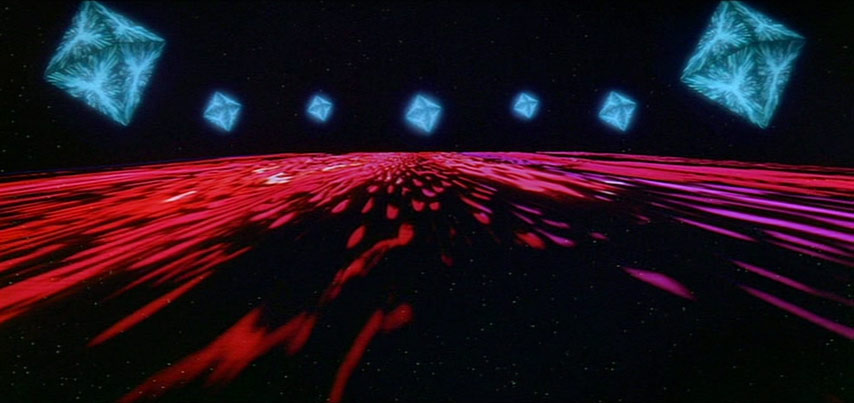
 
2001: A Space Odyssey: This list could begin and end here. A film as influential and monolithic as its arguable central figure, NO sci fi has been made since that isn't mindful of the possibility of moving the technology of the trade as far forward as the thematic thinking. This remains an unassailable masterpiece. And sci fi just doesn't get much bigger than this.


Planet of the Apes: The whole series but the first one will do. A great exercise in sustained irony and the notion of the Promethean dangers of human progress. This despite the involvement of Charlton Heston.


The Omega Man: Adaptation of Richard Matheson's I Am Legend pressed into 70s service with resonance of the newly departed hippy movement (there's even a bit of Woodstock shown at one point) and the ongoing Vietnam spectre. This despite the involvement of Charlton Heston.


Soylent Green: Out with the old in with the new. The sanctity of youth wasn't just a theme of Logan's Run but when it became a matter of what was put on the table things take a queasy Swiftian turn. A flawed but strong satirical fable well disguised as popcorn entertainment. This despite the involvement of Charlton Heston.


The Andromeda Strain: Alien virus combatted against the clock in a whiteknuckle race. Big production values and constantly fascinating story.


Rollerball: War made redundant by globally organised ultraviolent sport with constant information technology supplying bread, circuses and spouses. Flat screen tvs, corporate anthems and even a brief but powerful eco-message moment as the decadent idle rich take hand held rocket launchers to a row of pine trees. Tech and medium=message goodness.


Logan's Run: Sanctity of youth fable of overcatered society and population culls. Some mid-70s goofiness but top budget, A-list cast and big concept.


Westworld: Bread and circuses world gone wild when a circuit shorts and the inventions rise in revolt.


Slaughterhouse Five: Kurt Vonnegut on film. Might as well just say Jules Verne.


A Clockwork Orange: Juvenile delinquency as its own undersociety variously controlled and absorbed by the state. Burgess plus Kubrick.


Silent Running: Eco sci fi in excelsis. Bruce Dern defending the last patch of botany against a a coporate oppression. If that isn't forward looking I can't imagine what would be.


ZPG: Living human museum exhibits, robot babies, gas masks to go to the shop and rebellion by human gestation. The gang's all there.


The Stepford Wives: Strong women of small privileged community suddenly turn docile. New technology for old desires.


Quatermass and the Pit/A Million Years to Earth: Goes from an unexploded bomb discovered in the dig of a London tube station to a fascinating and tense finale involving a kind of interrupted evolution and the nature of human evil. The mind of Nigel Kneale! Yes an adaptation from a tv show but made for the big screen with a visibly big budget.

The Illustrated Man: Rod Steiger as the enigmatic bearer of tattoos that tell weird tales. Ray Bradbury story.


STAR WARS: An impressively art directed beginning, throws off its burden of ideas to play out as a boy's own adventure that could have been a western or pirate adventure. Nothing wrong with any of that but this is sci-fi-as-setting, not the fiction of notions. I understood that at the age of fifteen, not particularly cinephilic but with a low tolerance for padding and bullshit both of which played out on the screen seemingly without end. It was to be the only one out of the six that I would see in its entirety.

SO...

Right, so we've made it to Star Wars and are now half way. If Star Wars opened the door sci fi to be treated seriously in its wake what major budget fare did it allow? Almost immediately after its massive success we had a slew of superhero movies like Flash Gordon and the Superman series. Alien? Yes and then Blade Runner. But see below for these as exceptions. Mostly, we got a range of big budget low imagination pieces like Terminator, Robocop, Back to the Future, Tron (not all bad, though) and Ghostbusters and then there's the rise and dominance of Stephen Spielberg and all who fed in his stable, raising production values and lowering expected audience IQs to about the same degree (yes I typed all that in one breath!). If Star Wars opened doors it was to the date movie version of the fiction of ideas, flash without form.

But remember the claim is not that Star Wars influenced the sci fi to come but opened the door for it to enjoy higher production values and climb out of the genre swamp. As we've already seen, there was a lot of big budget sci fi in the decade running up to the big leap into popcorn space and some notable blockbusters up to '87 but what doesn't get acknowledged in the argument is the sci fi with real ideas that had to be made on the smell of gaffer tape because it didn't have light sabres and death stars but real ideas. Vide!

Sub Radar sci fi that Star Wars' success did not help 1977-1987

Videodrome: "Videodrome has something you don't, Max: a philosophy." Is the cathode ray making us evolve into the new flesh or just giving us the beautiful hallucination that we are? Cronenberg was doing on film what great sci fi writers had only done on paper, original scary thinking in genre.


Liquid Sky: Fun but also sobering response to the public reaction to the AIDS outbreak of the early 80s would never have been made with such cheek and honesty on any budget higher than the $35.52 it took for this one. I don't care about the goofy effects or pancacke-flat acting, the formless aliens who feed on human sexuality like junkies is an idea worthy of Cronenberg and, despite its lowly look was a bona fide arthouse hit.

 
The Brood: The generation of psychobabble gave birth to its own hysterical symptom in the shape of this film of psychosomatically-derived life set horribly free. This is the Frankenstein story that the monster had nightmares about.


Scanners: The airport book racks were filled in the 70s with scenaric doomsaying and popular fringe science about pyramid power, ESP with titles like Supernature. Cronenberg took it a step further. The first time a computer meltdown was shown as it would happen in homes the world over beyond a decade later: a whimper not a bang (an instance where a lack of pyrotechnics raises the sci fi cred).

Rabid: Plastic surgery was not new as a possibility nor the sport of the rich. Cronenberg added a little extra essence.


Brother From Another Planet: John Sayles' tale of an alien landing on earth and making his way through life in the ghetto. He has superpowers and a Christ-like serenity. He is a fugitive slave of an extraterrestrial race. This has high mythological content like Star Wars but as it has some original ideas owes nothing to it nor was it made because of it.

The Quiet Earth: An apocalypse in an eyeblink or is there more to it, or much less? Brilliant stuff that went straight to the arthouse.


Bad Taste: Peter Jacksons yobbos vs aliens epic remains as churning and funny as it was on the day of its birth. Star Wars it ain't ... nor was meant to be.


Mainstream but still...

The Fly: This greenlight came from the success of the previous Cronenberg films in this list. DC made his early films for the drive-in, not the art house and every one was a hit. Not a stormtrooper in sight.


 Altered States: Psychedelics and race memory. Oh, and Ken Russell. Oh, and Paddy Chayeffsky. Still here?


Ok dig it, before Star Wars plenty of strong-concept what-ifs with big contemporary budgets and after Star Wars a lot of big goofy self-referential mythology but really no challenging ideas. Those were, if anything, driven underground by the rush to cash in on SFX and big art direction.

What about The Thing? That was big budget. Yeah but it was in the wake of Alien rather than Star Wars; a boy's own adventure it wasn't. Well, what about Alien? Maybe but not definitely as it was a monster movie more than a quest but I'll give you the sci-fi=setting basis. Then again, its creative team admitted more influence from Mario Bava's Planet of the Vampires. Ok, Blade Runner. Big budget sci fi with substance might have been green lighted in the post Star Wars market but boy does it owe nothing to Lucas. Also Blade Runner was a flop, unjust but true.

The problem really here is that Star Wars is not really sci fi. It's far more action adventure with a lot of internal mythology (borrowed liberally from elsewhere or not is not the issue and the permissable norm in pop culture). So the only doors it could really open for sci fi were for films like it that just appeared to be sc fi but were perfectly happy to be retooled westerns, actioners or war movies etc.

I hope I haven't unduly offended any fan of the Star Wars franchise. You like your movies and probably hate all mine. We can get along. But this argument which is more of an attempted ambush at a social occasion than an essayable notion that this massively successful thing ushered in a generation of big sci fi and made it respectable doesn't wash. Star Wars did have an effect. So did Jaws before it and Indiana Jones after. But those effects were for more of the same of each, not for further exploration into questions of mind and time and all else beyond. Those questions were whispered in the arthouses, the fleapits and the video shops, their desperate, gaudy promo art begging fraudulently to be seen to be as attractive as the units of the big league, and on into time future, admired fanatically by the few and sneered at by the main ... like most good ideas until someone can sell them like staples.

Friday, February 25, 2011

Blind Spots 4: Three cinematic phenomena that I don't care about

This is not a list of overrated titles. Whether something holds an eminent place in popular culture seldom affects my opinion of it. This series is simply things that have consistently failed to touch me. Partly, it's an exercise. I surprised myself when writing of the Coen brothers that I really liked very, very little of their output, having always assumed I liked about half. I started another about Terry Gilliam and ended up having to split it into three posts to cope with what I was finding out about my own opinions. This is another. I'm trying to avoid big targets like Stephen Spielberg who I think should make something he really wants to make or just stop altogether (but I think it would be unwatchably violent: I think he's John Wayne Gacy without the murder). And I'm not fond of targets that are too easy like Wes Anderson who I think should be placed in care if he ever tries to make another film. This particular post pretty much sins against those stipulations. Whaddayagunnado?

TERMINATOR
This one takes a couple of looks for me because on the surface of it this title shouldn't be here. I really enjoy the film. It's big and goofy with enough mid-80s earnestness and neon lighting to be both a perfect sample of its cinematic era and a neatly wrapped treat. The thing I don't like is one of the things that sells it for many (perhaps most) of its fans: Arnold Schwarzenegger. Ok so if you're into Arnie you're into irony. It's like a club token you can flash. See, it's Arny: irony and my good self, we're like that. And he's part of what makes it so big and 80s. 

So, if all that's true why do I shove it here? Because I made the mistake of watching a making of that revealed that the title role was initially designed for Lance Henrikson. He would have been an extremely low key figure, invisible in a crowd, unremarkable by design. The docco had storyboard art with Lance in the role, swinging off rails, falling through skylights etc. In that instant when I knew that, the big dumb 80s iconic hit movie became a sketch released in place of the real thing. The suits won and Arnie's career, instead of stiffing at Conan and body builder #1 roles became an action hero in a long rope of parts all called John something.  

Terminator went from being a fine piece of 80s'orama to a sellout to the suits, yet another indication in the post Blade Runner scene that big 'n' dumb was going to triumph over intense and clever. In this and other instances, the strong, socially committed cinema of the 70s was given last rites, embalmed and buried. Taxi Driver would have starred Arnie if made in 1986 instead of ten years before. So would Logan's Run, Rollerball and The Parallax View. Terminator was a film which I liked as an original and a sequel. Now I don't like any of them.

Wim Wenders
I know. Wim's a genuine indy, why kick him if he's already down? Well, this post is not about public visibility nor it is about things being overrated. It's simply about me not caring about things I've been told I ought to care about.

One of the essential films to add to your shopping list in the late 80s was Paris, Texas. Then Wings of Desire came along and joined it. A little before that, as a film student, I was strongly urged to see The American Friend and Kings of the Road. The only one I haven't seen of those is the last one. That's because I saw all the others.

He's made other films and I haven't bothered to give them a fighting chance as everything I hear about them makes them sound like the ones I have seen. I'd write this exact post (so far) about Wes Anderson except that rather than not give a toss I actively loathe his films; Wenders just leaves me cold. Before you start mentally defending Herr W. against the charge of pretension be advised that I'm not going to bring one. "Pretentious" is one of the most abused terms in all of cultural criticism and you'll witness my use of it very, very sparely.


I don't think Wim Wenders is claiming more than he delivers I just cannot care about what he does deliver. I would care that a gang of angels want to retrieve one of their own whose rebelled by staying on earth if the tale of it were not so meandering and loose-threaded. I find the monologues of the actor and the circus performer stiflingly unengaging. It is not enough for me that they are angels. It isn't enough that they are rendered in sumptuous black and white (not trying to be funny there, I love black and white). And it is too much to put that goof Nick Cave on screen as though his pointless, affected badboy songs were going to add anything useful.


Paris, Texas has the advantage of being attached to a real writer, Sam Shepard. Additionally, the cast is superb. There is also some fine music that not only carries the scenes it's in more than they deserve but became one of THE soundtrack albums to make conspicuous in your collection. And then, snatching defeat from the jaws of certain victory, comes our mate Wim to suck all the vim out of the proceedings as fully as possible. Harry Dean Stanton, already long a careerist character actor, made a big public entrance in his central role in this film. And boy, is he good. He doesn't say a word for the first three weeks of screen time and when he does it's something endearingly trivial which brings him further into our hearts than we'd thought possible ... assuming we're still awake.


The problem with Paris, Texas for me is that its themes of perdition and redemption are good ones. Seeing the hobo errant attempt to repair the disaster area of his life as a brother, husband and father should make us want to talk to people at tram stops or fulfil requests of $2.75 from junkies who need to visit their mothers dying on hospital beds. Well they would make us want those things if Wim Wenders' idea of auteurism didn't have an 'e' and a 'u' and an 'r' too many. In the hands of a genuine cinematic master this hands-off approach might result in subtlety or understatement. With Wim at the helm it translates as gormlessness.


I have heard many impassioned pleas for the quality of this and Wings of Desire and I don't think any of the pleaders are in error or have bought into hype. I just can't join in.


STAR WARS
I am indifferent to the entire saga even though I've only ever seen the first one in it's entirety and a few of the others in little grabs.

Late 1977. I went to see this at the twin cinemas in Townsville (it was one building with two cinemas which bore different names, Forum and Odeon: multiplexing was yet to be perfected) with friend Wayne. The preceding short (the economy of plugging so much advertising into the pre-feature time at cinemas had yet to be perfected) was called To Protect and Serve and was made about, for and by the Queensland Police who, even to my cosseted middle class white boy sensibilities, bore the reputation of being a corrupt and violent wing of the state government. The resulting propaganda outing was so hilarious it put everyone into the most receptive mood imaginable for this film that was already hyped to the galaxies. There were two girls sitting in the row in front of us and one of them for reasons unwitnessed darted Wayne a poison look. As was his custom at the time he responded with a protracted: "faaaark off!" She turned back around and that was that except that I joked that he should take that one and I'd go for her brunette friend. He whispered loudly that he'd seen them in the foyeur earlier and they'd both resembled human Mack trucks which put paid to that endeavour. Anyway, the film...

There it was, bigger than life, the rolling prologue about the long long time before in a galaxy far far away and I settled into the gentle but real thrill of being present at a new and significant world event. It began by winning me pretty thoroughly. The opening sequence of action and intrigue seemed to have more substance than the usual sci fi fare and soon enough, the establishment of Luke's world was a revelation. No Star Trek standard valleys of styrofoam here but pure desert that by virtue of its being littered with alien technology felt like another world.

And when I say littered, I mean littered. The first really important thing I noted about the movie was the scrap spaceships. All it had taken was someone modifying the image of a car scrapyard but how impressive it was to see it taken through to this extent. None of these convincing craft ("spaceships with rust!" I gasped at the time) were intended to fly across the screen at any point in the film. They were there to suggest the world beyond the frame of the story. And then the story proper kicked off and my interest drained steadily until the end credits allowed me to exit with honour.

First I hated the naming of things which seemed lazy. Tattooine? Skywalker? Chewbacca? They could convince me that I was beholding an alien world but it was one whose names came from the kind of five minute creative thinking exercise that office workers are serially condemned to every few years in training workshops that their HR departments are obliged to outsource. This alone unlocked the mystery of the Star Wars Universe. It felt like they stopped caring after finishing a few dazzling bits.

By the time I got to the cantina scene started mentally scoffing everything I saw. This was meant to be a bar in a port like the ones in ol' Marseilles or Casablanca so there was meant to be a great range of different types in there mixing it up. There was a great range but that's all. I don't remember any groups of aliens just a room full of completely different life forms with no suggestion that any commerce had brought them there. Compare and contrast the same film's munchkiny beings, the Ewoks. Desert scavengers dealing in scrap. A good idea convincingly borne. Nothing like it in the cantina which looked like an animation of those books done by fans of aliens that are so beautifully rendered the viewer almost forgets to notice that they wouldn't be able to move without hydraulic assistance in the third dimension.


And there was the cuteness. The duo of droids, the poncey one and the little smartarse one who emitted little bips and bleeps which were obviously meant to be sarcasm. Alright that last detail was clever (saved them writing any real funny dialogue for the movie's chief wit, after all) but it grew tiresome very soon (please note that I didn't say "it grew old", I'm trying to write in the idiom of the time ... kinda). Lucas and co liked this so much that they did exactly the same in the cantina scene and with Chewbacca. The occasional dryness delivered by Carrie Fisher and Harrison Ford provide the movie with its sole gravitas (Alec Guinness notwithstanding) and when you say that of a film you know it's in trouble.

The final thing that turned my smile upsidedown about Star Wars was something I was noticing in blockbuster cinema in general at the time and was turning me away from it title by title. The film seemed to be constructed by such a gigantic premise and teensy plot that it really felt like a rip off. See also Superman: The Movie (and anything from the time whose title was appended with "The Movie"). Yes, it was dawning on me that big cinema extravaganze were not necessarily being made for their contribution to cinematic progress. But there's something else.

Two other things happened in 1977. First, the rock music version of Star Wars had already appeared on screens in the form of Led Zeppelin's concert movie The Song Remains the Same. The boys' own version seemed insigificant after that. Also, Never Mind the Bollocks Here's the Sex Pistols was finally released which was hype come true and wiped the table of cultural significance for me that year (including the Led Zep movie which by then looked like a delfated velociraptor-shaped balloon) and served to keep slick big mainstream culture at a distance and lead to the discovery of all such things hitherto obscured.

When I got back home after the screening my Dad asked me what I thought of the film and my shrugged, "alright" was for once not necessarily an adolescent knee jerk.

The first sequel was supposed to be the best one of the bunch. I've seen about twenty minutes of it and have no interest in extending the experience. Ditto The Phantom Menace and the more recent ones.

I was informed in a recent conversation that my aversion to Star Wars put me in the early Gen X bracket as though I was to be sentenced to a life bound by a cultural cordon which kept me from the delights to Back to the Future, The Goonies and Ferris Bueller. Thanks all the same, but I'll take Never Mind the Bollocks over that, then as now.