Showing posts with label 2013 MIFF. Show all posts

Sunday, August 11, 2013

MY MIFF 2013


Blancanieves
Foremost, due to the way the festival was erased for me last year it was my great and conscious pleasure to
walk to every screening (and back from most of them). Managing the stairs and seats of the venues I knew I was right not to even attempt it with the cast on my leg last year. I shuddered at the memory of it a few times while nearly tumbling down the stairs of the Forum exit.

The festival club was again a hit with its odd blend of classical splendour and Dr Seuss. I love its cathedral quiet and cloistered protection from the second remarkably frigid winter in a row. A dark and cinematic setting for some searching and bickering o'er a coffee or cider about what we'd just seen.

THE GOOD

Films
Catching up on almost all of last year's choices showed how good I'm getting at picking for my own peculiar pleasures. This year was pretty much the same. I missed one through illness but made it to everything else including the sessions I added to the minipass thirteen.

Best of the fest has to be Blancanieves for outright enjoyability. It didn't so much outdo The Artist as a contemporary silent film as it progressed from it. By dispensing with the gimmick of the silent form itself it blasted its way through the light and galloped to its shivery poignant ending with the joy of its own existence. I would've shown it at Shadows. One thing it did so that I didn't expect was to make surprising use of the 4X3 near square we all dismiss as limiting. The aerial shots of Seville's bull ring were breathtaking, filling the narrow frame the way they physically couldn't in scope. But the next big silent film needs to move beyond the period settings and embrace the changes while still using the limitation. That would be a new branch of cinema and I would be in the queue for it.

Others in the toppermost are: Upstream Color for its stubborn strong-arm pioneering beyond the bounds of the sci-fi genre; A Hijacking for its toughness and insistence on the value of committed performance; The Sunnyboy for bringing a lost boy back to us; Act of Killing for making its bizarre premise work and taking us into filthy corners we need to see and doing that through the momentum of the perpetrator's testimony and imagination; and Jin for the courage of its convictions and the boldness of its final tableau.

Of a lesser wow but with their own real power were: Blackbird for its restrained topicality and strong central performances; The East which I've put here for being noticeably lighter than the two previous Marling outings (I miss their audacity and sombreness, here it's mostly the latter) but would like to see the team's continued infiltration into the mainstream; Manuscripts Don't Burn for the fact of its existence against genuine prohibition and still managing to be good cinema; The Daughter for its toughness and ease with allegory; A Touch of Sin for the same reasons as the previous and for its gratuitous beauty (yup, I just typed that); and Good Vibrations for reminding me how much fun my own experience of punk was.

But Gebo and the Shadow, while appreciable as an exercise in adapting from the stage, was not for me. Aim High in Creation subverted itself by trying too much and producing too little, obscuring its own intentions: I wanted that one to blow me away. Expectations too high? Probably.

Outside of these as it was a revival screening I'm going to hold A Quiet Place in the Country aloft for its brashness, anger and the seriousness of its purpose. This is how feature films could be both cultural commentary and decent genre films.

I used to think myself successful at MIFF if I got four great ones out of the thirteen. I tend to choose by personnel and scenario once I've satisfied my requirement of a few screenings at my beloved Forum. The rest I'll let a few keywords guide me or perhaps a region from which I've seen too little. With that kind of decision making I'm easy on the judgement if I draw more than half poor to middling. The last few, though, have shown me choosing better. This is partly due to the vitality that the Michelle Carey led efforts of the last three years have resulted in a spicier banquet table but also partly due to my being able to spot things I like and others I might be challenged by. So, in two ways it's getting better.

If I lament the lack of anticipated movies in the line up I think it says more about what's out there than the organisers' choices.

App
My first experience of the Android app was mighty. Great instant info on session availability The two festivals I'd gone to previously were in the transition between the plastic card system and the apps so they were all about printing out paper tickets which annoyed me. The best way to do that was to print out as may sessions on as few sheets of paper as possible and keep them nice until they were scanned. It was horrible.

The cards were faultless but the last two festivals that used them didn't get them to their owners in good stress-relieving time and there were vaguely identified administrative problems that caused not only this but some misaddressing. I had to go and queue for my replacement for my last one, the very thing they were intended to eradicate. But the app puts the delivery into the hands of the punter and it's available on the day the program is released. A few tech hiccups I can deal with happily. A few app updates and everything worked perfectly well before the festival kicked off.

Turning up with my phone, as I would anyway, with all my tickets and session info and any last minute texting for organisation etc could not be easier. It even looked good and was a breeze to navigate and vote with.

One thing that annoyed me about it, now I think of it was the weird thing that happened every time I tried to rate a movie. It told me I had to log in for that when in every single case I was logged in already. It took logging out and then back in to work. A small gripe but a real one.


THE BAD

Queueing
Ever since I found at the end of an interminable wait in the freezing rain on Russell St that I would have got my favourite seat if I'd just sat in the warm foyer in filed in after everyone else, I've stopped queueing. This has led to a much easier mooded festival. As I said elsewhere, it also drove the last nail in the coffin for the appeal of festival membership for me. I only had to queue once as the person I was seeing the film with had a problem sitting too close. I was happy to oblige, especially as I didn't quite see how close I was to the head of the queue (and then watched in quietly seething vindication as the front three rows filled last).

Tagline
"Only the best films make the cut"? Has it been used for three years now? It hangs off the artwork like a sheep's dag and makes me wonder what a giant plaster figure of a scarfed and beret-ed winterbod would look like in Fed Square just outside of ACMI: the Big Cinephile welcomes you to all the magic of the movies at MIFF 13!

When I played my band's album to my Dad decades ago he approved and said it sounded very professional. I winced because it was the kind of thing you'd say about a covers band. We were meant to be original and fresh. Dad was only trying to be nice and, being of soundly technical mind, chose an industrial reference for his compliment. If anyone my age and of my poste punque stylings (however desperate) had said that to me they might as well have called it mainstream. That's what this tagline reminds me of. You may as well call it a festival of world-class films

Illness
I spent the first week under the cloud of the last wave of this year's epic cold. The fever and fatigue got so powerful that it obliterated the day I would have enjoyed watching Rhino Season. I might have been able to swap the session for the following Sunday but I kept thinking I might feel better as the start time approached. Not so. Also I was visited by something I've been plagued by since childhood, ear ache and ear blockage the latter of which defeated the nurse's best assaults upon it with a warm water syringe. A week of regular attacks on it with a kind of earwax napalm and her second attempt broke through and my personal stereo got its left speaker back. And my balance, that came back too.


THE UGLY

Trailer
I can't remember which year it was but there was once a MIFF trailer that worked as both a joke and celebration. Two people seen through a shop window get hot 'n' heavy on the shop counter. The guy tries to close the metal security screens but can only get them so far and we end up with what looks like a scope ratio image of a love scene. Funny, but when the joke wore out it was still sharp and clever, inviting, enticing.

Subsequent trailers have mostly been embarrassing jokes with what a brother of mine used to award a high ph level (ph=pensioner humour), glimpses of high naughtiness that would have proudly made it into sketch shows of those tired comedians from the 70s like Dick Emery and Benny Hill.

When I first saw this year's I thought, wow, they've done it. A clip from a Chinese movie. A woman stabs a man and the motion slows to a crawl as we see him reel back and eventually collapse. How beautiful an image, its campiness saving its violence from confrontation, the fluidity of the motion mesmerising. And then the bogan voice comes in with the cringingly try hard yobbo-party-Monty-Python crap about it being unrealistic. It's down there with the "oh-really" lameness of the Elegant Gentleman's Guide to Knife Fighting. There's an old tv commercial whose punchline is how a lovely photo of a pair of old dears at the beach is annihilated by the sudden appearance of a fat guy in a g-string going past. This trailer reminds me of that (and I don't mean its punchline).

A joke trailer might be good for about three viewings if it's a good joke. If it's a painfully bad one like this it doesn't even get through the first viewing and if you have to see it at every screening you have to find ways of zoning out. It only goes for about two minutes but, Christ, they're long ones. Everyone I spoke to about it was puzzled by the direction of its marketing. Is the boganism of it dissing MIFF audiences who supposedly would have only a welcoming response to the scene's traditions and its own humour and- That's the other thing! It's like: when someone jokes and a resentful other wants to top it despite a sudden lack of material the resenter will mock the joker, hoping that everyone else will go with the negativity. The ploy works only if the riposte has enough contempt in it to engender timidity or the one doing it stands higher in the pecking order. But when some shithead thinks he's being witty by diverting from the value of this clip he's invoking all the smudgy philistinism of anyone who would ridicule this kind of festival it's too much. Even a stranger who sat next to me at one movie expressed her distaste for it and composed an impromptu hymn of hatred while it was on before the lights lowered and we could once again forget it ... until next time.

Oh, so it's a self-reflexive joke. No, it bloody isn't. Not once did even a third of the audience greet this crap with laughter. At every session the only laughter I heard that could conceivably have been in response to this embarrassment was a few lonely titters falling dead from somewhere in the back seats where sit the blind and the timid of heart.

Oh, come on, it's just a joke, isn't it? If it's a joke why isn't it funny? Why do I only know it's meant to be funny?

How about in the future we just celebrate what the festival is about. If the Carey Administration can do such a good job at freshening what was becoming a welcome but weary event, can't they ditch the jokes of a bad date and seduce us a little with style and charm?

Audiences
Why is it that cretins think they are the smartest people in the room? The Melbourne Horror Society reported on Facebook that there had been a lot of laughter at the screening of Deep Red, the Dario Argento classic thriller. I wasn't there for that but I'm glad I wasn't. I've been at those occasions before where sections of the audience want to show how far above the movie they are. It happened to a small degree at the screening of A Quiet Place in the Country. And then there's that over-protested incredulity, the laugh that sounds like "or whore whore whore whore whore!" and seems to contain everything but actual mirth. Hey, none of the acting on screen that you are trying to ridicule is as wooden as yours! Folks, relax and engage, just relax and engage. There will be laughs along the way both intentional and unintentional but these things you're guffawing at are NEVER that funny. EVER!

Other than that the audiences at my screenings were by and large there for the movie. They got into what they saw. Pleasantly, there feels like a lowering of tolerance of loungeroomism (talking, phoning, tweeting etc). One strong sharp voice at Upstream Color stopped some git from phoning and at the same screening a woman made her way from the back to the front to demand that some goof there shut his screen off. As for commentators who think their clunkingly obvious observations on what is going on onscreen: where the fuck do you think you are? SHUT UP! People have paid for the film's soundmix, not your smugness.

To the bizarre people who place their coccyxes on the very edge of their seats so that their legs jam against the seats in front of them are headed for well-deserved back pain. They will, if goofy-minded enough, elect chiropractic over physiotherapy which means that instead of a month of treatment it will be years of near-effective improvements during which time they will be so heavily indoctrinated with anti-vaxxer and anti-flouride bullshit that they will emerge toothless vectors of whooping cough and measles. Or ... they could try lodging their buttocks in the corner created by the seat cushion and the back (or sitting up straight which is how the seats are designed). It's more comfortable. You can sit more calmly for longer without fidgeting.


EPILOGUE

This is the crowning event of my favourite season in this city. I love the contrast of darkened cinema and bright cold sunshine outside on a morning session or the great steely grey of a big Melbourne rain greeting my rugged up self after a movie with a tropical setting. Chowing down to chips and beer for a mid afternoon postmortem in the big dark cave of the lower floor of the Forum. I love strolling along Flinders St still in the haze of the film I've been living in for the past ninety minutes, picking something that goes well with coffee from a shop and walking, yes, brilliant one foot in front of the other motion that failed me last year. This is a holiday to other corners of the cosmos of imagination, their colours and conceits, all packaged in the constantly relieving chill of winter. My summers are languid and more social. I take longer off for them. But this capsule of transcendence is the one I think of with a thrill.

Upstream Color

Saturday, August 10, 2013

MIFF Session 16: GOOD VIBRATIONS: Place of Pride

When music guru John Peel does the unprecedented and plays The Undertones' Teenage Kicks twice in a row on his canonical radio show the protagonist of this film, Terri Hooley dances ecstatically in his dowdy Belfast home with his wife. A banging at the front door reveals the band and a small crowd of people associated with his record shop. He runs out into the street as they dance to the song and in a blinding spotlight raises his arms in imitation of Christ, giving himself up to bliss. But the light is that of a British Army chopper observing the revelry in case it's more sectarian violence.

This tale of a punk scene's birth and nurture along with the starry eyed and accidental promoter Terri is a thoroughly enjoyable ride through disappointment and triumph. In this case there is a pleasingly Irish oh-so-what to a lot of it which sets it apart from a great many other fictionalised music histories.

This genre suffers from a common malady in the dramatisation of key moments or achievements by the heroes of its tales. When John Lennon says "I'm talking about a hard day's night" in a Hamburg bar years before he should it's one of the few cringes that mar the otherwise wonderful Backbeat. The scene of Ray Manzarek coming up with the hooky intro to Light My Fire in The Doors is the same kind of thing. One of the worst is from a tv movie about he Beach Boys. They're taking a break from recording and ogle as a babe in a Thunderbird drives by. "She's having fun," says one. "Yeah," says another, "until her daddy takes her t-bird away." Someone else snaps his fingers. Ladies and gentlemen we have a classic!

This doesn't really happen in Good Vibrations but the moment Terri hears the freshly recorded Teenage Kicks in the studio cans and approaches the control room glass with a beatific stare it is at least funny but it does dilute the kingmaker John Peel's famous later response for the sake of a cinematic moment. When Fergal Sharkey names himself in full it feels like it's for our benefit rather than Terri's. Surely he would have just used his first name at that point.

But these are quibbles. What I really like about this film apart from his sheer amiability is its sense of place. There are reminders of the war zone nature of Northern Island during the troubles so frequent (most of them footage from the time, often jarringly on blown-up analogue video) that they acquire a kind of rhythm. It's no spoiler to repeat Hooley's own words about punk in Belfast: "New York had the haircuts. London had the treasures. We had the reason."

That strikes home for me. When the Saints' video was partially shown on Countdown in 1976 I was caught by it. When the full clip was played on Flashez I wanted it to go on for hours and, for a few minutes, time really did seem to stop. There was no comparing it with anything I knew. No one was calling it punk. I forced it up against the Rolling Stones of Get Off Of My Cloud or Have You Seen You Mother Baby (rather than Brown Sugar). And they were from Brisbane, not the more sophisticated centres of Sydney or Melbourne but dowdy old Brisbane. When the term punk rose in the parlance and I heard The Damned, The Ramones and, most cataclysmically, The Sex Pistols towards the end of that year the game had changed and I had chosen my team. Increasingly, the sense that Brisbane's punk scene arose from a need in opposition to the repressive Bjelke Petersen regime. They had the reason there, too (of course, less dramatically, but still, that was the feeling).

If there comes a time to tell the tale of the Brisbane scene the way London's was abstractly attempted in Jubilee, Melbourne's in Dogs in Space or Belfast's in this I know it won't avoid the pitfalls of the subgenre of music related films but if it smoothed them out as effectively and enjoyably as Good Vibrations does we'll be in fine hands.

Tuesday, August 6, 2013

MIFF Session 12: Gebo and the Shadow: fait accompli ... pas encore

The director of this film, Manoel de Olivera, is 104 years old and this is not his last. So how do you continue in cinema when you are almost as old as it and have seen every trope and sleight of lens it has to offer? You go back to basics.

Gebo and the Shadow is a melodrama from the early twentieth century written by the kind of adventurer that its prodigal son character Joao wants to be were it not for his chaotic ethical fog. De Olivera shoots what is very slightly removed from the piece's stage origins, almost exclusively in a single set and within that, often in a static setup across a table where characters converse or monologise as they would if the audience were there before them.

As a melodrama with its origins it strives in its plot only to elicit pity from its beholders. What we have here, though, is a wealth of performance which is why we soon cease to care about the stagey set. Claudia Cardinale is bitterness and tears, a mother soured by her absent and ungrateful son, herself ungrateful to the wife he left behind to care for her. Jean Moreau appears in a brief but wonderful scene where the old folks take coffee and are lambasted by the prodigal. The bi-lingual Michael Lonsdale, though, provides the full pull of gravity with his lifelong suffering patriarch who has put up with his wife's constant severity for decades and his son's hungry amorality. The duty he speaks of is of the type that utters the final self-damning line. We knew it was coming but are glad of its delivery.

It's poignant that de Olivera choose this piece from fellow Porto native Raul Brandao with its resignation to life in the face of a squandering grasp of it. De Olivera, whose first film was a silent one, has chosen a quiet statement of fealty to his own duty.

All this might seem damning with faint praise but is it when all I'm really saying is that this film does exactly what it was designed to do?

And the bastard is still making movies!

I prefer this greatly to the tweeness of his more celebrated Strange Case of Angelica. There, there's your praise. I'll take the achievement over it any day.

MIFF Session 11: UPSTREAM COLOR: ? ... !

One sleep later and I think I've got it. It's all about maggots. Magic maggots. Alien maggots. As I'm trying these things on I find they're all a bad fit so just plain maggots it is. But the maggots might just be standing in for something else. Ok, water already too muddy, what about the maggots?

A man in his thirties examines the plants outside his house and scrapes some strange blue mould off their leaves. It's a fine powder on his palm. He checks the soil and finds the maggots. Playing a hunch he collects a few and separates them into two jars, one marked with a smiley and the other with a dead ... smiley. Meanwhile two boy from his neighbourhood are on to the same thing finding the right maggots and putting them into a tea-like solution. The gardener goes one further by placing maggots into emptied medicinal capsules which he tries to sell like drugs at parties and venues. Failing that he abducts a woman and installs a maggot by force. Done.

Well, not yet.

At this point I should say that I have read more of the imdb entry than usual. I tend to have that open on ly to check names of cast and crew etc  but this time couldn't resist browsing through the user reviews. These are useful to comparing notes with other punters and looking for things you've missed. After a few of them showed no better understanding of what I'd seen I just went back to the cast list and immediately found a couple of insights thrown out there. The character I just called the gardener is listed as The Thief and the older guy who runs the pig farm cum audio recording service is called The Sampler. Neither is referred to in the course of the film but that slight bitg of information puts a lot into perspective.

The maggots have peculiar qualities when ingested. The Thief has a kind of hypnotic power over his captive, telling her a lot of weird things about himself to create false memories (eg that his head is made out of the same material as the sun) and to manipulate her eventually into signing her savings and assets over to him. He has harnessed the power of the maggots for personal gain.

The two boys who seem to have become extra-sensory masters from the same stuff are not heard of again but they are probably headed for a few ethical forks in their road to come.

The Sampler walks the countryside recording natural sounds and playing them back on a small midi keyboard. When the abductee finds herself in her car now more cognisant she wanders the nearby fields where The Sampler is stirring the earthworms with subsonic sound pulses, herself drawn by them. She has been in a state that looks like schizophrenia by The Thief including cutting herself to get at the worms under her skin (which at that stage might well just be hallucinations). The Sampler cares for her and rids her of the worms by a kind of transfusion with one of his pigs an-

You see the problem? Things happen here rather than build and while that might well be to a cohesive whole there is no map more discernible than our guessing at the patterns we see for the rest of the well-behaved 96 minutes of screen time. If we want to come at this one patterns are what we must get used to as even a lot of the dialogue is given to patterns rather than exposition. More than once I was reminded of my reception of Matthew Barney's Cremaster Cycle. Frequently, I was watching and thinking: really, that's happening? Barney's films were adjunct to sculpture, though, and not presented as narrative cinema as this kind of is.

The second phase (I won't call it an act as it's not about that) is about the relationship that develops between the abductee, Kris, and a man she meets on the train, Jeff. They seem drawn together but not (at first at least) sexually. When they do get naked we see that Jeff has a puncture mark on his ankle suggestive of the transfusion process that happened to Kris. Like her, he has lost his career and is drifting through a lesser job. The pair develop a kind of folie a deux confusing each other's memories for their own, arguing about the type of sound each appears to be imagining, holing themselves up in their bathtub surrounded by tins of food and an axe like survivalists or schizophrenics obsessed by visions of an apocalypse.

We spend a lot of time with them but are kept from empathy by a sense-defying sound image edit that alters locations for what they are doing, seemingly simultaneously (sex is in bed but also at the pig farm), conversations happen in voiceover while the speech in the scene is not played. There is a kind of culmination involving Kris diving in a local public swimming pool for rocks and placing them on the edge with fragmented statements that are eventually revealed to be quotes. Henry David Thoreau's Walden, a classic of American thinking, has already been shown and takes on further weight throughout.

Meanwhile, The Sampler goes about his dual business of pig farming and adventures in audio. While I've missed the development of the audio side his porcine charges and his husbandry of them begins finally to assume some significance as we compare what is happening on the farm with what is happening between Kris and Jeff. But it's all about the maggots.

Ok, no more of that. Upstream Color unrolls as a sci-fi reading of the cycle of nature and an intervention of it through the chemical qualities of the worms and its effects. Best leave it there. With a little time and thought it becomes increasingly easy to assign detailed meaning to the parts and passages of this piece but there is a cutoff where this stops being useful. I kept on coming up with jokes for the subtitle of this review like "Zac and Miri Make a Trip Movie" or "Malick Does Ixland" but the closer I came to relaxing and absorbing its stubborn strangeness those faded.

Shane Carruth has been an indy hero since his mid-noughties lo-fi time travel zinger Primer. Many fans of that are going to feel diddled by this but I am not among them. I can no better explain this film than I can the closing phase of 2001: a Space Odyssey, however many times I've seen it. That doesn't trouble me about the Kubrick film and won't about this. It's taken him a lot longer to do it but instead of being daunted by the difficult second album he's made his second film difficult. Whether it lasts or fades or, if he decides fuck this, what's Adam Sandler's number and this gets lost among more mainstream fare, he has at least done what few ever get to do and made his own film.

Oh, the title has a literal meaning in the movie. Then again you can say the same of Eraserhead. Then again again that's my favourite film ;)

Friday, August 2, 2013

MIFF Session 7: MANUSCRIPTS DON'T BURN: Self Creating Artefacts

The title of this film is a quote from one of my favourite novels, The Master and Margarita. The Satanic Professor Woland returns to the Master the manuscript the latter thought he'd destroyed years ago and delivers that line. Bulgakov's novel languished in seculsion for decades before it was first published and even a superficial reading will answer why that was. It was written during the time of Stalin when nothing that didn't fulsomely praise the Great Leader and Teacher was destroyed and disposed of along with its author.

The hitman duo bent on locating and eradicating an unnamed victim at the opening of this film would be at home in Stalin's NKVD. They are tradies who kill and torture and whatever else the job calls for. They save their emotions for their families. The scary thing about them is that it is just business, it's nothing personal.

No, it's impersonal and ineluctable. The two state-hitmen are assigned to make their work look like a suicide. What could be so terrible that a government wants to act like the mafia? Dissidence, usual stuff but in the case the dissidence involves the accurate retelling of a government atrocity against writers, political or not, and the need to suppress all knowledge of it. Three men are at the heart of this. They are part of what has been termed the Cultural NATO, coursing in with intelligence and keen observation to expose the horrors of the regime. They are tolerated as long as they keep to themselves, don't attempt to publish or evade their constant surveillance.

One manuscript in particular is held in copy by the trio with the most power to make the administration wince. Things are getting restless among them and the goons move in.

What would be a nail biting actioner if made in the US, Manuscripts Don't Burn is on a slow fuse. It wants you to look at the procedure of repression and the aching hopelessness of resistance. The look and pace are sombre and the performances muted. The quiet self-assurance of the secret service officer in charge of the case is never less than chilling and the moments of his success in reducing his charge's resolve to acquiescence carry a clear and durable horror.

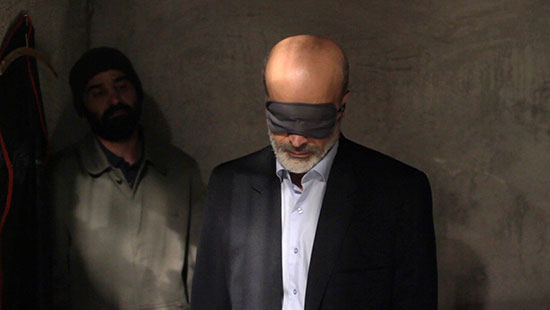
This film was written and directed by a man forbidden to ply his trade in his native Iran and forbidden to fly the country and work anywhere else. The credits beyond his are anonymous. This film embodies its own issue. The film's beginning is revealed to have been part of a loop which we see close at the end. One figure who seemed to be forgotten about from the opening appears again (though really for the first time) but now he brings a swag of unspoken questions and even hope (you'll have to see it to understand why). The single shot scene of the first of the trio to give in for reward ends with the non-digetic sound of birds in flight. We cannot bring ourselves to judge him. Our relief forbids it.

MIFF Session 6: A TOUCH OF SIN: Assault with a Deadly Economic System

Four stories of the effects of the capitalism that has been swelling in China for the past few decades. We go from exploitation and rorting in a far flung rural district, survival in a provincial city, bloody dummy-spitting in a massage parlour to a metropolis alive with colour, entertainment, business deals and the expensive end of the sex trade, we watch individuals meet the changed game, mostly with pressured violence.

The tradition that writer/director Zhangke Jia is tapping here is wuxia, tales of ordinary folk moved by circumstance to be warriors against injustice. The stories themselves that make up the omnibus were quite literally taken from the headlines as Zhangke began collecting from the newpapers and settled on these, with liberal borrowings from others to form a picture of his country worlds away from the Bressonian observed fables he is known for. The theme here is anger, his characters and his own.

The laid-off miner in the first story repeatedly fails to protest at the corrupt coffer-filling of the village officials who profited illegally from the sale of the mine. He goes forth with a shotgun concealed in a wall hanging or, just as accurately, a weapon wrapped in a tiger. The migrant worker of the second moves through streets and cafes loud with sudden flare-ups. His actions show us what he is really about and his departure from the film amid the gunfire and crashes from the bus movie screen into darkness tell us that he has found his point of control. The third story sees a receptionist for a sauna etc establishment being taken for one of its sex workers breaking out from their hassling (one repeatedly slaps her with a wad of bank notes, drawing blood and then almighty wrath (seldom has a loaded gun moment surprised me so much). Finally an errant factory worker flees his responsibility and runs to the big city, taking a security job in a high class brothel. He meets with the revenge of others rather than enacts his own but this, too, has a strong poignancy.

The canvas here is rich but not cluttered. The first story moves like a wuxia tale but because of the modern dress more resembles a Sergio Leone revenge western. Localised outdoor performances of Chinese opera appear as a link with tradition but also a reminder of the moral code they offered. The stories are not separated by partitioning title cards or even text on the screen but rather pass batons to each other as they progress.

The result is so rich that I baulk as describing it here for fear of leaving too much out. While some passages feel like they haven't travelled well from their setting the whole is so unfailingly compelling that the two hours plus running time flew by. It's also hard to find out much about this film as its freshness from its Cannes debut has left only the sparsest of commentary or information so far. I've been mostly going on what came from the Q&A after the screening (which featured the most clodhoppingly overbaked self-important statement in the guise of a question that I've heard at any of these: thankfully, tha language barriers proved insurmountable, and that's just when it was in English).

Two hours of sustained revenge opera in sumptuous colour and mounting anger. If that doesn't work as cinema I don't know what does.

Wednesday, July 31, 2013

MIFF Session 5: Blackbird: Suffer the little Goths....

There are a few scenes in the middle of this film which show its protagonist, Sean, reading Franz Kafka's The Trial. I normally dislike obvious references like this but this time it works well by being poignant rather than merely clever. Sean, 16 year old schoolboy in provincial Canada, wakes one morning like Joseph K to find himself arrested.

He was bullied at school by the hockey team alphas and worked out his vengeance by posting it on his blog, the whole scenario. Scenario means plan to the cops and the legals who shine atomically in their community for preventing another Columbine. Faced with copping a  plea and a slap on the wrist or going to trial and clearing himself, Sean goes hard with the latter. In juvenile detention where he reads Kafka he is bullied with greater force and less hope of protection. When the trail date is postponed and he looks at months more of this he follows his hotshot lawyer's advice and cops a plea. Slapped on the wrist and given a restraining order for twenty-seven people, he is freed. That's when his trouble starts.

Out in the free world he must navigate his legitimate path carefully or risk either more prison or less official and less limited retribution. He only wrote a blog post. There was an arsenal of weapons in his house but they belonged to his father. Out hunting in an early flashback he aims a rifle at a deer who suddenly looks like an unkillable pet. He has no trouble iphone-ing the gutting and the resulting viral video is everywhere. He's a goth, self-described, spiked leather jacket with an inverted red pentagram painted on to look like it was drawn with blood. No one is going to believe he would leave it at a blog post.

I say the trouble starts after prison because something happened early on that lifted this film from a paranoia fest or a copy of Gus Van Sant's Elephant. In the midst of this grim naturalism comes a Romeo and Juliet story that defies belief and its suspension, making us shut up until we see it working. Sean, social leper, is the infatuation of Deanna, GF to the hockey team captain. Through the roll call of extreme differences between them is an effortless intelligence that they are not seeing anywhere else. As I say, this takes a bit of doing but that it does comes down to this film's primary strength: performance.

Alexia Fast makes Deanna and her attraction to Sean believable by showing how difficult it is for her to express it. She easily snubs him in front of friends after they have communed in private, knowing the agony it will cause him. Her arc is a very subtle quest for her own strength. She really does have to give up her popularity if she pursues him and the pain of that is there in her playing. It's a fragile but impressive turn.

Connor Jessup (who could be Scarlet Johansen's twin brother) is the centre of gravity here. This is a film about suffering. Jessup takes his victim from its awkward imbalance of anger and fear into the coldest corners of isolation, never more than a teenager, never less than intelligent. You know that Sean is not going to reverse his fortunes in a single explosive act like an American hero, he's going to have to work it. It's telling that the climax of this film involves him delivering a single short line into a courtroom microphone. There is a quaver in his voice but it is the surrender of fear rather than an expression of it. There is no sudden uproar in the court. He's made his decision and the rest is process and data entry but the moment is a proof.

Blackbird is a quiet piece but that is possibly the most efficient way of showing suffering as a first world phenomenon. It's not without it mainstream concessions but that it can transcend them with such restraint while keeping a firm hand on solid narrative and compelling action is testament to its worth. If you look up Connor Jessup at the imdb you'll find a dizzying rap sheet of achievement for an under twenty. Are we looking at another Brit Marling? Maybe. By the time he utters Sean's (and the film's) final line we know he's earned something.

Sunday, July 28, 2013

MIFF Session 2: JIN: Babe in the Cradle of Civilisation


The most beautiful vision you have seen of a vast cloud bank pouring over a mountain range in a cascade slow enough and so easy on the eye that it feels like a dose of codeine when you need one. A stag in a field, the camera recording the glorious complexity of its coat. A forest. A lizard on a bough. A snake winding about its life. A turtle grinding through another day. Through the rich green leaves of a bush we see a red bandana and a human eye peering through the foliage. An explosion. Tearing blasts of automatic weaponry batter the trees. The story of Earth in about ten minutes. We are witnessing nature, even the bullets.

In one of the many caves you'l  see on screen beautiful 17 year old Jin listens to a fellow Kurdish guerilla sing a haiunting song about a mother wanting her daughter to come home. Jin hugs her colleague and desserts the camp.

Out of this needle edge of civilisation Jin plunges into nature. The life on the mountain runs the gamut and adds mineral to the vegetable and animal with sloping fields hazardous with shin shattering rocks. In her little red riding bandana she negotiates wildlife both lo and hi tech: a silent deal with an eagle wins her an egg for lunch, a shepherd recognises her military status and easily parts with half his bread, she crosses a field targeted by snipers and takes shelter against a bombing run with a bear with whom she shares an apple, chancing on a farm house she steals provisions and money but tends to the  sick old woman of the house.

But if she is a Red Riding Hood she is a seasoned veteran version, not needing no lines about what big eyes or teeth possessed of the predators ursine, reptilian or human and sexual she meets. She has no trouble recognising the need for compassion when it arises and applies her skills of healing and nurture as easily as she handles the Kalashnikov she toted before burying it in a cave.

So, she is young and schooled in the world. So what? Well that's for us to discover as we go, observing her simple but certain quest to escape the war and return to her mother. To do this she must consolidate her departure from the endless hours of war. Her first transformation is made after she visits the farmhouse and steals clothes as well as food. Burying her camouflaging drabs and weapon, changes and in her new rich colour she stands out from the landscape like a civilian. From here she looks like an innocent and knows it which works haere and fails there.

What I'm describing will seem quite ho hum but for all the broadness of the brush but there is such depth of feeling and seriousness in the telling here. Deniz Hasguler's effortless charisma is the chief delivery but the often breathtaking nature photography is presented as an equal in this film of extremely spare dialogue but constant communication. There is simply no easy way to look away from the plain but solid plea to consider the continuum of nature from earth to explosive. No better setting for this tale than here in the cradle of civilisation. From earth to Ur to Byzantium to here...

Reha Erdem's previous MIFF film, Kosmos, was a complicated fable of morality and faith. It's power was undercut by the uneasy blend of hard edge and whimsy. Here, he has honed an appreciation for an elegantly spare canvas.

Jin's final transformation will not be revealed here but it is both a gut punch and unsurprising. It results in her most powerful acts of compassion and leads to a tableau so shiveringly confronting it will either drive you to derisive rejection or riddle you with emotion. I kept myself one shudder short of tears.

Saturday, July 27, 2013

MIFF Session 1: THE DAUGHTER: A date with the new business model.

A sunny afternoon in Athens. A teenage girl waits at the school gates to pick up her brother. In the back of the car he asks where they're going and she sighs and tells him they have to go and do something first and then he can do what he likes. The pair climb into a lumber storehouse the back way, familiar with it, aware of a need to be sneaky.

Time shifts: the girl finds father's flat with new locks on the door and a carpet of unpaid bills on the welcome mat: she tries her father's accountant who hasn't seen the man for days: at the flat she shares with her mother and mother's boyfriend she picks up a few things and flees: she settles the little boy back at the lumber yard and tells him he should never leave and that he is safe there: she heads through the streets which ring deafeningly with the shouting of protest rallies: she visits her father's business partner who asks if she has seen their son.  She tells them no. The boy is not her brother. He is her captive. In a line of dialogue The Daughter has gone from a De Sica style neo-realist film to a thriller.

Except that it does something strange. We have begun so compellingly that it would seem natural for the girl, Myrto, to play a taut and frightening mind game with the boy's, Angelos', parents. Oh, we get a look at the loaded gun rule prop early: a massive power saw. And we see that Myrto means business. But what we get instead of an assembly-line thriller is a study in sustained intensity and a fable for the Greek collapse that does not let up. If you look at Salvina Alimani in the titular role and think of a young olive Sandra Bullock you should know that she not only doesn't smile once throughout the entire running time but only gets more fierce.

The backstory to Myrto's mortal anger is kept lean and presented in easily digested further time shifts. Her relationship to the boy is the sole point of genuine character development in the film. While the mis en scene makes such skilful use of the many prison-bar like lines in the lumber store, frequent isolation of light to a small area of the 2.35:1 screen, and some contextually odd extreme high and low shots, it holds its realism tightly.

But it also keeps its eye on fable. Myrto reads Angelos dictionary definitions of words like debt and responsibility while he draws monsters. The nest she has made of the lumber store with it Dr Caligari angles and combustibility is spider like and maternal at once. Her response to their parents' betrayal of both of them is adolescent - enough personal power to act but not enough experience to know if she can - can be seen without a big stretch as a creepy portent of the new world business model: do-or-die, vengeful and self-preserving. The world has changed and the betrayed want the kind of redress that teenagers don't think twice about before turning to action. At one point the storeroom is invaded by theives who make off with a ute full of saleable timber and we remind ourselves that all this stock must now be owned by the bank.

Alimani's hard performance might strike us as monotonous but the consciousness she allows through her stern visage eventually show us that we are witnessing control, not limitation. Her expression in the film's final image takes this to another level.

I can imagine many sniffing at the mechanics of the climactic scene and the heavy handedness of its symbolism but while those things registered with me I also felt the anger in the imagery. The Daughter takes this anger and packs a lot of it into a laudable 87 minutes of screen time, letting us know just how it feels. And we who are or have been teenagers ourselves, have no trouble feeling the same.


PS - I added this on top of my annual mini pass as I realised I wanted to commemorate something: at the time of the screening last year I was being wheeled from the operating theatre with a plate newly drilled into my left fibula. I wouldn't walk again for months and had to skip last year's festival. The stroll into town this afternoon and the return walk were the sweetest I have known.