Showing posts with label anniversary review. Show all posts

Saturday, March 15, 2025

CITY OF LOST CHILDREN @ 30

Krank, a craggy grotesque, taps the dreams of captive children because he can't dream himself. In an abandoned oil rig fitted out like a steampunk lair, his efforts, through a machine made to purpose, keep failing. The inventor of the device has long absconded in disgust, leaving half a dozen clones of himself. Krank elicits the aid of a cult of machine men to abduct children from the harbour town on shore. One night they take little Grub, brother of the massive One, circus strongman. Now ... um ... and a gang of children thieves is run by a pair of conjoined twins who are building up to steal a big payday safe and ... 

The problem with this film is that describing the plot will only make it seem pretentious or fatally cutesy. It does get cute quite frequently but never without something grim injected for balance. It is never pretentious; it delivers on all its promises of dark fairytale worlds, grounded unreality and spectacle. City belongs to a loosely aligned series of whimsical cinema stretching from the early '80s to the '00s (say, from Diva to Amelie) by the likes of Besson, Beineix and the team that brought you this one, Jeunet and Caro. These films, whether they were set in elaborate waking nightmares or pushed versions of the more familiar worlds of criminal life, were known for flamboyant design, cranked music scores, and a kind of bruised whimsy that reminded its audiences of the pain at the receiving end of a slap in the face.

City of Lost Children is the peak of these. The commitment to world building, from the brass and glass machinery to the soot encrusted brick walls of the city to the stunning interiors, is total. The careful use of CGI is made with futureproofing subtlety. While much of the casting emphasises the peculiar physical features to distortion, every face and body seems to be a part of this solidly imagined place and time. Add to all of that the fact that it works, for all its convolutions of plot, as an achingly beautiful tale of  redemption.

Ron Perlman, initially cast for height and bestial visage, has shown, role after role, that he's a strong performer, here again demonstrates his magnetism, tending toward his physical skills but convincing in the truncated dialogue he is given, a professional muscle learning speech. Judith Vittet as young Miette presents as tough as an eleven year old can. That this is done without older-than-her-years cuteness is a boon; her life so far has led to it and she has earned it. French cinema's goofy faced stalwart Dominique Pinon gets to play seven roles as the clones and their progenitor, each distinguishable from the others. Daniel Emilfork as Krank pushes his battleaxe face into his every scene but takes opportunity to show vulnerability along with threat without seam.

Music is by David Lynch regular Angelo Badalamenti and it's one of his most appealing. Ranging from organ grinder gothic to lush orchestral blooming, the music shoulders the extraordinary visuals, adding its own grandeur here and grit there. It sounds like he was enjoying his vacation from Lynchville.

I said that I thought this was a peak among the French whimsy but maybe I should have clarified that to mean it is the most timelessly presented one. When you are in front of this, you are not thinking of the underworld or dystopian futures or even political points about the fate of Earth's environment; this story exists within the imagination of its writers and creators, it transcends the few indicators of twentieth century technology and history to show a world both repurposed and dark. To its credit, while it can be grim it is never without heart and humour. If you seek it out, don't be put off by some of the abstruse plot complications, let the arc take you from peril and chaos to redemption and freedom. Above all, this is a fable of freedom and it feels like it even more than it did.

Viewing notes: I watched this from my 4K disc on a friend's new, enormous tv in Dolby Vision and 5.1. The transfer looks like film with no noticeable noise reduction but plenty of olde worlde grain. Splendid! The 4K is a local release at medium pricing. It's also rentable through Prime for cheap.

Saturday, March 8, 2025

HARDWARE @ 35

A professional scavenger finds a broken robot in the desert and brings it to a scrap dealer. While the dealer is out of the shop for a few minutes, a similar scavenger Mo buys the wreckage and then sells it at a profit to the returned dealer. Except for the head. That will make a pacifying gift for the girlfriend he's neglected on his own journeys. Getting through the wrecked streets in the near future world ravaged by war and climate disaster, he struggles to get into his own flat but he is let in and the robot head does make a good gift for his sculptor girlfriend Jill. They are ok for a while but have another barney and he splits. Meanwhile, Jill paints the head with stars and stripes and puts it at the centre of a big nasty looking installation. That's when we find out the head is still active, part of a M.A.R.K. 13 killer model and is stealthily reconstructing a body out of the machine parts Jill likes to use. Ummmm....

The rest of Richard Stanley's bleak action sci-fi is about stopping the robot as it takes over the apartment with a view to expansion and continued self-expression. Into this is woven a host of comments of the imagined future on the time of release including climate awareness, overpopulation and the possibility of administrative solutions for it that involve mass fatality and an overall sense of how the smartest things to emerge on the planet are compelling its ruin.

Stanley's film career has always been a bumpy one. He has been big on ideas and low on tolerance for besuited limitations. Hardware shows this in its mix of well lensed cinematic moments and the more typical use of scant means to create maximum effect. If this means that scenes that need constant tension get a little deflated by repetitive action with the puppetry of the robot then so be it. But there's a tiem bound consideration, here, that's easy to miss.

Hardware, though it had the rising Miramax stamp on it, was destined for the arthouse and the video shop. That's not a comment on its overall quality but its character as a dark and often cobbled together piece. It more than made its money back in the cinemas where it did screen and had a healthy afterlife on VHS and remains in print for home video to this day. Its reputation is mixed among the sci-fi community swinging between tawdry ripoff and above-weight vision. In its prime day, though, there was a persistent appreciation for the aesthetic of the DIY production values of indy cinema that resonated from punk. Hardware only intermittently resembles the Terminators or Blade Runners it wants to share a bed with and will never present a complete record of support in its community, forever living in the realm of cult cinema.

But that's no bad thing. It was decades of getting used to the figure of David Lynch and his popular second act movie Mulholland Drive that might just allow Eraserhead into a mainstream cinema season (and then in deference to his passing). Richard Stanley does not have Lynch's cache, having never been popular or at least well enough known to get his name into dictionaries, but that says nothing about his ideas. The projection of the M.A.R.K. 13, its purpose and the final statement about it at the film's close is a clearly anti-fascist statement. That it was put into a diegetic context of art service without an obvious pointer in a politico-cultural direction is clever. Jill's solution to the problem of the robot's detection is as strong as anything in the dark sci-fi of the era. The saviour/voyeur figure of Lincoln is intentionally troubling as is his corner on the technical expertise the situation needs: it's not just M.A.R.K. 13 that threatens.

So, even now, decades beyond it first getting cache as a hot new title in the groovy movie houses, Hardware still needs a little love from viewers to warm to it. It does stand in the retro shelf beside War Games and Demon Seed instead of living in constant praise like Blade Runner but I have no problem with that. This might well be due to my age as I lived through that punk attitude from adolescence and will easily look around the sight of virtual gaffer tape on the special effects (I mean, I did have to do more of that when I watched the 4K of Terminator which begins with a scene that only looks like a plastic model hovering over a mini set).  What I do see, the more I watch this one, is the cry against tyranny and the misappropriation of technology. If that isn't a message for now I don't know what can be.


Viewing notes: I watched Umbrella's superb new 4K presentation of this one. It might make the glue and tape of the effects a little more evident than an old hire VHS but that's just a trademark from when sci-fi was arthouse and remembered what punk felt like.

Saturday, March 1, 2025

FRIGHT NIGHT @ 40

Charley is still in his teens but he's already a wreck. Amy is ready to take things to the next level which should be electrifying his teenage raison d'etre but there's a vampire moving in next door. Amy leaves, the school horror nerd Evil Ed takes his money for some pat advice and the host of the late night horror show Peter Vincent brushes him off as a crazy fan. Well, who would believe him?

Tom Holland's mid-'80s horror-teen-comedy doesn't have the future-star appeal of the Lost Boys or the genre-expansion of Near Dark from later in the decade but what it does have is an early take on self-reflexivity in genre. This is generally supposed to bloom in the next decade with Scream but Charley's knowledge that both holds him back from action and pushes the plot further places him firmly on the timeline of characters who know the rules of the movies they're in. But then, instead of making this the pivot of the plot Holland throws in the realism of the barriers. Charley knows what is happening but everyone else he knows is just in the normal world. Cackling Evil Ed, the long suffering Amy, his tv idol and his latchkey mum, think he's nuts.

While the struggle to gain credibility is a plot driver in any supernatural movie, this one wears its era on its sleeve. The teens aren't just incredulous, they're cynical. Peter Vincent bemoans the plummeting popularity of supernatural horror in favour of the current oafish teen slashers. Amy's offer toward the sexual development of her and Charley's partnership is matter of fact, not the thing of giggling or smirking, it's something more John Hughes. Vampire Jerry also knows his movies and after kissing the hand of Amy and saying, "Charmed" he asks, "isn't that what I'm meant to say?" and it plays as a joke among the characters.

But then, when it gets down to the horror threads of the weave, Fright Night plays fair. Amy is revealed to be identical to Jerry's long lost love and he pursues her. Their serpentine dance in the nightclub is genuinely sensual, playing the creepiness of the mature Jerry against Amy's youth. (This is also the moment of the film's best mirror trick.) Her erotic fealty to the vampire is rendered even more worrisome by her acquiescence. When her physical form begins distorting, there is a sadness to the horror as we see the effects of her addiction to the maleficence. This also goes for Evil Ed and his own trajectory is a tragic one.

As for Charley, himself, his task is to grow up and take a real stand. This is done through bringing his team together and doing the hard work to convince them to join him in what will be a hard fight. To do this, he has to martial Peter's vanity after his urge to quit town has taken over. Charley's values now centre on the unity of opposites, centred in Amy who is transforming into a vampire but who is still saveable if Jerry can be vanquished. He has to shed his suburban teen skin with all its dependency, take up arms, such as they are, and do battle.

The cast works well with this. William Ragsdale does look about ten years older than he should but he makes up for it with the confusion of the younger character and his distracted nature. His change has to convince if the movie is to work. The dependably dark and unctuous Chris Sarandon revisits his ghastly role in Lipstick, but adds a skin of urbanity, emanating an intimidating confidence. He is a scarier vampire than Robert Eggers' recent Nosferatu, a successful seducer of the young. Amber Bearse might seem to have little to do but look middle  '80s pop star androgenous (kind of) until she is clad in prosthetics but her Amy does feel real and unaffected in contrast to the overwrought young women of the screen at the time. Stephen Geoffreys' Evil Ed is hard to take but has to be, a kind of teenage id-engine that works its one note into the centre of the Earth. Floating above it all, of course, is Roddy McDowall, whose decades-long career by then brought him well into the core of horror cinema. He plays camp at first but through a prolonged and credible vulnerability, finds his character's essence and strength. As goofy as it can get, this is one of Roddy's best turns.

While Fright Night's reputation leaves it on a lower rung than the hits of the later '80s, it remains one of the most engaging evocations of suburban gothic available. As a comedy it goes for amiability rather than belly laughs. As a horror it is more successful, building a dread between Jerry's palpable malevolance and Charley's isolation. That Jerry can pick him off, even in the sanctuary of his own home, works solidly. As a fable of accepting the things of adulthood I think it does better than the big John Hughes teen epics by keeping the themes streamlined into allegory instead of spraypainting them all over the dialogue in dated hues. It feels like it has less to prove while offering more. That's why I can keep returning to its warm dangers. 

Viewing notes: I watched my squeaky clean and beautiful sounding 4K steelbook edition which I can only recommend. However, Fright Night is rentable through most of the usual outlets like Prime or Apple, for a small fee. Beware of the remake. If it has Colin Farrell in it, it's the wrong one. 


Saturday, February 15, 2025

THE CHANGELING @ 45

After losing his wife and daughter in a horror crash, composer John Russell must find his way to living through massive grief. He emerges from mourning, moving to a new city and job teaching composition at the local Conservatory. He lands well, finding an isolated mansion to move into for the kind of quiet that allows concentration. But that's not how these stories play out. Things move by themselves. Sounds occur when and where they shouldn't. Curious, and almost glad of the distraction, John goes exploring and finds a walled up room with a lot of dust and webs and a child's wheelchair. There's work to be done.

This was an original screenplay, based on a claimed genuine haunting. Off centre U.K. directors Tony Richardson and Donald Cammell were early choices but both bailed for creative differences. By the time Peter Medak got the megaphone, the script had been through rewrites and he added some of his own. In a very real sense, this tale of failed adoptions might have to do with the film being counterproductively uneven. While it's a favourite to put on on a rainy afternoon for its engaging eeriness, it always gets to a point where I feel like getting up for a break.

That's not to say it ever really drags. The Changeling feels draggy over the course of its reasonable hundred minutes because, as good as he is to watch, George C. Scott's John Russell is so blustery and pragmatic that he never seems to be under threat. Add a plot convolution that plods when it should accelerate and you have something that does actually feel like a story fixed with patches rather than drafted anew as a fluent single treatment.

Medak is no slouch when it comes to effective film making, the chills here as good as you'll find in anything of its era, but he can appear to lose sight of the aerial view of his projects. If you read up on The Ruling Class and that is stars a young and feisty Peter O'Toole you might hurry to it but by the second of its two and half hours you might start cherry picking the good bits of what should have been a  ninety minute satire at the most. Similarly frustrating is the '90s entry Romeo is Bleeding which should have been a sure fire bad cop story in the era of Pulp Fiction and Bad Lieutenant but ends up as cinematic porridge. The Changeling is not as bungled as either of those as it does deliver on its promises as a complicated ghost story, it's just that we could lose about fifteen minutes of transitional or lifestyle scenes (they date it stylistically, anyway, and give it the feel of being a filmed Playboy ad for pipe tobacco). 

It is also not helped by its orchestral score which begins with an enjoyable uncanny piano and strings theme but soon blands out into aural treacle. This is after the likes of Jerry Goldsmith's terrifying score for the Omen and John Carpenter's unsettling piano and synth music for Halloween. It gives the film the feel of a luxury budget production but that's really not always what you want in a horror movie.

But horror movie it is and is quite readily regarded as a classic of its kind. I might question that last point but I do have to admit that the goods it brings when it needs to (that séance scene!) and those moments of development that suggest that the real darkness is not in the haunted house alone, are gripping. You might notice that the worst of my criticisms here are kind of the opposite of faint praise, that my sticking points are quite likely local to me. Perhaps I should just say that, while I would watch something like The Haunting (1963) at the drop of a hat but think about revisiting The Changeling it might be more indicative of its place in my estimation. I love The Haunting. I respect The Changeling.


Viewing notes: I watched my lovely 4K release of this which came with a BD and a CD soundtrack album. This is not currently available to rent or buy in Australia. If you were to travel back to the days of VHS shops you'd be able to get a copy on a cheaper weekly rate. Not everything had got better.

Tuesday, February 11, 2025

AFTER HOURS @ 40

Bored office drone Paul strikes it lucky one night ... kinda. A chance conversation with a beautiful woman at a café gets him a number and leads him into the worst night of his life as twists, turns, rug pulls and wrong footing have him run the gauntlet in a New York that has replaced the sleaze of Taxi Driver with an affluent bohemia. Not fun.

Griffin Dunne's pet script (he didn't write it, he just wanted to do it) had been passed around forever and, through a series of acquaintances, landed in the hands of Martin Scorsese. Marty had just seen King of Comedy fall through the earth and his first attempt at Last Temptation kicked out the studio door. This looked like money. It was the mid-'80s and cokey crazy was working as well as the teen empire. Movies for those of voting age and up were popping like mushrooms around the time. These days it's a genre called the yuppie nightmare cycle. Desperately Seeking Susan and Something Wild cast rising stars in comedies that could go south or west as long as they smashed a young urban professional against a loopy femme fatale. Susan had two of them including a major pop star. After Hours had five.

It flopped. After the big no show it was injected into the art houses where it did better over a longer time and was quietly absorbed into the mud of the cinema gutter as forces like The Coens and Stephen Soderberg rose and got to work. So what's wrong with it?

First, Griffin Dunne's empathy card starts fading from the café scene in which we cannot believe that Rosanna Arquette would pick him up. Also, Linda Fiorentino's sassy boho artist feels phoned in and the papier mache piece she's working on looks like a year twelve goth kid's project. The taxi ride from his familiar territory to the wiles of the west end of Manhattan is done cranked so it looks like it was shot as a speeding car in a Jerry Lewis movie. The punk club is pure passe try hard unless it's meant to be a yuppie version of one. Look, there's a lot of good moments and observations and the turns of Terri Garr and Rosanna Arquette shine, but the whole thing feels tone deaf.

Trying to care for Dunne's horny creep who tries to pass as an average guy will never work. We can laugh at the uber cool goof artist or feel sympathy for Arquette, recognise the '60s casualty of Terri Garr's character and find a lot of the frustration scenes anxious. But we are supposed to want Paul to make it back to his flat and lick his wounds and I, through more than a few views, have never been compelled to care about him.

This is from Martin Scorsese whose grip on how to make awkwardness and threat hilarious puts him up with the masters of Russian literature (read some and you'll get the weight of that). He who drew both intense eerieness and clumsy naivete from De Niro in Taxi Driver was surely well suggested as the perfect fit for this feast of such moments. Perhaps it's a problem of concentration. While he's so good at finding the horror of the everyday and the laugh in physical threat, when he's only meant to do black comedy or dark farce, he pushes it so far it only works as over egged.

I'm going to admit something that I don't have to: my first viewing of this was a bad experience. I went with a couple of friends to a screening at the long lamented Trak in Toorak. They were down from Brisbane and we were cramming things in. We trammed from The Quiet Earth at the Valhalla to Toorak for After Hours, Scorsese fans all. The Trak was an arthouse, mainstream second run, classics and contemporary indy. If you went there you knew the director's name and reputation. After Hours had been billed as Marty's whacky fun fest. The audience was plummy and comfy, the very yuppies that the genre was aiming at. They tittered at almost every line, even transitional or expositional moments which didn't try for laughs. Soon, everything was like the funniest moment of comedy any of them had ever witnessed. Imagine a Friday the 13th sequel in which everyone screams at every single kill and every scene, even the sex, for the entire running time. They had paid for a whacky fun fest from Scorsese and by the Lord Harry they were going to get it. I was shrivelling from the embarrassment of it, fearing the judgement of my northern sophisticates. We left in silence, even getting a cab in grasping flight.

Horrible but every time I've seen it since the only improvements I can find are in lines and moments that those screeching laughs and belly thunder had covered. Increasingly, it has played as a failure for me, over earnest in its attempt to be light and sharp. It's why I delayed watching Shutter Island because, as a horror fan, I didn't want him to bugger that up, too (he did). Scorsese still had greatness to come. He finally did make The Last Temptation of Christ and it's a masterpiece. Goodfellas reaches great heights and is still untarnished by its boring younger sibling Casino (or its embarrassing grandchild The Irishman). At some point he might have decided that a good paycheck and a reputation just felt better and was happy enough riding on the legend. 

I'll always look out for him in cinema documentaries but the films since 1990 have mostly been well made and bland (there are exceptions but those are few). He'd been such a god at Uni, we knew his dialogue by heart. From the time I saw Taxi Driver on a Steenbeck editing desk I was completely hooked. We  bent the knee for all of them and felt we'd found a cinemaster for our generation (even though he counts as the previous one) some we loved, others we forgave. After Hours was the first one I forgot.

Saturday, February 8, 2025

PSYCHO @ 65 (Lots of spoilers)

When the mild mannered but impatient Marion gets a big pile of cash to deposit for her boss she takes it on holiday to nowhere. Maybe it will persuade her reluctant lover to marry her as he always whingeing about not having the money. Maybe it will fund a new start on an Island off California. Whatever, she's ahead of the chase and, tired after a day's driving, wheels into an off highway motel. The nervous guy who books her in makes her nervous so, after an eerie conversation with him she begs to to take the last shower of her life before bed. She doesn't make it to bed as the shrieking old woman in the house by the motel has beds and flesh and sin on her mind and comes in with a butcher knife and that's that.

That's not the end of the movie. Not only has the murder taken a big number of shots edited into a small number of seconds that feel much longer and accompanied that with a relentless screeching of violins at the top of their range which seem to sound like widened eyes, a sequence which deftly convinces us that we've seen a lot more stabbing and a more nakedness than we have, but we've just witnessed the killing off of a character we've had half a movie engaging with.

Well, it happened in Robert Bloch's novel, Hitchcock must have relished the disruption. His love of gimmickry stretched back to the beginning of his career and would continue to its end. This one allowed the publicity to try the line about cinemas refusing entry to people who tried to come in after a certain point in the run time. But the word was that he killed off his star. The story after this is the investigation by Marion's sister Lila and the reluctant boyfriend Sam, along with private eye hired by Marion's boss. There is plenty of plot to go from that point and it's where the intrigue finds its compulsion in the question of what Norman's game is and what his mother has to do with it.

But as plotty as it gets Psycho is more about that crushed attempt at a family that were the Bates. There is a lot more to this in the novel but most of that is narrated backstory and would have necessitated either an unacceptable narration or flashbacks which might have served to drain tension and pace. Hitchcock's adaptation concentrates on the effect of the family's demise on the rest of the world as it meets it in the form of Marion and the interest in discovering her fate. Norman and his wild mother are the sharp splinter of an old dead tree that yet can tear and kill. 

Anthony Perkins is perfectly cast. His skittish nerves, fragile movements in conversation with strangers remind us of the living relatives of the birds that Norman has stuffed and mounted on the walls. Then, his assured motion in cleaning up after his mother's atrocities give us a different side. We are to learn the most about Norman of all the characters, some of it in a direct lecture by a psychiatrist but as much if not more in these moments of contrast, pragmatism and panic, predation and prey. The shrink at the end sets up the final moment of reconciliation of the facets but it is Tony making the hairs on the back of our neck stand up.

Of the other cast, they are perfectly functional with the exception of Martin Balsam as the detective Arbogast whose worldly face and effortless manipulative powers give him a forbidding strength of his own. I haven't forgotten Janet Leigh as Marion whose intensity belies the good girl grown up. She must stare at us from behind the wheel of her car, emoting as the thoughts of her predicament sound in her head. At one point her face breaks very slightly into something like a wicked smile as she considers one consequence of her theft. I wonder if original audiences thought that this expression made her the Psycho of the title. Her interaction with Norman Bates involves a slight purging for both, a night time conversation that might bond or separate through its awkwardness, it is the closest thing to freedom that anyone in the film gets.

There is a lot to discover about the production of Psycho and I'd recommend you pursue any extras on physical media that you find, or other sources. I won't go over it too much here but to mention a few things. First, Hitchcock effectively paid for it himself. This is why, between Vertigo and The Birds, Psycho is in black and white. The fact that he determined it to be a kind of modern gothic black and white with cinematographer John Russell, is down to his ingenuity. I cannot happily imagine this film in colour. The lower budget allowed for the casting of a few names lower on the pecking order of Hollywood but who came through strongly. It allowed him the shower scene as the original backers Paramount retreated and Hitchcock had to get creative with studio affiliation. It also allowed him to call in the talents of composer Bernard Herrmann whose extraordinary strings-only ride through frenzied violence earned him a doubling of his fee from Hitchcock. Psycho is almost an independent film and features the best of the limitations that suggests.

I first saw this at school. Mr Bowman, an English teacher who took us for an elective on film writing in year eleven, was delighted to screen it against the screen in one of the chemistry classrooms which had tiered seating where we also saw our anti-drug and anti-sex instructional films. At sixteen, it was the most violent film I'd ever seen. Sonny, a darkly narcissistic bully, was sobered by it and blamed the screaming music for its effect. By that stage the local commercial tv station was playing movies like Zabriskie Point and Husbands with the swearing left in. My Nana had spoken of how subtle Hitchcock had been in suggesting rather than showing his violence. She must have seen Psycho but it would have been too inconvenient an example for her lesson. Then again, she was the one who bought me the novel.

Psycho didn't quite change my life, though I was heavily affected by it, but it opened doors that held confrontations soon to become riches. The decade to follow featured a revival of Hitchcock's mid and late period movies as they went back into cinemas, on tv and into home video. We discovered his black comedy The Trouble With Harry, the might of Rear Window and the bizarreness of Spellbound. Psycho wasn't there. It remained a byword for the extreme mainstream. Anthony Perkins presented an Oscar, standing beside Janet Leigh, and joked about taking the rap for the shower scene killing. A vocalisation of the screeching strings still signifies imagined psychosis. But for me, to see it again, I cannot look away from its sadness, that sense of bad paths chosen or compelled that can only lead to great destruction. Marion turns off the main highway to her final stop. Norman lets his mother in to deal with the crisis he cannot confront. In psycho we acknowledge the broken and the bruised of us, their silencing force and their comforting masks. For me, it is Hitchcock's masterpiece.


Sunday, February 2, 2025

JAWS @ 50

After a teenager gets killed by a shark off Amity Island, the chief of police closes the beach. It's almost the 4th of July and the Mayor knows that the loss of tourist dollars will cost him his position and reopens the beach. Ol' Bitey comes back. So, salty Quint, oceanographer Hooper and Chief Brody set out in a boat that could be bigger to land the shark.

There's more to it but that basic plot created the summer blockbuster, cut the decade of New Hollywood in half and gave us the word Spielbergian. Mainstream cinema was already a love match with unfettered capitalism but Spielberg, starting here, dragged it so far beyond the event horizon of art as business that it's no longer possible to consider film completely divorced from commerce, from satire scale profits and an endless river of merch.

The big thing about that and Jaws is that Jaws is an exploitation plot with a New Hollywood depth and a spotlessly clean lens on enriching the concession stands forever with popcorn epics like it. The big thing is that Jaws is a much greater film than it needed to be. When an exhausted Chief Brody is thawed at the dinner table by his young son mirroring his movements and demands a kiss on the cheek because he needs it, it doesn't contain a moment's cuteness because the warmth of it invites us in. We are the Chief, his son and his wife who is looking on like we are. This is from the era of gigantic disaster movies and identikit genre pieces for the drive-in. Roger Corman could have made Jaws but Spielberg made it future proof and dazzlingly polished: it's like it was made last week but without mobile phones.

The '70s was also the era of the movie brats. Scorseses and Coppolas who had grown up in the cinema as though it were a Sunday School for artists. From them came epics like the Godfather and small but deep studies of crime life like Mean Streets. The Exorcist played like a medical drama rather than a generic horror. Depth was in. The realm that Jaws unleashed went the other way and, for all the Networks and Taxi Drivers that came in its wake, changed mainstream cinema into a big dumb down. I don't mean to suggest that Jaws is a dumb movie, on the contrary, but everyone who suddenly wanted to be Spielberg (and then George Lucas) had less trouble than before selling their dreck for its dollar value.

Jaws plays like a movie brat version of an exploitation film but one made by someone without a degree from Corman University. Spielberg had come through television. He made an effective TV movie in Duel and then a feature film Sugarland Express that even his fans have to struggle to recall (it's a good movie, just not Jaws). So, while he was used to working with tight budgets he'd not made commercial films on next to nothing and Corman's make-the-poster approach. The film is normalised now but it ram raided film culture at the time and has never been out of accessible reach to cinephiles and beer and pizza night entertainment alike.

So by the time Hooper, Quint and Brody board the Orca and chugalug off to sharkville, we know a lot about why they're doing it because in a way that never feels too expository we have lived with the residents of Amity Island that summer, heard their East Coast Yankee accents opine on the situation. If it weren't for the Great White Shark circling around at the beach, we'd all move there tomorrow. Spielberg builds this without the grit of an Arthur Penn or Richard Fleischer, the photography itself squeaks with sponge finish but the sight of the kids behind the news reporter making faces and bunny ears brings real daily life home to the screen. We've walked into the cinema to see ourselves. It felt so much better than getting punched by mafia thugs in an alleyway.

But there's something else, here. Spielberg loves his bad guys and gives them so much screen love that we can forget what the movie is about if only for seconds. A shark fin breaks the surface and glides in a smooth and sexy motion in the foreground as the distant background shows a mass of ant sized humans scurrying from the water. This can be self-destructive (Schindler's List gave the head Nazi glamour and  charisma that the title character could never rival) but here it is pitch perfect. In the third act, when its movements are heralded by the motion of the yellow cannisters pinned to its body, the shark appears malevolent and vengeful. It would not be the last time that a non human character would assume a persona in movie by Spielberg or one of his clones.

And then there is Spielberg Face, the reaction shots that sidebar time itself as characters register things beyond their power and comprehension. Mostly this is wonder, close-ups of awestruck faces, like our own gazing at the screen, rendering our own awe as beautiful as the faces of the movie stars. In Jaws the Face is horror. Brody on the beach locked in a glare of shock as the Hitchcock trick of reverse motion between a zoom and a tracking shot appears to make him and us queasy with panic. The equally famous bigger-boat moment comes later as he comes face to face with the shark itself. In Sugarland Express this even went meta as a movie reflection in a window appears to be projected on a fascinated face. 

This, along with Spielberg's confidence that we will be engaged with mechanics and processes, mark him out for future moments in the cinema with titles that are talked about like news stories. Spielberg takes the manipulative force of cinema to the next level with this, sucking us in to believe that our purchasing power gives us a sense of agency over the film while making us cogs in the process itself. All effective art does this but Spielberg's movies make it a business model.

Personally, I believe Jaws is on the same level as any film considered canon. Fifty years have done nothing to reduce it and it stands equally with anything you can name a classic. It's the rest of Spielberg I have a problem with. After a number of equally effective movies he turned his crowd pleasing power to more serious fare, chasing the respectability dollar and critical approval and maybe, just maybe that best director Oscar that would elude him for decades.

It's not just the cuteness of so much of it that repels me. He didn't just infect his own movies with it but all but contractually mandated it for those pressed into service like Joe Dante or Tobe Hooper to the point that if a movie wasn't a teen slasher or high school romp it was a Spielbergian festival of adorability and the adorability always felt pressed out of machine tubes like sludge in fast food joints. His movies became the most beautiful tacky get well cards on screen. But he ceded the throne of cute to the execrable Wes Anderson who is lauded now for the same bullshit.

(Similarly, I have beef with John Williams as a film composer. He's perfectly adept at scoring movies and his grunting bowed strings for Jaws is a masterpiece but Spielberg used him again and again to slather the speakers in schmaltz. Not his fault? maybe not but if he was told to sludge it up on purpose, couldn't he have done something more than he did? For all his skill and orchestral talent most of his scores sound phoned in.)

The assault on respectability is another issue. Whether it's The Color Purple, Saving Private Ryan or Schindler's List, Spielberg feels lost among all the heavy messaging and just wants to get back among the gadgets and how stuff works so what we end up with is epics made of a few setpieces and a lot of meandering. It's like someone who never smiled trying it out from a YouTube video; there is a creepiness to Spielberg's pursuit of gravity. 

The truth is he was already doing it in his action adventures where the dysfunctional families and dark authority were just part of the plot and crunched along like popcorn. Jaws with its humane treatment of communities, shared fear, belly laughing irony and pure white knuckle suspense gave us the whole meal. I can't feel nostalgia for Jaws as it's never been out of reach. Seeing it again doesn't feel like putting on a golden oldie because it will sweep you up in minutes every time. To be fair, most of his movies do this, regardless of what I think of them, but this is the best of them all.


Viewing notes: I watched my 4K Universal copy of this. It is presented with Dolby Vision and Atmos and could only be bettered by a screening of a good print at a cinema. Jaws is locally available on a dual disc 4K/Blu-Ray pack and is average price. You could pick it up in a sale for a lot less than thirty dollars. It's worth it.

Saturday, February 1, 2025

THE FOG @ 45

An old salt tells a group of kids around a beach campfire about a ship that wrecked from a false light during a sudden fog which lifted as soon as the damage was done. At the stroke of midnight, things in the nearby Antonio Bay township go haywire, alarms go off, things move by themselves and, over the horizon, a luminous fog is rolling towards the coast. Things could be better.

John Carpenter's third feature followed on the heels of his first hit, the monster Halloween which started the following decade's strain of teen slashers. The Fog was intended as a kind of fame rider: it didn't have to reinvent, it just had to draw them in. Drawn in they were with a huge margin of the production cost tenfold, even more and for longer on the new home video market. Carpenter was unconvinced by his own work in this case, thinking it muddled and unclear. He reshot scenes and added others. From this you might expect a mess but you'd be wrong.

The various threads of character driven arcs slowly converge as the plot progresses and one of the emergent properties of the whole thing is a more definite sense of setting than Carpenter had ever achieved (and his first one was in space!). Antonio Bay with its haunted servos, lighthouse radio station, antique church and small town seaside houses, feels like a place the way that the LA of Assault or the Haddonfield of Halloween don't quite get to.

Is it unrealistic that a lug like Tom Atkins could bed the barely in her twenties Jamie Leigh Curtis? How come all those bids in the prologue are out at midnight listening to an old man spin yarns? What's stopping the ghosts at the physical doors? Aren't they ghosts? Well, do you want it realistic or atmospheric? Sometimes you can't have both. What sticks through those holes in the upholstery are the setpieces like the attack on the fishing boat, the various single attacks on homes, heralded by ominous knocks at the door. And under all of this is the slow revelation that the tale told in the prologue left out some very dark details.

Antonio Bay, about to celebrate its centenary, was founded on mass murder and theft. It's not just the locals who are coming along to the statue unveiling. The familiar American story of an official telling of sins of the fathers presented after bleaching is familiar to Australians, as well. If Carpenter treats it lightly, having established it, it at least has been brought to the fore for the viewer and compels the final act of retribution. The film might not have the terrifying force of Halloween, the slowburn siege of Assault on Precinct 13, or the dizzy black comedy of Dark Star, but it does have a door to open: what's on the other side might well be someone who doesn't think you deserve a home.

The cast list is like a roll call of Carpenter collaborators past and future. Jamie Leigh Curtis plays to one side of the main narrative but is welcome for that. Her real life mother, Janet Leigh, is in running cope mode throughout and kept barely in the safe zone by assistant the wonderful Nancy Loomis. Assault's bad guy, Darwin Joston is a coroner. Tom Atkins breaks his Carpenter affiliation cherry with the roughnecked but gold hearted truckie. And so it widens. Everyone does a good turn.

The locations are stellar and if you get a local release of the 4K, you will be rewarded. A few process and matte shots are given a little too much clarity which would have been invisible on VHS but the shots of the bay to the horizon and the winding seaside roads are breathtaking. Antonio Bay doesn't just feel real, you want to live there.

Crowning this is another John Carpenter electronic score. Few elements of the movies of the late '70s and early '80s got closer to the intersection of the times in music and the times in the cinema than these. The score for the Fog with its underplayed piano theme, builds dread with a quiet assurance. It's the kind of thing that still gets a mention if a recent film goes out on a limb and uses synthesis. And that goes for the film itself. No, it doesn't quite have the chops of the great moments around it, but it holds its own and improves a little with each viewing, reminding that Carpenter's name was one like Cronenberg or Lynch, that made the ears of moviegoers prick up. I say moviegoers rather than cinephiles because Carpenter served this up to mass audiences in a way that few others could and still maintain such a solid cool.


Viewing notes: I watched my local Studio Canal 4K release from 1999 and it remains a stellar transfer which does justice to the source. At one point a pack of four '80s Carpenter titles was made available in 4K (without the Blu-Ray discs or extras) which went on sale for $19! Never seen it since and would've bought it just for back up discs. But the individual double discs are still available retail in Australia. Fun fact, I'm writing this on the anniversary (local time) of the premier screening of the film.

Sunday, January 26, 2025

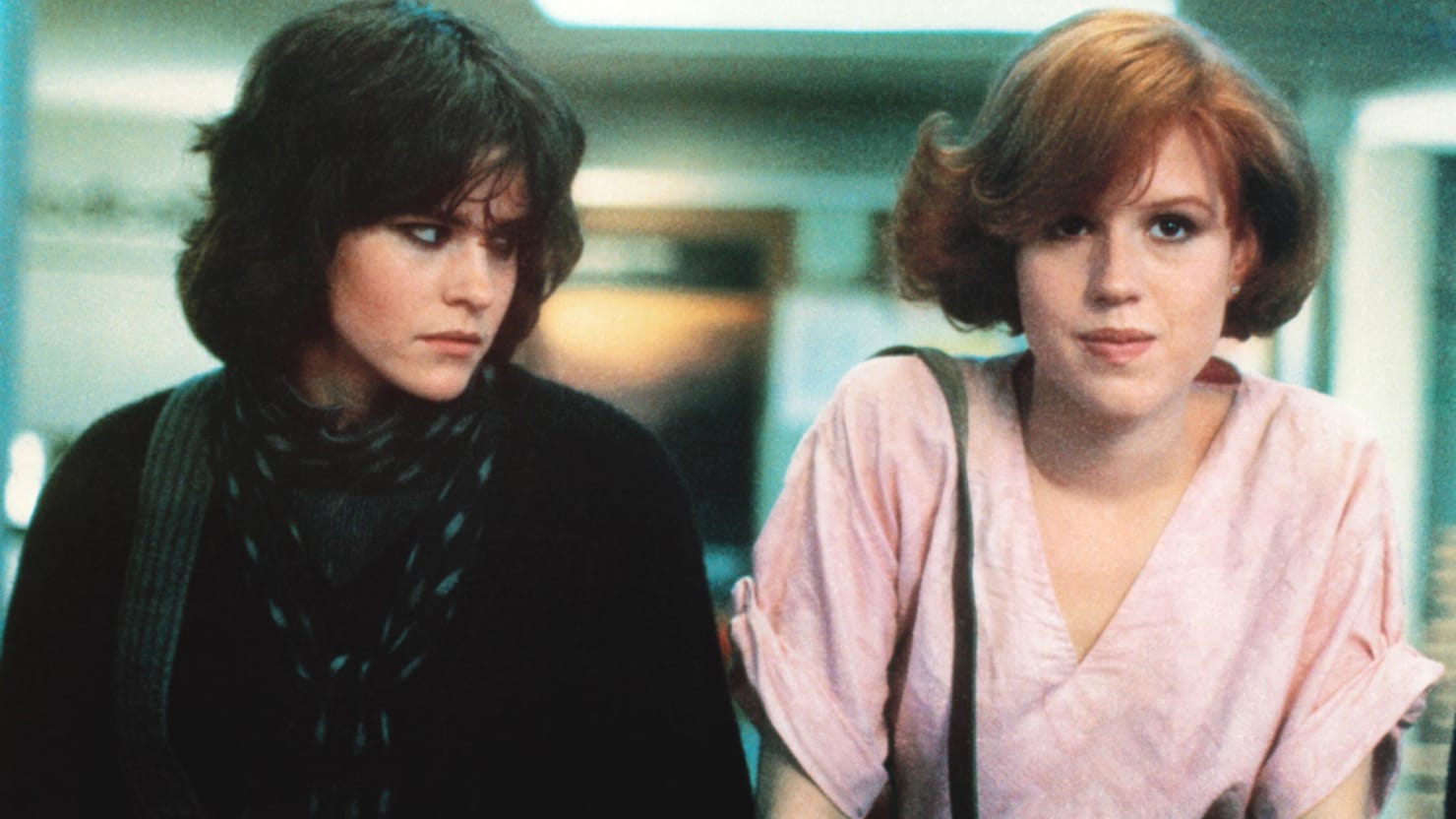
THE BREAKFAST CLUB @ 40 (SPOILERS AHOY!)

Five schoolkids serve detention on a Saturday. They each have to write an essay about who they think they are. Left to themselves after getting drenched in the contempt of their middleaged teacher, their differences start igniting and in the ensuing prolonged teensplosion they end up actually doing the assignment with an elected designated essayist. Sounds like a young conservatives workshop. Oops!

Is that harsh? This movie was designed to hit with the established teen cinema market that had swollen by the mid '80s into a screaming hormonal rage. It was given as a olive branch between the yet to be nicknamed Boomers and X'ers but also to reflect on the times and how they are always tough on teens. It pretty much does exactly that with a lot of energy, a good ear for dialogue that doesn't patronise the demographic, and a credible arc and round up that ends with a warming freeze frame of defiance. So, why do I hate its guts?

Well, let's spring back to the obviously relevant Elizabethan period of theatre for a second. In Shakespeare's time, love stories were comedies. They had the same formula as modern day rom coms, from meet cute to marriage. Shakespeare wrote his greatest love story as a tragedy. Way to start an arms race. Same thing here. Teen movies were comedies with gross out humour and generationalism and they ended in sex to various degrees of success. John Hughes had already joined this trend with his Sixteen Candles which had all the trimmings (even chucking in an indigestible side of racism for the times). The Breakfast Club, which had been gestating for years, wiped the table.

While his teens are teens their interaction and speech are not branded as teens like they were in Porky's. John Hughes had emerged from the great ick of the National Lampoon movies with an apparently clean bill of social health. The kids are sexual but it's no longer horny boys and walking semen receptors. Sex carries a danger but it's an interpersonal one not a smirking threat. By the same token these aren't just adults in waiting, either. As their conflicts draw out the issues, they reveal the problems of the growing awareness of their age group against the resistance of their parents' generation, as they try to navigate their own way from childhood to the grown up world. None of them wants to be their parents but neither the ambittered old bastard Vernon the teacher. They have themselves to create and that has to be done by themselves, without guidance.

So, Bender's obnoxious feather ruffling that gets everything going really does have to be scattergun and destructive. He doesn't know where he's going, either, but he knows how to clear jungle with a machete. Part of Hughes's effectiveness, here, is to resist all the tropes of the genre, even those he'd added himself in Candles. If it had been five Benders, we'd just get more Porky's. There is a contrivance in the characterisation along very trad personification lines: Bender is the rebel, Claire the popular beauty, Andrew the athlete, Brian the nerd and Alison the weirdo, or resistance, ruling elite, convention and chaos. Peel the veneer of casting and dialogue and it's a medieval passion play. But that's not the problem, here.

Judd Nelson's Bender is so constantly taunting that the movie is over halfway through before you ease off wanting him dead. Molly Ringwald's Claire show's vulnerability believable for her unpreparedness for unusually hard attack. Emilio Estavez's Andrew is all squeaky clean surface and raging confusion a scratch away. Anthony Michael Hall's Brian has the best opportunity of range, sucking up to Bender's power or Andrew's when it rises, in constantly alert self-preservation. But it's Ally Sheedy's Alison who gets to me most personally as she is of the tribe of latchkey fantasists whose creativity in the absence of guidance is all self mythology. Her initial frenetic herky jerky quirks are overplayed but as soon as she is forced into dialogue she works better than any of them. But she is also the centre of the problem with this movie.

Not that it's a bad movie. Hughes keeps the single location interesting as a dynamic space for the kids to bounce around and off each other. His performance direction (apart from Sheedy's overcooked weirdie slapstick) is muscular and nuanced, from Bender's space invasion to Brian's skittish affinity shifts. His management of the arcs within the big arc is impeccable. It's easy to see why this gave him a career as visible and nameable as Spielberg's in the same era. The Breakfast Club is a brilliant movie. It's just a brilliant movie that sucks.

It's not because of Alison's makeover but that's the thing that flings the curtain aside and exposes the wizard as a fake. At the end, after everyone else has been sorted and given their prize for turning up, alpha chick Claire takes Alison aside and art directs her out of her individuality, taming her sub-Siouxsie shag-mop, replacing the near goth eyeliner with highlighter and debagging her anti-sexualising op shop outfit with something out of an Eisenhower era yearbook. She looks like she farts vanilla essence. She approaches the stunned Andrew like a spacecraft floating toward its station dock. A little talk and tweaking and she's ready for the great mangle of adulthood.

Why is this bad if it really only points to a realistic outcome? It's bad because it claims that the conformity that almost all teenagers fall into (whether against the big world or their own peer pecking hells) is not just inevitable but desirable. Alison, who was the the sexiest character of the five through her initial refusal to engage with the others to her barnstorming personal chaos, was more of a rebel than Bender the walking bumper sticker. We've spent one and a half hours with the claim that the conformity of Andrew or Claire or Brian was just wrapping for individualistic rage when all of them were really just longing to get back into the cosy middle only to drag the sole genuine thorn in the side into softened consumable form. It's the mid '80s and this is American punk.

What I mean by that is this: having been completely outclassed in the late '70s by the tougher and more genuinely political British punk, the thing that was called punk in America started copying its style and sound until it attempted to outdo it without getting the point about it being anti-competitive. From this arose the false narrative (now pretty much accepted) that UK punk was the copycat. This prevails because its carriers are culturally dominant and live at a time when preference trumps truth. Ponder that when you watch the cast react to a toke of cannabis as though it's hospital grade meth and the music presages the revisionist rockism of the US '90s.

The Breakfast Club tells us the way to conformity the way that rebellion is always sold when it becomes marketable: it gives its audience the illusion that because they enjoy the onscreen revolt, they are themselves rebels. Bender's freeze frame fist pump might as well be a sales exec celebrating a campaign. It's not just Alison getting microwaved into flavourless sludge as she effectively is, that just lays bare the problem, it's that we're meant to do the same thing in the cinema seat or the beer and pizza night and sing along.

Hughes did have an effect on the teen movie, including the better Pretty in Pink and the pukefest of Ferris Bueller's Day Off. Others, under its influence, even did a little better. But, really, what the world of teen cinema needed was Heathers which cleansed the dishonest earnestness with bruising satire. And then Porky's came back in the '90s with American Pie and its clones. Why? Because Porky's was still closer to what the teen ticket buyers had wanted from movies about themselves, "the lineaments of gratified desire".  Whenever that happens the real non-conformity will rise again, like 2000's Ginger Snaps or 2023's feloniously underseen Bottoms, before being stamped down by the mainstream. Your mission, should you decide to accept it, is to locate those ones and, happily, a world of digital memory awaits the adventurous explorer. See The Breakfast Club, of course, but relish Heathers.


Saturday, January 18, 2025

THE ELEPHANT MAN @ 40

Surgeon and medical academic Fredrick Treves discovers a man, John Merrick, with extraordinary deformities at a carnival. It's Victorian England and that's how John makes his living. Treves's initial interest is the academic version of freak alley but, as time and adversity come into play, he finds much more to Merrick than met the eye. As grand society courts John, gutter society wants to see the freak. This can't end well.

If  you have seen images of the real Merrick (Joseph, changed to John for the film for some reason) you might have no problem with the choice made for the film's director, David Lynch. Lynch was already known for his midnight movie long term hit Eraserhead which centres around a mutant baby. It was Mel Brooks who hired him after seeing Eraserhead. Party time, right? Right, except that the film is a sombre story of a man against the world with a theme of human dignity. David Lynch would forge a reputation that led to his surname itself meaning weird and as Lynchian as The Elephant Man gets, it's the film often left off lists of his work. Like 1999's The Straight Story, it just doesn't seem Lynch enough.

There's no shocking violence, no one swears, most of the performances are restrained and there's nary a note of screwed up jazz coming through the speakers. All true, if those things are all a movie needs to be a Lynchfest. However, there is an affinity glowing from the screen that allows audiences an easy path to the sense of siege within Merrick, surrounded as he is by the best and worst intentions and how they can approach under false pretences. And then, in the end, if there is no cure for this (the condition or the way the world uses it) there is a quite finish that would be schmaltzy if it weren't so eerie. So, it's perfectly Lynchian, just not sensationally so. For all its bizarreness, Eraserhead, Lynch's Ur text, is also pretty subdued. It's Dune and Blue Velvet and Wild at Heart that get the shock and crazy flags flying. 

If anything, it's more poignant to watch how Lynch handles the kind of cast he would never have again. I don't mean high profile (Dune had more of that) but in a very British tradition of suggestion over expression. Anthony Hopkins as Treves shows range from rage to troubled mumbles, always seeming to find his position's need of reserve straightjacketing. As good as he is, he's nothing compared to John Hurt whose haunting eyes peer out of thick prosthetics and whose voice struggles for each syllable he utters. Lynch would seldom return to performances like these and they pass from scene to scene as though sculpted.

The deep grey scale to stark contrast black and white of the pallet keeps the focus on the drama and tragedy of it and builds a world where cells of elegant lifestyles are fashioned by the world of filthy industry as it belches steam clouds and malignant black smoke. And then there's the score. John Morris' theme is a marvel of a blend of profound sadness and outright creepiness. Street piano figures the haunting minor melody over booming celesta. Each reiteration is a baton pass, the first is in the mid and low strings and then recorders to oboe. Then there's an eerie descending figure from the top of the piano and piccolo. It is a masterwork of evocation. Later, Samuel Barber's Adagio for Strings is used as it would be for the rest of the decade as a poignancy for hire piece. But Morris' score, apart from making good use of the motifs in the main theme, plays like conventional orchestral cues.

There's that word conventional which is supposedly verbotten to use in conjunction with Lynch's output. The truth is he has no great trouble making conventional cinema when required. An old box set  came with a full disc of Wild At Heart extras including over an hour of outtakes. They were all perfectly functional scenes which would have fit perfectly if left in. Lynch took them out for running time considerations but he chose those because he wanted to make one of his movies, not anyone else's. 

The production of The Elephant Man was under a lot of pressure. Lynch's design for the Merrick prosthetics was taking a lot of time and he couldn't get it the way he wanted it to the point where he hit a wall, exhausted and confused. Eraserhead had taken about four years and he did it as he could fund it but that funding came from jobs as well as grants. This time the pressure was on with a relatively gigantic budget and actors he wasn't entirely confident with. If he wanted a shot as mass distribution, he really had to cut a lot of his big ideas away and work as straight as he could. This is why, when Treves sees Merrick for the first time, Hopkins registers a paralysing shock. The only movement apart from the slowly tracking camera, is from a single tear that forms on his left eye and rolls down his cheek. It's a genuinely moving moment. It's also a genuinely mainstream moment, manipulative and clear. By the time Hopkins is almost fading into the decor for his crucial question of whether he is a good or bad man, Lynch gives him all the time in the world and it's Oscar worthy. There isn't a moment in Eraserhead or Dune that would let you say that.

If I'd heard of David Lynch before seeing the ads for The Elephant Man, I'd forgotten. The images made it look like it was made in the 1940s and that intrigued me. I roped in a gang of old school mates at a pub session and we went. We were all starting Uni and looking forward to big changes as we crossed left our teens. After the interest-free short that they'd play before movies in them days, the feature came on and settled everyone down as the creepy theme music appeared and the weird prologue ran with its black and white slow motion elephants and woman in agony. The build up and delayed reveal disgusted one of us as it struck her as sensationalist and cheap. Then when it happened, we screamed with the nurse who opened the door to his room and saw him. 

All of that was dynamite but then the movie grew up and asked us about what we might do when confronted with such shocking difference, join the yobbos from the pub, pay a visit to say you did and gather social tokens? And then the finale where we are assured by a maternal voice that nothing will die. That would ring trite except that it sounds under distressed nature recordings and images of white smoke imploding and an expansive star field that stretches to infinity.

So, I loved this movie before I knew I should. When I saw Eraserhead years later at the Griffith University cinema I was completely rapt and had found my favourite film of all time. David Lynch had smuggled himself into the mainstream. He'd even got eight Oscar nominations. While he moved on to a gigantic flop he took its lessons and pushed his vision into the mainline until it took and his name was added to the dictionary. That started here. 

Friday, January 10, 2025

HELP @ 60

Ok, so The Beatles were having a very big second conquest of the world and the idea of the second movie came up. It was contractual like the first one but the plans were off the charts. Colour, massive cast, worldwide locations and a whacky plot that brought them somewhere between James Bond spoofing and pop art. The world was waiting. So, what went wrong?

Well, to start with, it was all of those things listed above and more, but also a far cry from the enhanced documentary that made A Hard Day's Night work across decades. This is before you get to the now unacceptable racial comic stereotypes and highly uneven whimsy that add up to a mess with good songs.

There is a plot. A sacrificial candidate to a Kaliesque Indian cult cannot be executed because she sent the ritual ruby ring to Ringo as a fan gift. This sets the ersatz Thugees on the trail of the Beatle to either retrieve the ring or sacrifice him by a deadline. The Beatles seek assistance from several sources like Indian mystics, jewellers, Scotland Yard and some rogue scientists who discover the ring's potential for weaponry and join the chase. The chase takes them to the Austrian Alps and The Bahamas among other locales and everything kind of romps home to the end credits.

While there are Anglo-Indian cast members, the main roles of the Thugee cult are played by a sub-cast drawn from British talent at the time like Leo McKern, John Bluthal, Eleanor Bron etc. They are in various stages of blackface and affect the kind of accents that even the canonical Goons sported when a quick laugh was needed. There's really no pedalling back from this, although there is a meta commentary in the Indian restaurant scene where all the staff are played by Cockney's who mention union regulations. 

That reminded me of something much later, the Yiddish speaking Native Americans of Blazing Saddles and, later still, the tribal characters in Cannibal The Musical who are played by Koreans who protest their Native American authenticity. Both of these examples stand spotless in the frequently dodgy comedy of both those film makers. The restaurant staff almost redeem things but once that scene has played we're back to the goodness-gracious-me bad guys. The only reason they are Indian at all is because of the deadly cult of the scary Asian climes. I've just imagined the cult as West Country Druids and it's immediately funnier. This is spilt milk, of course. I would oppose revisionism to wield an AI brush to this one. If you sit in front of it you are going to get some tidbits from the playbook of The British Raj by way of end-of- pier comedians and panto.

A cleverer counterpoint to this is the scientist constantly complaining about the build quality of British supervillain weapons. His use of and disgust for the various lasers and mismatches of international power connections plays like a smart parody of Bond movies' catalogues of spy weapons and would have sat comfortably in an episode of the spy-fi show The Avengers and certainly found regular appearances in the soon to appear Get Smart. Could The Fabs have squared off against the boffins as main baddies with music technology forces like guitar feedback? They'd already done I Feel Fine, by then. Ok, that is the kind of embarrassingly goofy thing that a groovy minded senior of the time might have thought up, but it's the end of my holidays and I'm overheating.

And where are The Beatles themselves in all this? On the sidelines with dialogue wisecracks more zany than funny, action-mannequins in their own movie. It's important to remember that initial screenings of this film were to the demographic who screamed like Boeing jets every time one of the guys had a close up. Almost all the humour is aimed at that bullseye and, where it had been percussive and genuinely funny in the first film, doesn't really have to do much in this one as the comedy focus is aimed away from the stars and on to the cast of clowny others.

What you do get, though, is the songs of the first side of the album of the same name which have them at the peak before Rubber Soul pushed them irrevocably into the critical stratosphere. All of them play like contemporary music videos (the title track actually is an old timey performance clip). All the song writers, teamed or individual, are approaching heights of craft.

As you watch these performances and witness the sidelining of the stars it might well occur to you that you are looking at celebrities in a bubble. They are both too well known and approaching unknowable at this stage. The gigs keep getting bigger and the hits keep coming. The interviews get more guarded and the blackened windows of their limos are wound all the way up. They can't make another Hard Day's Night, it, oddly, would now appear too contrived, too fake. This precursor to the Batman and Monkees TV shows is about as candid as they can allow themselves. The members of the band were a lot less enthused about this film than the first one. They'd grown creatively restless and the I-love-she-loves-we-love assembly line had already frayed beyond repair. They'd seen the mightiest adoration that any small collective of their species could and the only thing new to them was lurking in the shadows. And they'd adopted slower drugs, getting through each pincushion day in a haze of cannabis coughs. 

I wonder what a third film might have been like in this series, a movie after the adventurous and darker corners of the Revolver album were known to their fans and the general public. A psychedelic pioneer? Ninety minutes of solipsistic twaddle? The closest we get is Lennon's role in Richard Lester's How I Won the War, colourful, absurdist and edgy but destined for the bargain bin. The year after that, when the bubble developed a leak with Magical Mystery Tour, the effort to embrace the weirder times was eclipsed by the more genuinely psychedelic Yellow Submarine cartoon, the year after that. Maybe that's as futile as the single disc White Album that fans persist with, beyond the point where it is either healthy or useful. But that this was the second and last statement of Beatles movie as PR exercise, we were left with what feels like a second episode you watch just to get to the third. Then again, we are talking about a music group.

Help is a film best watched lightly. It doesn't have the quaint pretensions of John Boorman's Catch Us if You Can but is unhampered by the cuteness (however more engaging) Herman's Hermits vehicle Mrs Brown You've Got a Lovely Daughter. The Rolling Stones were not a fit for loveable fiction features, being far better suited to documentaries (and what documentaries). The Kinks might have done something intriguing, if they'd been asked. And Cliff was a distant recollection, destined to follow the St. Trinians movie after Christmas lunch. 

But that's the thing. Movies built around musical acts have never quite convinced Hard Day's Night does because it was a one off, a fictional documentary made with funny people. The recent The Nowhere Inn with St Vincent playing herself is cushioned with fictive invention and acquits itself as an oddity. More celebrated are the legend makers that blithely pursue the real with gleeful fabrication like Almost Famous. And there are too many like Eddie and the Cruisers or The Doors which lie as embarrassing stains in the carpet that resist cleaning. Help is of its time, offering a high def colour record of how a PR engine overheated, never to start again.

Wednesday, January 8, 2025

WILD AT HEART @ 35

Sailor and Lula are lovers. For reasons drizzled over the course of the plot, Lula's mother wants Sailor the hall away from Lula. At a ball Sailor is approached by a hitman whom Sailor despatches until the guy's brains are decorating the staircase. When Sailor gets out of prison, Lula meets him at the gate and they speed off. First a gig, then break parole going interstate drawing a growing force of interested parties in hot (even deadly) pursuit. By the end of the story they will have been stretched to snapping. Jeeze, they were only in love.

David Lynch was riding high in 1990. Blue Velvet had been hauled up out of obscurity by sage champion Pauline Kael and his collaboration with Mark Frost on the initial hit series Twin Peaks had made him such a household name that the term Lynchian became part of what you said. Something, anything, odd or just not immediately comprehensible, Lynchian. Then he did something ... Lynchian. Instead of producing something along the lines that had given him his celebrity, he made a conventional movie.

It's my contention that Blue Velvet is a conventional thriller. It's frequently extreme in its violence and challenging with its sex but it makes narrative sense from beginning to end. The early episodes of the TV show have more outright weirdness to them. But Wild at Heart plays like a lot of movies from the decade just ended; young adult, neo noir flavoured and wall to wall needledrop music. The '90s would continue this. If you baulk at the witches of Oz in Wild at Heart, God knows what you'd make of the ghost of Elvis in the slightly later True Romance. Moreover, if you have ever seen the deleted scenes from the movie, you will know by their conventional tone, how mainstream Lynch was thinking for this one. 

There is, all said, plenty of Lynchian stuff on screen, though. Freddie Jones's walk-on at a bar with his voice all heliumed, going on about pigeons and Willem Dafoe's art directed teeth serve that end. Sherilyn Fenn's accident victim and her heartrending monologue and Harry Dean Stanton's exit, also. You could probably find at least one Lynchian touch per scene but they stick out in Wild at Heart where they seem at home in Blue Velvet. Eraserhead is constructed wholly from them and there are many in Dune. Even The Elephant Man has them (albeit woven more seamlessly in). Because the narrative is kept close to Barry Gifford's source novel (he co wrote the screenplay with Lynch), the timeline is central and the Lynchian bits more like seasoning.

What is Lynchian is the overall insistence on the central romance. For all his trips beyond the Scorpio nebula in visual style and performance direction, Lynch is as sentimental as a Christmas tree when it comes to things like love or hope. This is why the Wizard of Oz references don't feel out of place, however superficially fantastic. Laura Dern's Lula shares a moment of damaged hope with her character in Blue Velvet when she pleads for order in her universe which has been battered by shock. Sailor's serenade to her at the gig with a big goofy Elvis number as the girls around them scream as though everything suddenly transported back to the '50s and he really was Elvis is played for laughs but incompletely, the gesture of it is dressed to impress. See also, though more soberly, the performance at the end. These moments weave into the picture without notice as, whether we want to own it or not, they are part of every Lynch film.

Sailor and Lula are depicted as rock 'n' rollers, bad kids with pure hearts but they only barely keep from pushing through to being garish trash. Lula is less like a riot grrl than Sandy at the end of Grease. Nicholas Cage trips over himself channelling Elvis but only really gets as far as a Vegas tribute. They are campy rather than dangerous. To be fair, this has more to do with the characters own ideas of their image and we aren't meant to swallow it whole, even if David Lynch seems to. If you want rock 'n' roll bad you need to turn to Willem Dafoe's Bobby Peru with his pencil thin physique, stumpy metal teeth, sleaze moustache, and slinky, evil sliding gait. A kind of distillation of Blue Velvet's Frank that could take the mic at a gig and flatten a whole audience.

Wild at Heart is a road movie where the fugitives are fleeing from the previous generation which is gathering strength every time you see them. The extremity of the effort is explained as the plot develops and it has to do with the sins of the father, and uncle, and rival of father, and almost anyone on the ancestral tier of Lula's crazy mother (played by Dern's real mother). The sins of the past are invested on the future generation. A few mentions of the depleting ozone layer are enough to give this credence. Sailor and Lula want to get to California with the intention of severing all ties and as the vistas west open up to the extent that we see a lens distorted horizon to suggest the world's curve is welcoming them from its edge. For all their naivete and puerility, they do have a point and whether it's the magic of New Orleans to the open road, they are living what they set out to live. And then, when the world catches up and tears them from each other and they approach the grown up task of repair, the depiction of difficulty of the job is refreshing as it feels earned.

The film had quite an advance campaign. I recall reading frustratingly small tidbits about its content and eagerly pored over the few production stills seeded to the media. If the public was temporarily infatuated with David Lynch, my own fandom was reaching fever pitch. I imagined barely discernible darkness within shadows, black smoke and old black grease on machinery, biological anomalies and shocking violence. I imagined watching something I dreaded seeing. 

This is from the experience of seeing Eraserhead repeatedly at the local Valhalla from the midpoint of the '80s. Every time, whether I could rope someone else in or had to go on my own, I would sit there, watching the credits fade in and panic. The Baron Harkonnen's rape of the servant boy in Dune left a scar and all of Frank's antic's are with me still from Blue Velvet. There was a lot of rich cinema around then, aimed squarely at my demographic but Lynch was in the lead as he wasn't like any of the others and could build worlds from whims that stayed with his audiences. That year, while the USA and UK got to see the first season of Twin Peaks, the extended pilot was released to Australian home video. I watched it many times, fearing and being wowed by the end scene in the red room, knowing only that it was twenty-five years later, not a dream sequence but a sequel scene. It freaked me out and I had to keep watching it. To know that a whole new movie was coming at the end of the year felt like a gift.

I saw it three times in one week, roping any number of people in to join me. We'd quote it at gatherings, parties, the pub, anywhere. That flowed through to the second season of Twin Peaks the following year when so much of it started fading and looking tacky. After that point, anyone who'd jumped on to the wagon reacted as though they'd been cheated and the response was predictably childish. When a friend approaches you to inform you that they made a positive decision not to try one of your favourite things, you start learning a little more about them.

What can I say, the film flows like a well told story of the highway. It burst with colour and magic, even if some of that was just veneer. It made a sleeper hit of Chris Isaak's Wicked Game and was one of the first mainstream movies to feature a significant remix of an established song. It consolidated the career of Nicholas Cage, allowing him a leap into quirky action roles for the coming decade. Dern fared less well but has had more than a few decent highlights and to this day walks with the respect of her peers and public. I would dress in the mornings before work listening to the soundtrack CD and mentally move around in the space it suggested. For all its reputation as the choc top Lynch movie, it still has its own power. Never again was he so fun but never again so light (if you are thinking of The Straight Story, you need a rewatch). For me it's of its time, it's time in my life.

Thursday, December 26, 2024

SHAUN OF THE DEAD @ 20

Shaun is still young but time is ticking. As someone who has holidayed in Greece but prefers the confines of the local pub, he is terminally under motivated. His girlfriend Liz, credible but weary, all but delivers an ultimatum (in the pub): get moving or get another girlfriend. So, with work conditions squeezing in and plagued by his flatmates' mutual antipathy, the potential loss of the love of his life, his dour stepfather emotionally blackmailing him into appearing at their place with flowers, he writes a note to himself on a white board to improve. Just in time for a zombie outbreak across London. Doesn't crisis mean opportunity in some language?

Edgar Wright's 2004 film was described by its co-writer Simon Pegg (here also playing Shaun) as a RomZomCom. It's a cute line but that it's also an accurate description of this film ensures its durability and popularity. The central rough-shod romance works from the off and develops fluently. The zombie crisis is all out of the great Romero. The comedy is non-stop, even when the action calls for tension. The concept brought in to a smooth landing makes this film a rarity: a horror comedy that is both.

The opening titles shots of people moving through their normal '00s lives like the checkout chick whose permanently downcast eyes don't seem to be aware of her hands sliding items over the barcode reader, or the group of head bobbing earbud isolators roaming the streets, or any number of droolers texting or reading. Modern London (or any city) is a zombie outbreak waiting to be announced. This is after the prologue in the pub where Liz is trying to draw some life out of Shaun and, in a shockingly funny series of reveals where the people being talked about are in the same scene, we get a lot of exposition which we don't even notice. Soon after, when Shaun is going to the shop, completely oblivious to the carnage surrounding him, walking past monstrous figures, whose stumbling motion doesn't alarm him, back home where his flatmate Ed points out the girl outside whom they first take for a drunk. This is not a comment about denial but the crushing confrontation with the familiar.

While Wright keeps the pace high and the jokes constant he is paying a continual debt to the films of George Romero. Romero redefined the zombie film in 1968's Night of the Living Dead in a few crucial ways that ensured its influence over genre cinema across the decades to the future. First, he removed the Voodoo or magic or religion from the premise. Zombie movies used to be about local wizards using magic to manipulate the living. Romero intentionally kept the cause of the outbreak vague. When the news report suggests an extra-terrestrial cause it fades as the latest guess. The crisis is banging down the doors as the newly risen dead come looking for living flesh to eat. The other contribution was to heighten the sub-text of the zombie sieges whether it was racism, unpopular wars, consumerism, unethical scientific research or (in the case of the undersung Land of the Dead, refugees). Horror cinema had always used sub-text but now it could be acceptably writ large in monsters numerous enough to resemble the whole culture. Those shots of automatic behaviour by non-zombified Londoners are funny when you first see them. So is the response of Shaun an Ed to the zombie girl outside. It is very easy to absorb the fatigue of the crisis and burp it out as a joke.

And what jokes! Edgar Wright and Simon Pegg had already collaborated on the dowd humour of Spaced. Pegg was also a regular in the cast of Big Train. There are major parts and walk-ons from the spectrum of that golden moment in U.K. TV comedy. The casts of the aforementioned join those of Black Books, The Office, and The League of Gentlemen. The mix of absurdism and satire was constructed of these performances for a good half decade and Wright managed to cast the lot who, even if they really are just there to be recognised, add such spice to the proceedings.

Also, the humour throughout is unrepentantly British. The gag about Ed pleading to keep being the driver because he adjusted the seat would have been sarcasm from Bill Murray. His reading is earnest and casual, a detail of everyday life rising into present day crisis and as impossible to argue with in either context. The completely reset line, "Coming to get you, Barbara," is a direct lift from the opening scene of Night of the Living Dead. There is a Fulci restaurant in the phone book. But mostly, the comedy arises from astutely crafted scenes where the interaction of characters all but allows the humour to form more or less naturally. When the action turns dark, this only needs to keep going.

Even with the TV players and influences on Shaun of the Dead, it plays like cinema. It's a London that might as well be shot on location. Its streets shuffle with zombies whose gore filled mouths are shown to be a short step away from detached urban life. The bromance of Shaun and Ed and the romance of Shaun and Liz feel real and get to poignancy without force. It would take the obscurity of some of the local references to diminish most of what's on screen here but almost all of it would survive that particular zombie onslaught. It wins its night, dawn, day and land, ready to rise again and strike terror and belly laughs in all who look upon it.


Viewing notes: I watched my 4K disc of this which features an impressively detailed HDR video pass and DTSX audio. It's available locally in this form but also on a few streamers. Do yourself a favour.


Wednesday, December 25, 2024

GHOSTBUSTERS @ 40

Paranormal team gets evicted from their university lab and starts a business: the Ghostbusters. Across town, Dana comes to them for a supernatural pest job. They get a big break from an uptown hotel and they're working. Could the galloping sightings and incidents be connected to Dana's ancient god squatter? Will Peter Venkman get Dana into the sack before she gets possessed by an ancient demigod? Are these the end times?

Dan Ackroyd and Harold Ramis wrote a script for themselves that combined the kind of deadpan comedy of the early '80s with sci-fi action and horror, hired a tight-ship director and rising funnyman to create one of the most durable mixed genre movies ever. Ghostbusters keeps its pace high and the jokes flowing but knows when to turn the mix on one down in favour of the other when it's time for third-act action. Add a super catchy theme tune that jetted to number one and you've got a summer hit.

In a field that included Police Academy, Spinal Tap and Blame it on Rio, any kind of comedy was battling grossout, satire and things that didn't quite know that the seventies had ended. Ackroyd and Ramis wrote a core of supernatural thriller and added a joke for everything that could be heckled. They hired a tight-ship director in Ivan Reitman and a rising funnyman and created one of the most durable comedies ever. Add a theme song that rocketed to the top spot and stayed there and your summer hit movie has a place at the cinema, the video shop right up to streaming and ultra high definition for the collector o' today. It's still around and needs to be.

Bill Murray has cruised through the decades with his mischievous schtick, leaving milestones whose titles alone can elicit delight: Groundhog Day, Scrooged, Stripes and Ghostbusters. He's also weathered charges of bad stuff but always seems to roll back up and head into the next thing. He's a personality comedian and his first scene, rigging an ESP test to land a female student, shows him as both clever and sleazy, effective enough to get us on board but creeping enough to reveal his flaws. It's an impressive turn and without it, this film would lose the charm it needs to function outside of its declared genre.

There is nothing about the rest of the cast that displeases except the over stiffness of William Atherton's EPA zealot. His humourless ranting and psycho eyes are in line with the period's caricatures of authority figures and he was probably under strict direction to provide his role with definition but you do get to see the actor behind the stereotype here and there.

And lest we should overload the praise, we do need to remember some things that just cannot cut it now. Dan Ackroyd has a dream of getting a blowjob from a beautiful female ghost. At the time it was just a knowing wink at young adult audiences but now it feels like a how-about moment in the writers' room that got left in. It's not entirely one for the lads as this film is careful to provide a counter to every strike it deals which can allow some edge through and cover it with balance. Bill Murray's oversexed observations in Dana's flat are met with knowing resistance from Dana herself and while his charm is advancing, she does let him know that he still has a fight ahead of him. Recall, Dana is played by Sigourney Weaver, still freshly known for the tough intellect she brought to Alien's Ripley: Murray is given a real challenge.

I saw this at Hoyts in Brisbane in late 1984 with a flatmate. We noticed with a look away a kid smoking a cigarette. We both smoked but the kid was really small. The movie played and was good fun. A schoolage girl to one side of us tried to lead a clap in time with the Lionel Richie theme tune. It wasn't taken up but it injected me with the kind of irrational embarrassment that you only stop feeling after about thirty. I was twenty-two and felt old.

These days Ghostbusters is my Christmas film. It's not set at Christmas nor carries a yuletide theme. It's just the one I won't have to think about as I tuck into a leftovers pie and possibly venture a small drink to placate my hangover. I stopped being Christmassy over a decade ago to the point where I'll invite friends around on the eve and stay well away from the rest of the world for the day itself. Some people think that's a sad admission but it's a ritual I've grown to treasure. The rest of the  year I will be happily sociable but that one day of sanctuary with a small measure of spirits and a goofy classic sets every bad thing right until it has to be dealt with the morning after. Who else am I gonna call?

THE WOMAN IN BLACK @ 35

Arthur, a young solicitor, is tasked with settling the deceased Mrs Drablow's affairs out on the west coast of England. On the way to her funeral, he steps in to save a child from death via a trucking accident. Then, having been told there would be no mourners, spies a woman in black in the church who vanishes as quietly as she appeared. She's there at the burial and the walk through the cemetery. When he points her out to the local lawyer he refuses to look, falling into a panic. Local carrier Ketwick gives Arthur a lift to the  deceased woman's house, across a causeway, mostly submerged in seawater. He goes to the house and starts work among a mess of papers. Then he hears the sounds of a carriage crashing into the water and a child's screams. When the fog lifts there's nothing there. And he thought it was going to be a boring routine job in the country.

This adaptation of Susan Hill's early '80s novel was produced by the ITV network in the U.K. in 1989 and remains the best filmed version. The 2012 take with Daniel Radcliffe retools the subtleties of the source material to feature angry local yokels and chucks unearned jump scares at a rate of something like ten minute intervals. It was made to fit its time and feels far more dated than this older version. Watch it after you've seen this and you will never watch it again.

Nigel Kneale's adaptation of the novel compacts much but provides a clear logical narrative line. Kneale is a past master of mixing perceptions of time and history and manages to solve the epistolary form of the novel's middle section by using era-appropriate recording technology, wax cylinders, to allow Mrs Drablow's voice to provide essential narration. Adding electrified light to the 19th century house in the mid-'20s shows Mrs Drablow's wealth and canniness. She is not a fanciful witness to the supernatural incidents she reports. This adds veracity to what might have otherwise been a standard if effective haunting story.

Director Herbert West piles on the atmosphere, offering some enjoyable urban period detail, a cosy stream train journey, market town with all but smellable livestock and pubs and a location of a haunted house in a forbidding setting. The electricity that Kneale gave to the story offers comfort by joining the early '20s to the viewer fifty and more years later. After one chilling encounter, Arthur goes through the house, turning on every light he can find and we're glad of it.

The look and feel is uncinematic and claims no greater level than broadcast but the intensity of the staging is powerful. There's a broken family graveyard outside the house that Arthur inspects as a kind of curiosity. In a single shot, he responds to an intense sensation and turns around to find the woman in black standing behind him, close but metres away. Sure, the actor was hiding behind one of the headstones and popped up when the shot covered her to "suddenly" appear, but it works and how. I was so wary of seeing this after my first viewing (on home video) that I'd tense up if I showed it to anyone else. The sound of the carriage accident in the fog also works and intensifies later when it is shown not to depend on the fog or even time of day. The notion that ghosts might only be triggered playbacks of elemental records was something Kneale had based a whole television play on over a decade before. Here it links up to the wax cylinder recordings and discomforting incidents in the house. This adds up to a terrifying closed world and continues beyond its bounds.

The lesson here is big ideas working even with scant means. I have twice missed the theatrical version of this story in which a heavily minimised cast is used to great effect. That this television telling is so effective will come as no surprise to anyone who has schooled themselves in the BBC's Ghost Stories for Christmas which remain effective and always punched above their weight. The problem is that this is hard to get in front of, these days. For a long time there had only been a U.S. DVD available on online platforms due to discontinuation. In 2020, I took delighted delivery of a special edition but that label (Network Restoration) went bust. There is vague news of that edition resurfacing next year through another label. I hope that's true. In the meantime, there is the possibility of the play turning up near you. I'll recommend the novel. The 2012 James Watkins directed waste of time is a series of jump scares and cliches not present in the source material. It's the only film version currently available but must not be pursued. Somehow, I hope readers can find themselves in front of this, effective, spooky and satisfying tale.