Thursday, October 25, 2012

Various Apocalypses Part 5: The Dark Hour

Spanish film about knowing what you had once it's gone. A group of survivors from an unidentified cataclysm go about their lives, educating their young, maintaining what they can of their life support in what looks like the last available underground bunker.

Frequent sorties are needed to the outside to cull the zomboid hordes who are encroaching and can infect through the slightest contact. The infection works faster than the one in 28 Days Later and when one of the party does get touched he agrees to be shot to death on the spot. Also, there are the invisibles creatures violent and stealthy that move through the bunker and enter any unsecured door with fatal results. This happens during the "cold hour". The reasons for this naming of hours are unclear until the end. As they constitute a massive spoiler I'll leave them out here.

The day to day is being recorded by the ten year old boy Jesus with his mini dv camera. He stands in as unofficial narrator. He is not in every scene nor is his narration. Though it begins looking like one The Dark Hour is is not a found footage piece. The entire film's video look is there (apart from budgetary concerns) to lend a claustrophobic and ugly edge to the setting. Works.

Jesus and his friend Magda visit old timer Judas in the lower bunkers for their education. Though Magda is a little older than Jesus neither can remember the time before the disaster. Judas plies them with tv, cinema and books from the time as well as his own knowledge and experience. The hopelessness of any idea of a return to this state is almost solid. When Judas gives Magda an old makeup kit, her delight is profoundly saddening in the grimy light of her home.

This is a studiously plain film, measuring its action and dramatics with a weary eye on the maintenance of life. Quite a lot happens in its reasonable 90 plus minutes of screen life but the sense that it would anyway is strong. Only when the pressures of the zombies and phantom visitors mount too dangerously to ignore does the flat and pointless existence meet its inevitable and probably final challenge. The rest is spoilers.

Because of the intentional lack of action movie flash and the surprises of the climax it's hard to say much about this film. If it is to be so realistically grim and ugly why have the big signpost character names like Jesus, Judas and Magda? Wouldn't Juan, Salma and Ignac have worked better, considering the end-time theme was impossible to misconstrue to begin with? They stick out like uncorrected writer brainstorm session contrivances. But this is really the worst I have against The Dark Hour, a film that blends its cinematic heritage and welcome morsel of orginality so well that even at its grimmest it manages to disarm. I saw mine on an imported dvd. Maybe SBS?

Tuesday, October 23, 2012

Top 13 horrors for Halloween


Okay, as this is an occasion for my favourite film genre I'm doing two unusual things in my tops lists: there are more titles and Eraserhead isn't one of them.

What's the same is that this is not an attempt at a definitive list. Horror is my favourite genre and I like far more than thirteen. I left the inclusion entirely up to what I could think of at the time. This would almost certainly change if I thought about it again this time next week. So, sorry if your favourites aren't here, a lot of my own aren't either.

Halloween: This bloodless coup of a film was the most profitable independent American film until The Blair Witch Project. Through the kill scenes and an atmosphere of undiluted and understated creepiness there is a powerful arc of nerd girl Laurie finding her courage and standing up to the monster. It was this where the masked killing machine who just keeps coming back originated. Original still best. Oh, and one of the best realised music scores for any film in any genre, by director Carpenter himself.

Dark Water: Shivery ghost tale remembers that the best of them include a tragedy at their centre. The convergence of this and the haunting results in a powerful and heartrending climax. Wash this down with a creepy and crushing coda and you have the logical end to the J-horror genre.


The Blair Witch Project: Campfire tale as cinema verite. Three students try and make a film about a witch in the woods and either fall under her control or get literally scared out of their wits. Not the first found footage film but still the most effective.


Ringu: The man who ended J-horror also began it with this tale of a curse and race against time. Like Dark Water this is also the story of a mother's bond with her child and the rediscovery of mutual respect between a woman and her estranged husband. Climax still freezes me and it's still better than the exponentially higher budgeted American re-bloat.


Suspiria: Giallo maestro Dario Argento's apex drives to the heart of why our nightmares scare us (we have no control over them) and serves one up with frozen blues and thick blood reds. Some of the most tightening murder scenes you'll see and a music score on a par with Halloween.


Martyrs: Outside of Asia contemporary horror has fallen to cliche and uninterestingly slick digital effects but this French/Canadian entry not only gives us gore that is painful to the eye but concepts that make us feel ashamed to be alive. The really nasty stuff has less gore but the ideas behind it are petrifying.


The Haunting: Citizen Kane alumnus Robert Wise made one of the finest haunted house movies of all time with this adaptation of a popular novel. Some still impressive special effects, almost three dimensional lighting design support a very very sad central story. Could watch this on a weekly basis.


The Exorcist: A story of doubt, faith and mother and daughter. You don't need to be religious to get into this one anymore than you need to believe in ghosts to dig The Haunting. As a girl goes through severe changes in mind and body her famous and inevitably neglectful mother is drawn to attention. The father who is only suggested by the gaps in an international phone call has been absent for years. As the tumult within the girl explodes into freakish violence the priests are called in. One is a skeptic, grieving for his recently deceased mother and the other is an old stager who has met this demon before. A mix of tough seventies drama and supernatural pyrotechnics, The Ex remains a wonder of the medium. Try to find the original cut as the "version you've never seen" aka the director's cut just adds bloat and removes power.


Night of the Living Dead: Throw out the magic and ritual of the traditional zombie story and all you have is the dead come back to life. All? Romero's fable of fate, made for the shoe polish budget of a contemporary quirky indy gets everything it tries for right.

The Changeling: Effectively eerie haunted house film builds to a conclusion of real dread. Atmosphere and strong performances lift this already fine story into the ether.


Kairo: Would you like to meet a ghost? So asks the website visited by most of the characters in this apocalyptic tale. No you wouldn't, is the correct answer, not if they're anything like the ones here. A chaos of mass loneliness, Kairo (or Pulse or Circuit as it's variously known in English) was once beautifully described as The Omega Man as directed by Tarkovsky. Yup!

Prince of Darkness: Dismissed even by Carpenter fans my near favourite JC film has ideas worthy of its chief inspirator Nigel Kneale and a human diminishing concept at its centre AND another great music score by Johnno himself. I can watch this just for the atmosphere but love the rest of it too much.


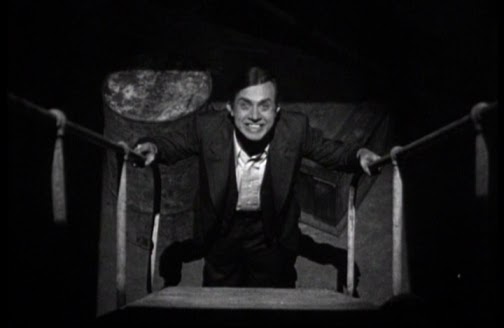
The Cabinet of Dr Caligari: Silent wonder as sleepwalker terrorises town at the same time as sinister bullish carny seems also to run the local asylum. Crazy expressionistic backdrops suggest a constantly unsettled state of mind which might be as easily fallen into as a gutter. Like a nightmare that has sneaked out from an Edvard Munch woodcut.


Top 10 22/10/2012

Withnail and I: Recently screened this to some people who hadn't seen it. This is a film remembered for its dialogue exchanges but I had forgotten a lot of them which freshened up the film no end. Perfect pacing and expert recall of what it means to be young and on the brink of missing out on making that big scratch on the world. Grant, McGann and Griffith all play and different pitches which should be disastrous in such a tightly cast film but here works like a perfectly arranged piece of music. And it's bloody funny.

Eraserhead: Does it to me every time.


I Walked With a Zombie: Jacques Tourner's second contribution to the Val Lewton canon keeps to the voodoo mythology but adds Jane Eyre. The walk through the cane fields still sends a shiver and then the socio-political harmonics start ringing in and you've got something typical of Lewton's efforts, a reach well beyond the basic requirements of genre into something other, rich and strange. I think of the Lewton canon as the chief precursor to Cronenberg and Lynch.

Night of the Living Dead: Story of the end of life doesn't need to be scary beyond that single thematic arc but plays beautifully on both genre cliche and new elements. One of the chief success stories of American independent cinema and it's very easy to see why. Romero stripped the magic away from the situation and refused to offer a sci fi cause for the phenomenon. There are zombies. They will get you. All you need. It works.


 The Tenant: Paranoia films don't come more threatening than this. Polanski himself is centre screen as the shrivelling emigre in a Paris populated by crassness, manipulation, ugliness, loneliness, violence, weirdness and Isabelle Adjani.


Fight Club: Because I knew nothing about it before I saw it and left with another favourite. I saw it new in a packed cinema. I was still thinking about it weeks afterward and giggling at most of it. Fincher when middling or poorly still has legs as a stylist but when his style is met by material like this (including the cast) he makes contemporary classics. See also, Seven.


Donnie Darko: Is he insane or a time traveller? If you watch the bloated and ruined director's cut you no longer get the choice as a viewer. In it's original cut, this one remains a series of bullseye shots at family, school, wishes and the explosiveness of being young. Writer/director looked like he might claim some precocious autership but quickly sank into pale repetition and loss of control over his material. That director's cut was nature's warning.

Naked Lunch: How do you film the unfilmable novel? You leave the text aside and look at where it came from and go from there. Cronenberg's take on the Burroughs confronting epic of addiction and alienation offers companionship with the source rather than a version of it. This film is better with a reading of the novel. The reverse, dare I say it, is also thus.

Bringing Up Baby: When romcoms remembered to be both romantic and funny, people like Cary Grant and Katherine Hepburn who could walk through a great range of roles through their sheer presence walked here. But both when still young were like power appliances when plugged into comedy. This one is all about sex and repression. Grant is a paleantologist headed for a sexless marraige with another paleantologist. As soon as the elegant chaos of Hepburn enters the scene, the dinosaur skeleton Grant is working on is relieved of a bone by Hepburn's pet leopard. It doesn't stop from there until the credits. This is one of the funniest movies you are ever likely to see. An ex of mine, however, sat through the entire thing without as little as a smile but did like the leopard. There's your caveat.

Two or Three Things I Know About Her: Jean Luc Godard read an article about lower middle class women prostituting themselves to keep up with the consumerism that rose like a flood tide in the 60s. While he would never have made a straight drama nor a documentary about this he loosened his grip even more from conventional cinema even more and gave us a bare-faced essay about consumerism and prostitution featuring direct commentary by himself, a kind of anti-narrative that yet involves fictionalisation and a logical time line that doesn't veer to documentary, both a fetishisation and an examination of fetishisation of colour and consumer good, direct address by incidental characters and too much else to list. Two or Three Things vies for my favourite Jean Luc with the same year's (1966) Mascluin/Feminin. While the latter wins the sheer watchability arm wrestle the former offers greater rewards for viewer patience. Before this, Godard might have continued cute, after it his seriousness led him as far away from his fan base as Kurtz got from his intended. Godard saw the prostitute in himself and couldn't unsee it. This is the moment that happened.

Monday, October 22, 2012

Review: SHADOW DANCER

There is a kiss at the centre of Shadow Dancer and it is unlike any you have ever seen. It is impulsive and passionately physical but it is not sexual, not amorous. This is not through any lack of connection between the kissers, they are, by this moment, essential to each other. These characters are not in love; they are connecting this way because they are still alive. To find another screen kiss like it you might have to go to a film set in a concentration camp.

The setting here is the freezing, grazed knuckles world of Belfast during the troubles. The war on the ground is such that the suspicion of betrayal is enough to get you waterboarded, dumdum bulleted or blown up. The film has a prelude which sets the character of Collette for life: as a child she leans on her younger brother to go and do an errand she doesn't want to do and sees him shot by the IRA outside their house. Cut to 1993 we see the grown up Collette nervously convey a handbag so large and ugly that it must be a bomb on a train and then leave it at a tube station.

Bomb doesn't go off but the Brits do, catching her effortlessly and forcing her into the hard place by the rock (Irish girl, English gaol). All she needs to do is betray her brothers and everything will be alllllllright. It's Norn Irn, the very breath of the idea could get her splattered in bloody bits on the nearest steel grey backstreet. She has a young son. Damned if do or don't she does.

 Her subsequent days are spent fending off the suspicions of the local terror leader, taking part in IRA hits and feeling the squeeze of her impossible predicament. Now and then she meets up with Clive Owen's hunky chunky MI5 agent and reports what she finds out. In the meantime he, sick of the attitudes of his superiors and colleagues to these compromised and threatened operatives, tries to find out all he can about Collette's case and discovers something he didn't expect. Although he's in charge of her case he has been denied access to her file. He's about to find out something very troubling which leads to a pair of twists that will make your heart sink.

I say twists but this film does not play for narrative grip as much as a constant amping up of the tension of the beginning. This is not made any easier by the cheerless near monochrome (but not obviously desaturated) streets, homes and pubs of the town.

No ease either from Andrea Riseborough's intense performance. Her strange beauty, like a marzipan-face aristocrat from an eighteenth century portrait, is almost constantly marred  with concern which expresses itself in a stress furrow 'twixt the eyebrows which is almost always present. Apart from moments spent enjoying the sight of her young son's life her Collette is seemingly bound for early mortality or galloping premature aging.

Mac, Clive Owen, is similarly bound, knowing of the certain visceral mess to come but powerless to stop it. At the point of the kiss I began with he is devastated by the circumstances but compelled to play them out. That's why there is no eroticism in the act. That's why it is so simultaneously rivetting and uncomfortable. That's why this is a corker of a film.

There is also a kind of setpiece halfway through involving a street funeral. The British army are out in force to prevent the deceased from being publicly celebrated as a soldier (as opposed to a criminal). At one point a pair of pistols is passed stealthily through the crowd to a pair of men who don balaclavas and fire into the air in salute. As I watched this it occured to me that Stephen Spielberg would have fetishised this moment, luxuriating in the images of the cold steel being passed along lines of funereal clothes, perhaps slowing it down and throwing in some metallic clanks in case you did get the guns were steel. Here it is shown unadorned, grim, defiant and curiously moving and the hatred in it confronting. That's why this is a good film.

Still in cinemas at time o' writing.

Tuesday, October 16, 2012

Various Apocalypses Part 4: Kairo/Pulse

A ship in the ocean. Extreme high shot, perpendicular. Silence. An image of immediately troubling loneliness.

Cut to contemporary Tokyo. A group of twenty somethings worried about the sudden drop in communication of one of their number investigate. His apartment is as it was but there is a vaguely human shaped stain on the wall. For a moment  in the dark this appears to morph back into their friend with a noose around his neck. Then it's just the stain again.

Case by case this seems to be happening all around the city. Suicides and disappearances. A clue appears in the form of a website that imposes itself on users with the invitiation: do you want to meet a ghost? We follow one internet illiterate student (this is 2001) to his university tech services department and meets Harue who tries to sort out the problem of the site which, by now doesn't even need the modem on to appear.

Across town, Michi is trying to work out what's happening to her friends. We see what happens to one of them as he encounters one of the stains on the walls that has come to life. The scene is unrelentingly strange and terrifying, removing all the control we think we have over it at its start until we feel like screaming along with the boy in the room.

In other settings we see similarly disturbing things. One of the worst is made from the simplest of ingredients. A computer screen playing video of a human figure walking across a room. Just before it gets to the other side the loop replays and its back to where it started.

There is little plot to this film as it is not fuelled by plot. It is a situation that once revealed only needs to keep developing. Althought made within the time frame of the big wave of J-horror (1997-2003) it doesn't belong among the Ringus and Ju-Ons with their clock-beating survival or ghost exorcising climaxes. Kairo's brief is the notion of what might happen if we keep ignoring each other, nurturing isolation and loneliness. By the time one character, literally reaching out to her friend, explodes into a cloud of swirling ashes (or is it insects?) we sense we are beyond hope.

Shot on DV which carefully only ever falls short of a film quality image, we are in a world where dark stains can look like people for a few seconds and people who shoot themselves in the head don't seem to even need to bleed anymore. Ghosts wander the streets, indistinguishable from the living. This warm-toned but increasingly grimy world is coming to an end and there is nothing to be done about it.

This film contains my two favourite moments of CGI. A hercules transport aircraft crashing which is as gutpunching as it is spectacular and, more poignantly and a lot less flashily, a figure in the background of a shot, climbing a tower and leaping off. Perhaps I should add a third as we end (this is not a spoiler) with the image that began the film: the gigantic silent ocean rippling on.

Supplementary 5 for week beginning 14/10/2012


Fellini's Roma: Again, my Fellini fandom rests easiest with his unfashionable 70s output. Big, vulgar and colourful as a nouveau riche living room, they are also funny and often surprisingly beautiful. See also Amarcord.


Eraserhead: Nothing has ever come closer to the space between waking and dreaming life than this. Only like anything else that copied it.


Ginger Snaps: Gamechanging reinterpretation of the werewolf myth involves mensturation and the force of youth rather than just lump it all into sexual repression (which is dealt with but in a way characteristic of this clever film). Winning dialogue falls efforlessly somewhere between Heathers and Joss Whedon.Two sisters, caught between their new-age mother, indifferent father and the big bad straightness of high school, meet the werewolf that has been savaging the local pets. But is that an entirely  ... bad thing?

Seek the se and pre quels if you wish but you won't find there what you find here.


The Eye: Pang brothers retake on The Sixth Sense outdoes the original (this never happens in the reverse, when US versions of Asian movies appear), baypassing the BIG TWIST and looking into something even more troubling. At first I was annoyed by what I thought was a big Hollywood ending but now it seems to fit well.


The Offence: Sean Connery bargained with Universal to back a film he wanted to do if they wanted another Bond film with him. Actually, there were two but Polanski beat him to McBeth. The Offence is a mean as mustard story of a detective at critical mass who committs an atrocity during an investigation. The question here is whether police work, all that tough stuff we shy of doing ourselves, brutalises good people or attracts brutes to it. The undeclared centrepiece of the film is a double play of a series of ghastly memories from his career. The first play is images that he cannot get out of his head as he drives home and the second is his verbal revisit to his wife who has insisted on hearing him tell her what's wrong. His account, only ever vocal and quiet, approaches domestic violence. Occasionally stagey, The Offence remains one of Connery's finest hours and an intriguing outing for director Sidney Lumet.

Monday, October 15, 2012

Top 10 15/10/2012


Planet of the Apes: Originally saw this on a cinema outing while on school holidays and it was already old 'n' creaky but it was also freaky. No sequel, reimagining or reboot has that power and freakiness. I read the Pierre Boulle novel Monkey Planet somewhere halfway through my teens but gave up as it was nothing like the movie!

Eraserhead: Always and ever!


Life of Brian: It's shock value long gone (and even then no threat to anyone's genuine faith) Brian remains the tightest statement of the Pythons' dizzying absurdism. Each year I contrive to show this (preferably to at least one person who hasn't yet seen it) at Easter. Too many scenes in a film wall to wall with strong comedy but I still love the Latin lesson and its eventual (gloriously irrelevant) detour into Star Wars territory a long sequence that, from Cleesian verbal pyrotechnics to Gilliam's weird mix of goofy and violent, contains the essential range of the team. If you're a young 'un and skeptical about Monty Python and don't want to trawl through the tv series (and it does get surprisingly draggy even for big fans) you should start here. The blu-ray is exemplary.


Cruising: Even the few Friedkin fans who revere both French Connection and The Exorcist seldom mention this one. There was a misguided reaction against it when new from the gay community which might well have left an everlasting taint but if so it is unfairly so. This is a story about alienness that seeks not to resolve difference but to gaze upon it and bids us ask ourselves how we should sit with it. I remember seeing a crumbly old vhs copy of this which I paused at the shot of the killer's diary page. Just cursive words on paper and seen so briefly you'd hvae to wonder about their subliminal power. Friedkin put them under our skin before we could press the pause button at home. Think on't. Comparable to the lightless snarl of Looking for Mr Goodbar, also from the twilight of American mainstream originality. Goodbar might have made it in by itself but hasn't appeared (to my knowledge) on any optical format yet so I can only report a distant memory of it.


The Producers: Because it's funny and never gets old.


M. Hulot's Holiday: First Jacques Tati film I ever saw, this appeared late at night when my rowdy twenty something household greeted it with parodic ridicule. A few scenes later we were laughing breathlessly with it. Something like the opposite happened when my last programmed Shadows screening, Tati's Playtime, got me my biggest audience turnout who sat in puzzled silence in front of it. That was an awkward couple of hours.


Being John Malkovich: Because I laughed everytime I saw the expository trailer and all over again when I saw the whole film at a packed Nova back in '99. Jonez might make bigger and further reaching but probably never stronger or funnier.


Irreversible: Goes backwards to make it hard to empathise with the leads as they go about their violent revenge. Begins in hell but ends with a vision of heaven that the order of events makes heart rending. Gaspar Noe continues to create power on screen but never deeper nor as purposed as here. Seriousness often draws a nervous laugh. This cannot.

Unbreakable: M. Night Shamylan's least remembered film is also his best as it expertly balances its  concepts with the narrative that should carry them until the delivery of the purpose of what we have seen comes to us unruffled and immediately useable. The clunking ending, notwithstanding.


Cure: A tale of stress tightens as a Tokyo detective with the double burden of an apparently insoluble series of murders weighs down along with his wife's worsening dementia. The answer to both is in the investigation and, though effective, is more terrifying than the disease. Kyoshi Kurosawa's acknowledged masterwork has a subtle brutality that has the strange effect of warming up the icy proceedings and carrying us on to the what-did-I-just-see ending.