Reiko, the aunt, an investigative reporter, is on the trail. She follows it to the scene of her niece's tale, experiences the triggering object (an unmarked video tape) and, in line with the myth, gets a phone call that tells her she has seven days left to live. She shares this with her ex, a mathematician for his rigorous appraisal and a psychic for his intuition, who becomes the next potential victim of the curse. They pursue the story to its roots and find, at first, a heartrending story of punished talent but a cry of rage so strong it can burn itself into the airwaves, narrow casting to any who tune in and smudging them with death.
This was the third take at filming Koji Suzuki's novel of the same name. The first two were for tv and remain obscure (never seen them). It was Hideo Nakata's lean and elegantly atmospheric slow burn for the cinema that broke Sadako's fury into the public consciousness. And then, unintnentionally but inevitably, just as in the story, the copying and miscopying began until exhaustion for the next decade. Ringu is regarded as the Ur text of J-Horror. This is distinct from Japanese horror cinema, as such, which existed for decades but does not share some essential traits with the later phenomenon. After it, the traits travelled to Korea, Hong Kong, South East Asia and kept going, adding locality to the solid core established by Nakata, until the term needed broadening to Asian horror. Its success was so solid that Hollywood ordered industrial quantities of remakes which all but obscured the originals with their normalising, point missing, bloat. After all that there is still Ringu itself, endlessly replayable, as strong as ever. So, what's so good about it?
First, it knows its own audience and starts with them. The novel and subsequent stories by Suzuki were devoured, along with the weirdo horror mangas of Junji Ito, by schoolgirls, readers sophisticated enough to want atmosphere and clear emotional arcs with their big-idea scares. The two girls at the start are all but welcoming their chief demographic into the tale. And it is all about telling and shows its muscle early by switching rapidly from tell don't show to its opposite in one scene. The remainder of the film will follow this as the reporter who tells for a living gets shown and to show, most startlingly as part of a part of a psychic chain that takes her into the past and leaves physical marks. Reiko was feminised by Hiroshi Takahasi's screenplay to cut corners from the novel and place the character in the high stakes position of a protective parent. The novel's Asakawa bears a mass of backstory and heavy complication that sits snugly in a novel where it would drag a film. As Reiko interviews the schoolgirls formally, hearing their versions of the myth, it's a kind of audience meets character encounter.
Second, Ringu plays cleverly. The race against time of the plot is never allowed to fall from our minds but we also want to know as much as we can about the cause of the curse. We're happy to follow Reiko and Ryuji all over the landscape, getting the intel they need before another time stamp appears with the strange electronic inverted bell tone to keep comfort at a distance. Only in the climactic action, which gets down to the minute, are we forced to tense up and even then it is a scene rich with carefully played pathos. It shouldn't work but it does. At other times figures appear where they shouldn't and that is played variously for shock and afterschock. Why does Reiko's young son Yoichi watch the video? It's easy to miss, not essential to the plot but freezing in its implication.
Third, it's world building. Unless it's set in a gothic castle with cobwebbed hallways, you might not associate a contemporary horror film with the kind of art direction, mise en scene that you could use to judge a sci-fi. But Ringu's Tokyo and beyond is a place of polished boarding, downcast camera angles and church-like silence between walls. The sea is huge and hungry and islands might be dry land but feel as though they might easily sink without a trace. The transmission of the curse via videotape might seem quaint now (it did, when I saw it in 2000) but it's offered as familiar technology, so much so that the notion that its carriage of the cursed images feels almost natural instead of being recorded from what was thought to be a local rural channel; it's just the VHS cassette in your handbag that holds your fate. And the images themselves, like a record of a nightmare imprinted on to magnetic tape, offer glimpses: this is a world that only feels recognisable; it holds horrors in the ether.
Fourth, it's scary. Yes, it's easy to decide you're not going to go along with a claim like that if you are not feeling inclined. I know I've hyped the comedy of Bringing Up Baby to people only to have them sit flatfaced through the whole thing. I've banned people from my home for actively ridiculing Night of the Living Dead when all I did to praise it was to emphasise the originality of the idea and the great economy of its execution. If you don'wanna, ya don'wanna. But, if you can get past the oddly contorted death masks of Sadako's victims when you are told they died of fright then you probably have the imagination to welcome the scares as they come.
I first saw the film at the long grieved Lumiere. It was straight after work and the cinema was letting in the grinds and hammering of the roadworks outside. The cinema was about half full, I and my companion toward the front and a large group of tertiary students toward the back. We coasted along with most of it, enjoying the atmosphere and the mounting tension but once the false bottom ending was shown to be that and the real climax happened I was struck with the sensation that the film couldn't be doing what it was doing. I all but felt that everyone in the cinema was holding their breath along with me until the assault of it finished. And then, in the slow descent from that point where the final decision is made, we could easily miss quite what the character was doing. More in the spoiler section below.
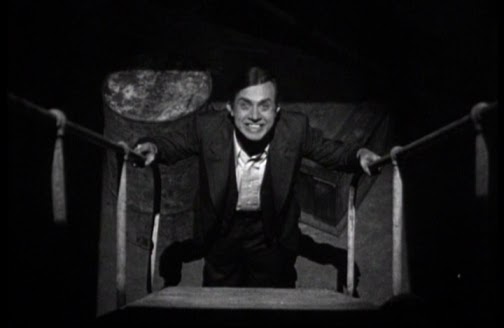
Ringu at twenty-five might seem on the surface to be almost contemporary to the viewer of 2023 and after but the essentials are steadfast. The remake from 2002 missed these things, or buried them beneath megatons of Hollywood genre stock. Overstated orchestral swells, backstories no one asked for, cliches from the previous decade of swollen mainstream genre and a climax that looked like it was edited for MTV which featured a monster made so intentionally ugly that it looked like its design was dictated by a child. The original climax, accounting for shifts in the technology it depicts (change a tv screen for a painting, a '90s button landline for an old wooden box phone), could have been shot in the silent era. The takes are long enough to register the uncanny physicality and motion that unnerve the viewer and allow a flow to the progress of the scene so that it feels (despite what's happening) natural. For all the showbiz trickery of almost anything in the horror genre of which this film is a significant and willing participant, Ringu is yet pure.
Viewing notes: I saw this most recently on Arrow's stunning 4K release which has detail to gasp at, real film grain that hasn't been "cleaned up" and a 5.1 audio track that delivers strong immersion.
Ringu is available to stream in Australia on Tubi and SBS on Demand.
SPOILERS BELOW
.
.
.
.
.
.
.
.
.
.
.
.
.
.
.
.
.
.
.
SPOILERS
Well, spoiler. The last lines of dialogue come from an unnamed girl who talks about how copying the tape lifts the curse. So, this sounds like one of the interviews that Reiko was conducting with the schoolgirls. There is a narrative point made toward the end of the film by which Reiko understands about the copying. It's not ambiguous; with the help of an apparition she twigs. This means she didn't already know it before her husband met Sadako for the first and last time. But if it was in there among the schoolkids' testimony then it's surely something she would have recalled (like when she was frantically filling buckets of water at the bottom of the well to lift the curse). Yes, I know it's just a bit of over-egging to let us know in case we missed it but it's occurrence just before the credits roll makes a sore thumb of the statement.
Oh, the plural was right all along. Someone on a discussion group came up with this funny but true observation: Reiko is presented as a bad mother at first but becomes a bad daughter in the final scene. She's barrelling down the highway toward her father's place to get her son to copy the tape and give dad an eyeful, passing on the curse to him. Sure he can just copy it and pass it around to anyone but his sparse rural community is going to run out of people soon and will have to set up a kind of Wicker Man community, cursing everyone they can find. Well, she might have just given it to someone in a hospice and let time and Sadako have their way and create a terminus but how long is that going to last. Thing is, even with all this in operation the thread as is, remains doomladen and only serves the film itself.
Oh, I should point out that none of these objections marrs my overall appreciation of the film; it remains one of my favourite horror movies of all time.